
By Hugh Cameron
Reporter
0
Share
Newsweek is a Trust Project member
See more of our trusted coverage when you search.Prefer Newsweek on Googleto see more of our trusted coverage when you search.
A recent report has revealed which states’ taxes are the most competitive relative to other states, based on those that impose the lowest rates while maintaining a structure that is simple and growth-friendly.
The Tax Foundation, in its 2026 State Tax Competitiveness Index, measured how well tax systems are structured on over 150 variables across corporate, income, sales, property and unemployment insurance taxes, and in terms of how these contribute to a state’s broadly defined economic success.
Why It Matters
As noted in the analysis, the index highlights features of a tax system that support or undermine the “competitiveness of a state’s business environment,” cutting scores for things like a complexity, non-neutrality and comparatively high rates. The Tax Foundation acknowledges that this not a holistic measure of a tax structure’s overall success, and it omits metrics such as the quality of public services toward which taxes may contribute, as well as residents’ perceptions of their state's tax rates.
Read More on U.S.
However, The Tax Foundation says that its analysis can serve as a “valuable diagnostic tool” for policymakers, as well as citizens looking to assess how their tax burden compare with that of other states.
What To Know
The independent think tank, viewed as holding business-friendly and fiscally conservative leanings, found that structural strengths in states’ tax codes varied widely across the U.S.
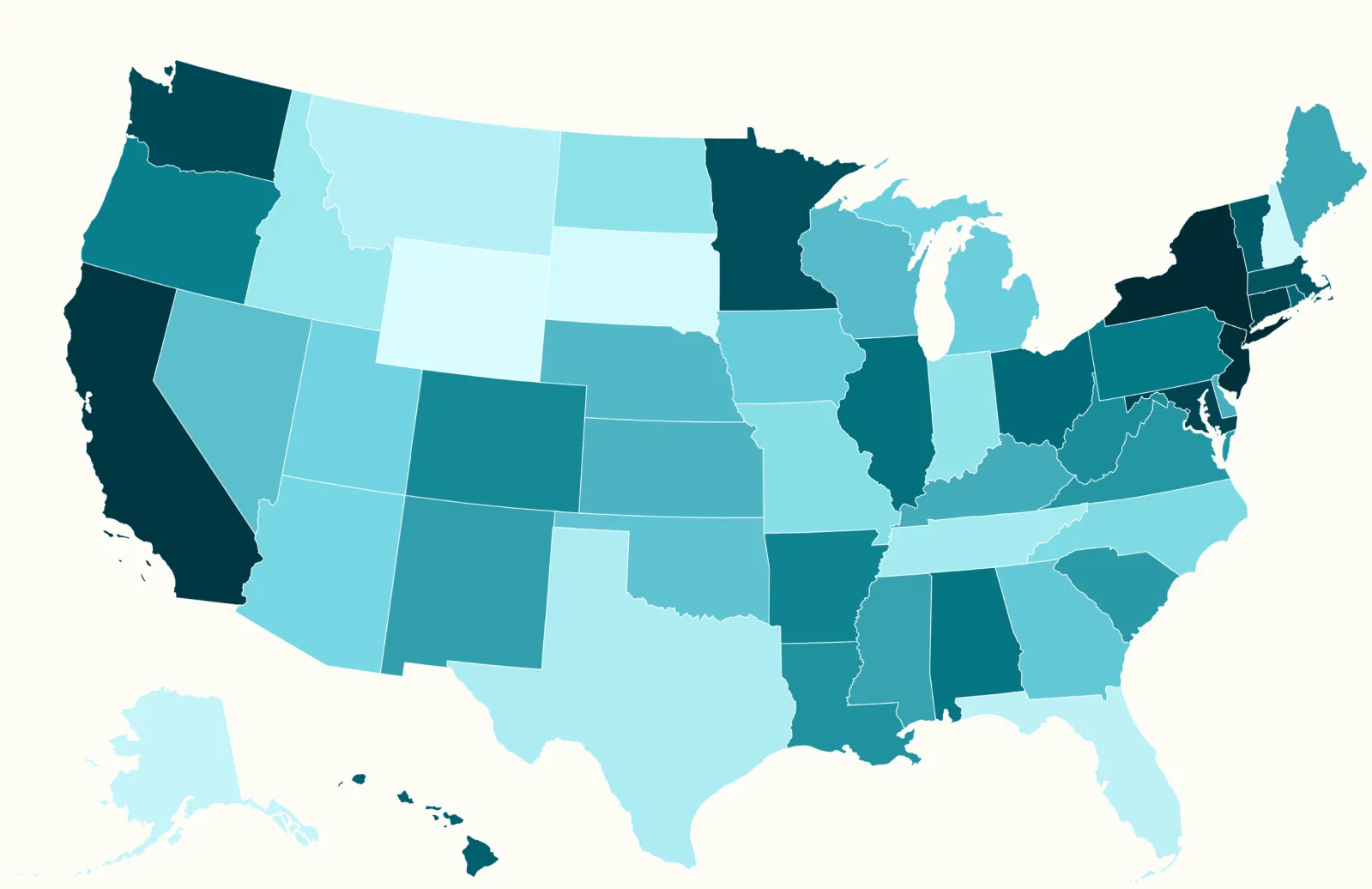
According to its analysis, Wyoming stood out as the state with the overall soundest tax structure. Wyoming does not impose either individual corporate or income tax, and earned full marks in these two categories on this account.
“A state without a corporate or individual income tax definitionally cannot have structural shortcomings in the design of those taxes, hence Wyoming’s performance on the Index,” the Tax Foundation explains.
The think tank described Wyoming's four percent sales tax rate as “nationally competitive,” and the lack of estate tax or inheritance tax has further boosted its ranking.
Wyoming is followed by South Dakota, another state which foregoes both individual and corporate income tax. While therefore reliant on its sales taxes, researchers note that this remains “highly competitive.”
The remainder of the top ten states in the Tax Foundation’s rankings are:
- New Hampshire
- Alaska
- Florida
- Montana
- Texas
- Tennessee
- Idaho
- Indiana
New York, on the other end of the index, stood out as the state with the worst structured tax system, described as “burdensome and highly nonneutral” by researchers. The Tax Foundation cited its high rates of individual and corporate income tax, as well as the combined rates for state and local sales tax.
“To a significant degree, the draw of New York, and particularly New York City, has been enough to attract and retain individuals despite a high-rate, poorly structured tax code, just as many people choose to live in the city despite its high cost of living generally,” the state analysis reads.
New Jersey came second to last, attributed to the state levying “all major categories of tax, typically at high rates and significant levels of complexity.”
The remaining states at the bottom of the Tax Foundation’s rankings were:
- District of Columbia
- California
- Connecticut
- Maryland
- Washington
- Minnesota
- Massachusetts
- Vermont
What People Are Saying
The Tax Foundation writes in its analysis: “The modern market is characterized by mobile capital and labor, with all types of businesses, small and large, tending to locate where they have the greatest competitive advantage. The evidence shows that states with the best tax systems will be the most competitive at attracting new businesses and most effective at generating economic and employment growth.”
What Happens Next
Tax structures have proven far from immutable over the past few years, and the Tax Foundation highlighted a number whose rankings have significantly improved. These include Tennessee, which has climbed from 38th place to 8th since 2020, thanks to reducing the rates of its corporate gross receipts tax and becoming one of a handful of states to eliminate individual income tax.
However, Oregon was one of those which fell significantly over this period, dropping from the 8th spot to 35th, having adopted a high gross receipts tax on top of its existing corporate income tax.
View 0 Comments
Submit Correction
View Editorial & AI Guidelines