
By Hugh Cameron
Reporter
0
Share
Newsweek is a Trust Project member
See more of our trusted coverage when you search.Prefer Newsweek on Googleto see more of our trusted coverage when you search.
A number of Americans are facing significant differences in fiscal realities across the U.S., from shifting rates of income and sales taxes to property levies.
A new analysis from the personal finance website WalletHub has underscored how property taxes can fluctuate significantly from state to state, with some boasting effective rates several times higher than lower-taxed parts of the country.
Why It Matters
Property taxes have emerged as a primary “hidden cost” facing both current and prospective homeowners, as widespread housing affordability pressures have dampened demand across the real estate sector. Falling sales, reluctant buyers, and inventory issues have been cited among key challenges facing the housing market in 2026, and ones which experts say are likely to persist with the influence of wider economic conditions on home-selling activity.
Read More on U.S.
What To Know
According to the latest data from the U.S. Census Bureau, the average American household pays $3,119 each year in property taxes, and WalletHub notes that these can impact both owners and renters given their importance to local government budgets as well as the influence on rental prices.
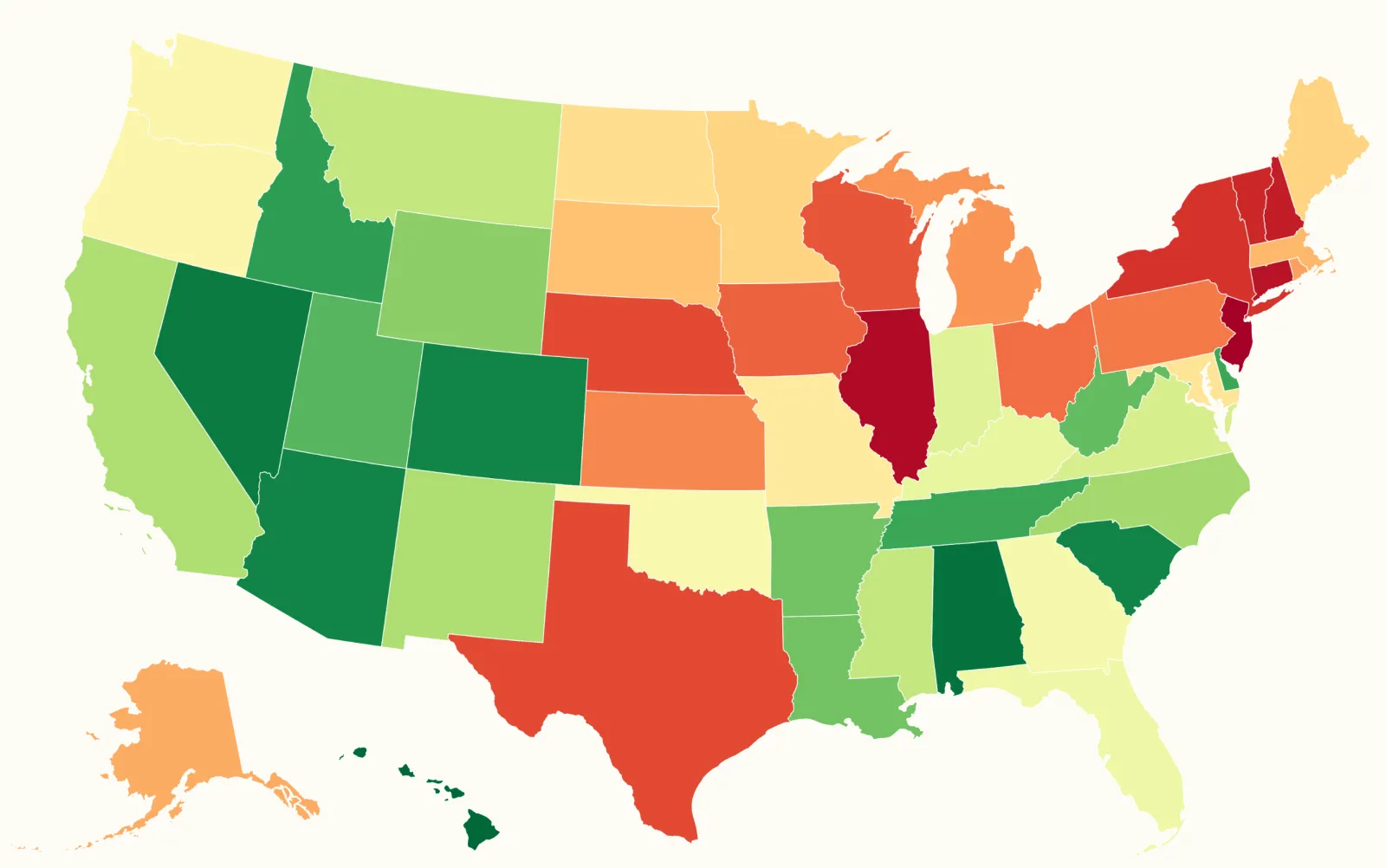
The report highlights the significant disparity in real estate tax rates across the U.S.
Among all states and Washington, D.C., New Jersey ranks as the most expensive when it comes to property taxes, with an effective rate of 2.11 percent translating into $7,022 in annual payments on homes valued at the 2024 median of $332,700. For the state median value of $454,400, this figure increases to $9,590.
New Jersey is followed by Illinois at 2.01 percent, with Connecticut (1.81), New Hampshire (1.66) and Vermont (1.59) rounding out the top five.
By contrast, WalletHub found that Hawaii has the lowest effective real-estate tax rate of any state at just 0.27 percent, with homeowners paying only $888 on homes at the national median value, but $2,239 for those valued at the state’s high median of $839,100.
Alabama comes in second with a rate of 0.38 percent, followed by Nevada at 0.47 percent, with South Carolina, Arizona and Colorado all at 0.48 percent.
What People Are Saying
WalletHub analyst Chip Lupo wrote in the report: “Some states charge no property taxes at all, while others charge an arm and a leg. Americans who are considering moving and want to maximize the amount of money they take home should take into account property tax rates, in addition to other financial factors like the overall cost of living, when deciding on a city.”
Jeff Kolakowski, CEO of New Jersey Builders Association, said of the state’s housing market in an interview with WHYY: “We have a high regulatory environment that not only increases costs here in New Jersey, but it leads to long development timetables, which leads to a lack of investment here in New Jersey. And we have high property taxes. We have a whole host of things we have to tackle if we’re going to create a healthy housing ecosystem here in New Jersey.”
What Happens Next
Opposition to property taxes, largely from Republican lawmakers and aligned groups, has grown in recent years, with others also highlighting that some form of property tax reform is overdue amid persistent affordability challenges in the U.S. housing sector.
“Property tax reform is going to continue to be an issue going into 2026 because it was largely not resolved in 2025 or in years prior, and taxpayers are still clamoring for relief,” Manish Bhatt, a senior Policy Analyst with the Center for State Tax Policy at the Tax Foundation, told Newsweek in late December.
View 0 Comments
Submit Correction
View Editorial & AI Guidelines