
By Melissa Fleur Afshar
Reporter
0
Share
Newsweek is a Trust Project member
See more of our trusted coverage when you search.Prefer Newsweek on Googleto see more of our trusted coverage when you search.
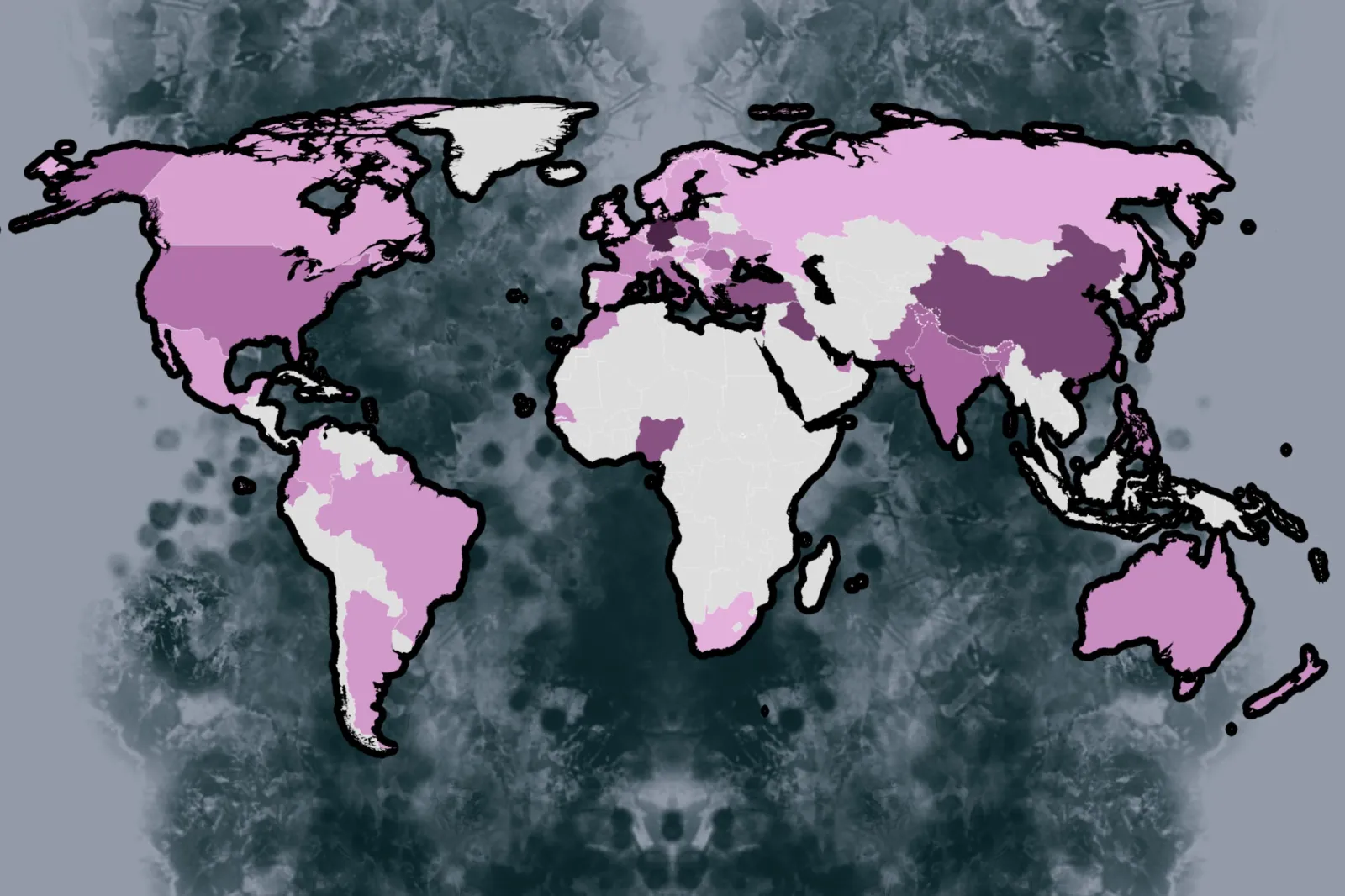
The U.S. may have a global reputation for self-importance, but new research from Michigan State University’s Department of Psychology challenges that narrative—ranking the country 16th in global narcissism, well behind nations including Germany, Iraq and China.
“This is a strong, large-scale study, and its biggest contribution is reminding us that narcissism is a human trait, not a uniquely American one,” Lynn Zakeri, a therapist in Chicago and owner of Lynn Zakeri LCSW Clinical Services, told Newsweek.
In the study researchers surveyed 45,000 individuals across 53 countries—undertaking one of the most culturally diverse examinations of narcissistic traits ever conducted, offering new insights into how age, gender and cultural context influence the personality trait.
Read More on Science
Narcissism, in this context, is marked by high self-esteem and low empathy, rather than a clinical disorder. The study focused on self-reported traits rather than diagnosing Narcissistic Personality Disorder.
“That distinction matters because traits live on a continuum and do not automatically equal pathology,” Zakeri added.
According to the data, the five countries with the highest average narcissism scores were Germany, Iraq, China, Nepal and South Korea.
The countries with the lowest scores were Serbia, Ireland, the U.K., the Netherlands and Denmark. The U.S. placed outside the top 15, a result that researchers said runs counter to popular assumptions about American culture.
Zakeri said the findings “challenge a popular narrative,” adding, “visibility through media and social platforms amplifies narcissistic behavior, but amplification is not the same as prevalence.”
The researchers found significant global patterns when it came to demographics.
Across all regions studied, younger adults scored higher on narcissism measures than older adults. Men also reported higher levels of narcissism than women.
“Younger adults scoring higher is consistent with decades of developmental research,” Zakeri said. “Early adulthood is a time of identity formation, status-seeking, and differentiation. These traits often soften as empathy and regulation mature.”
She added: “Higher scores among men also align with socialization patterns that reward dominance, confidence, and self-assertion. These traits are often reinforced, not questioned.”
Researchers also explored the relationship between narcissism and broader societal variables, including a country’s GDP and its level of individualism or collectivism. One unexpected finding was that narcissistic traits appeared at similar levels in both individualistic cultures, like the U.S., and collectivist cultures, such as those in East and South Asia.
“Cultural norms strongly influence how comfortable people are endorsing statements about confidence, status, or self-importance,” Zakeri said. “In some cultures, endorsing these traits reflects social roles, hierarchy, or survival rather than entitlement or lack of empathy.”
She added that higher national scores may not reflect personality flaws, but rather social and economic stressors.
“Countries that scored higher may reflect environmental pressure rather than personality flaws," she said. "Rapid social change, economic stress, collective expectations, or rigid hierarchies often increase self-protective traits like grandiosity or entitlement.”
While the rankings may shift perceptions about global narcissism, Zakeri emphasized that the clinical implications remain rooted in individual behavior.
“Clinically, the most important question isn’t where a country ranks,” she said. “It’s whether narcissistic traits interfere with empathy, accountability, and relationships."
Macy Miscikowski, a co-author and research associate, added in a statement: “Insights like these encourage us to think about the balance between cultural and biological influences on personality. It also suggests exciting avenues for studies on how life experiences, societal expectations and economic contexts interact to shape the expression of narcissistic traits across one’s lifespan.”
Do you have a tip on a science story that Newsweek should be covering? Do you have a question about narcissism? Let us know via science@newsweek.com.
Reference
Miscikowski, M. M., Weidmann, R., Konrath, S. H., & Chopik, W. J. (2025). Cultural moderation of demographic differences in narcissism. Self and Identity, 1–31. https://doi.org/10.1080/15298868.2025.2593298
View 0 Comments
Submit Correction
View Editorial & AI Guidelines