...

By Billal Rahman
Immigration Reporter
0
Share
Newsweek is a Trust Project member
See more of our trusted coverage when you search.Prefer Newsweek on Googleto see more of our trusted coverage when you search.
Fatal bear attacks in North America have occurred in wilderness habitats involving hikers, hunters, and campers.
But which US states have the worst figures regarding bear fatalities?
Read more: Learn About Emergency Funds and Where to Keep Them
Read More on News
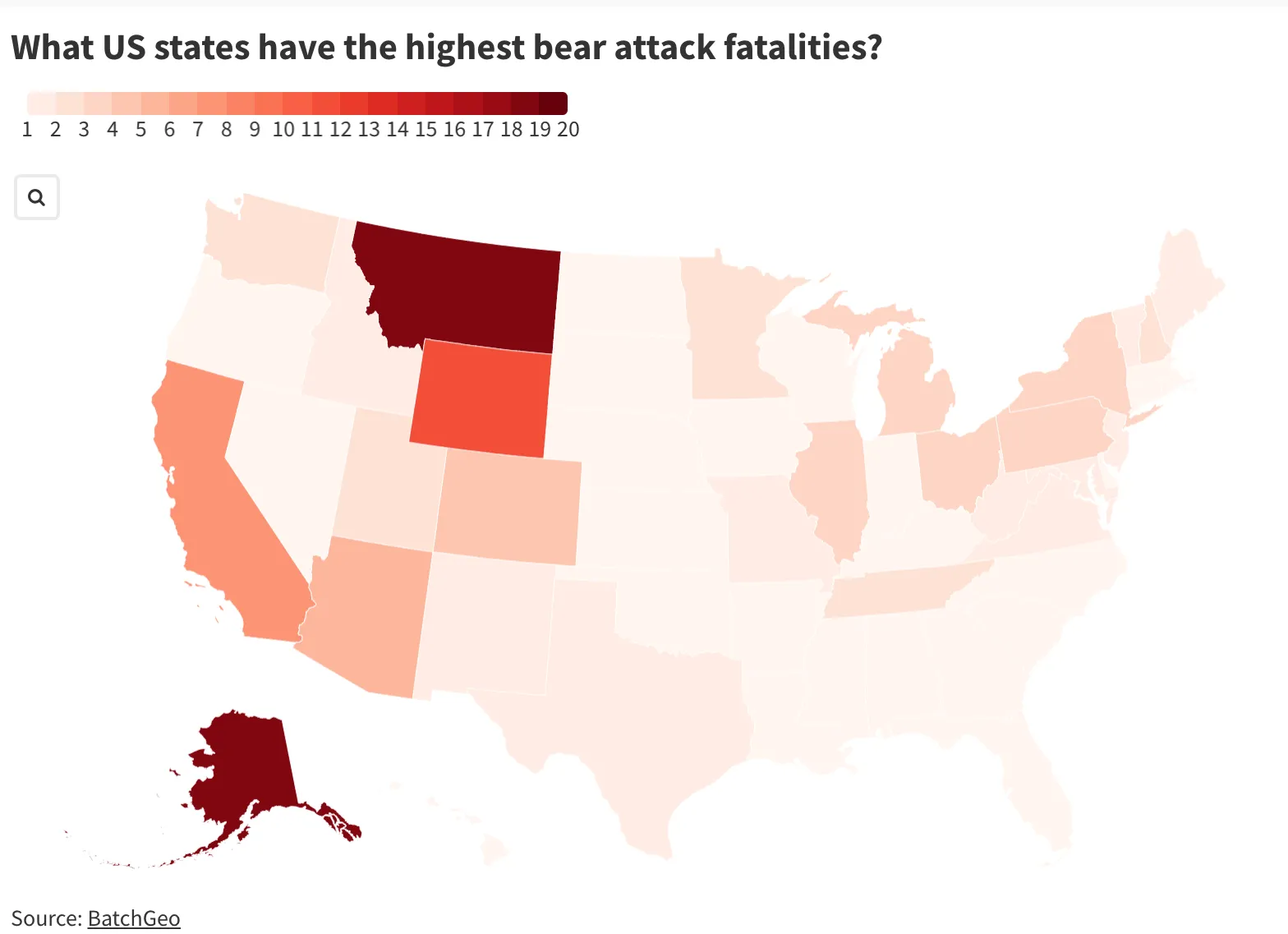
According to research gathered, ten fatal bear attacks happened in Montana Glacier National Park between 1967 and 1998. All the attacks involved a brown bear.
The state of Wyoming is another hotspot which has some of the highest fatal bear attacks in the country. Yellowstone National Park has seen eight incidents, including attacks in 2015 and 2011. Similarly to the incidents in Montana, all fatalities in Yellowstone were caused by brown bears.
Read more: How to Build an Emergency Fund
Northwest Wyoming is a bear attack hotspot as the region includes Bridge-Teton National Forest, where two fatal bear attacks occurred, and Shoshone National Forest, where one attack happened. In May a 35-year-old Massachusetts man was attacked and seriously injured on Signal Mountain Summit Road in Wyoming's Grand Teton National Park on when two grizzly bears surprised him.
Read more: Best Place to Put Your Savings: CD vs. High-Yield Savings Account
Alaska has also has several bear attack hotspots, with 18 recorded incidents. Between 2000-2017, it saw a total of 10 fatal attacks.
...
Polar bears, black bears, and brown bears are the three types commonly involved in fatal North American attacks. The three bear groups are responsible for over 180 deaths since records began.
Bear attacks are more common in the summer as the animals hibernate during the winter months. August is the most likely month for dangerous incidents, while February is the least likely.
Campers, joggers, researchers, and children are among those who have been killed or seriously injured. Whilst such episodes are very rare, experts say that it remains important to take simple measures to protect yourself.

...
What should you do if you see a bear?
If you encounter one in the wild you could take several precautions to ensure your safety. Always pay attention to your surroundings when you explore habitats where bears are roaming. If you come face to face with the mammal, keep your distance and don't surprise them.
You can help protect bears by avoiding encounters with them. However, if you come across one make a noise and let bears know you're in the area. Most bears will avoid humans if they hear them approaching their habitat. You can call out, sing, or be loud to deter them.
Linda Masterson, Communications Director for the National BearWise program said: "Ditch your earbuds and stay in tune with your surroundings. Try not to hike alone and make noise periodically so bears know you're there and can avoid you. Keep your camp so clean that your Mom would give you a gold star. Never keep food or anything with an odor in your tent.
"Feeding bears or letting them get into your food or supplies won't just ruin your trip, it will teach the bear a dangerous lesson. Feeding or approaching bears is dangerous for both people and bears.
"Respecting bears, giving them space and never feeding or approaching bears is the best way to keep people safe and bears wild. Bears are amazing wild animals; it's up to people to keep them that way"

...
Jaime Sajecki, Black Bear Project Leader, said: "Never run from a bear. Don't approach a bear, quietly move away and leave the area. If a black bear does approach you, make yourself look big, make loud noises, clap your hands, and continue to back away."
It's also crucial to always pay attention to your surroundings and make a special effort to be noticeable if you are in an area with known bear activity.
Look out for bears tracks, droppings, or torn-up logs. It is critical to leave the area if the evidence is fresh.
If you have a dog with you, keep it on a leash or leave it at home when traveling to an area with high bear activity as they can provoke bears.
Remember to always use official trails and travel in groups of at least four.
Do you have a story we should be covering? Do you have any questions about this article? Contact LiveNews@newsweek.com
View 0 Comments
Submit Correction
View Editorial & AI Guidelines