...

By Giulia Carbonaro
Senior Reporter
0
Share
Newsweek is a Trust Project member
See more of our trusted coverage when you search.Prefer Newsweek on Googleto see more of our trusted coverage when you search.
While the pace of home price growth in the U.S. has slowed down as a result of falling sales and rising inventory, there are pockets of the country where markets are still reporting double-digit increases, according to recent data.
A report by data platform Cotality, found that a majority of the hottest markets in the country in May—the latest month for which reliable data is available—were in the Northeast and the Midwest, while the South and the West reported the highest concentration of quickly cooling markets.
But the hottest markets in the country are not the usual suspects—the likes of Boston and New York City. Instead, they are cities that some many people may never have heard of, unless they live in their vicinity.
Read More on News
What Are the Hottest Markets in the Country?
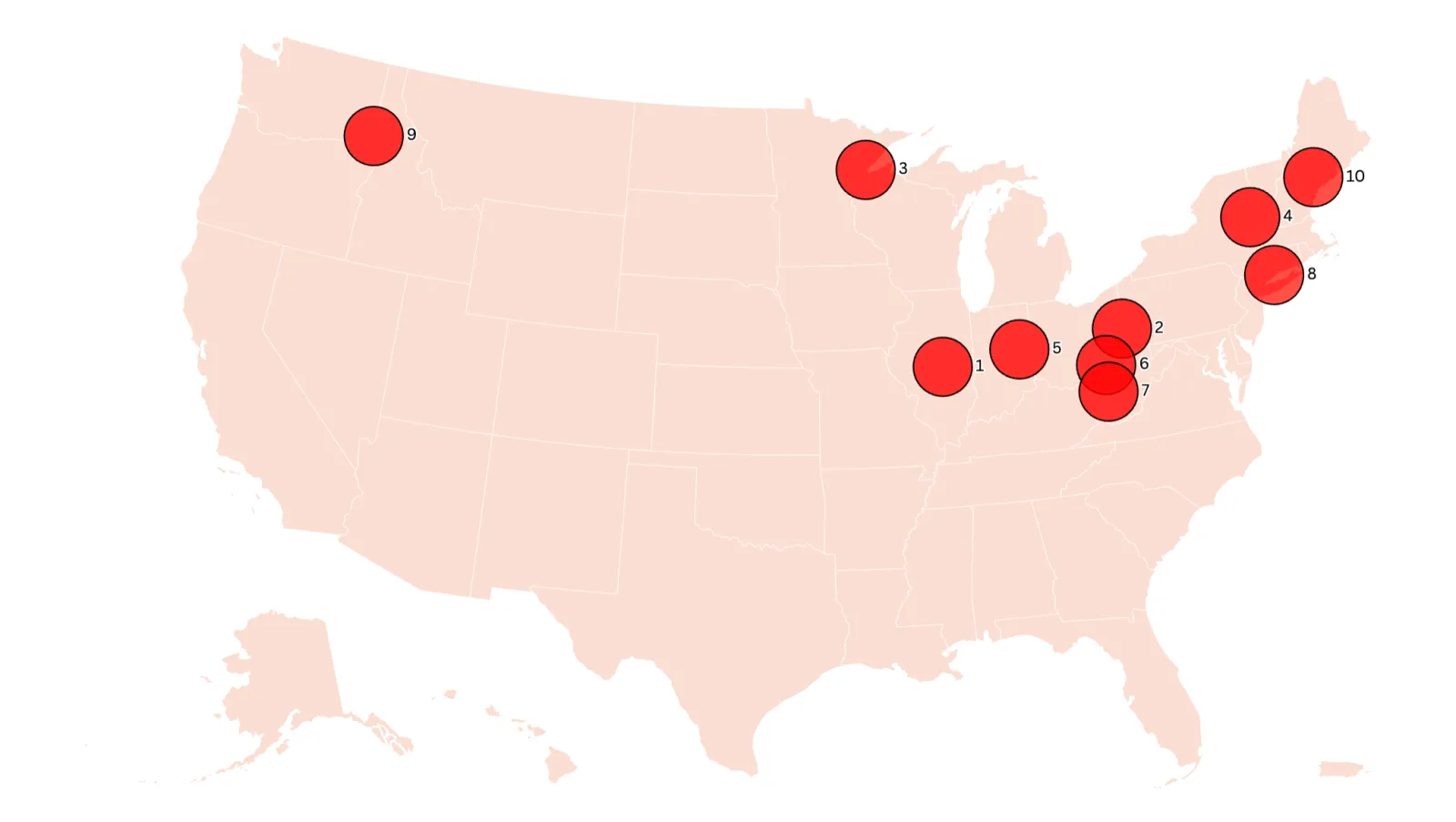
These are the 10 hottest markets in the country, according to Cotality—the ones that saw the highest home sale price increases year-over-year in May:
- Decatur, IL: 12.4 percent
- Weirton, WV: 12.0 percent
- Duluth, MN: 11.9 percent
- Glens Falls, NY: 10.6 percent
- Muncie, IN: 10.6 percent
- Parkersburg, WV: 10.5 percent
- Charleston, WV: 10.4 percent
- Bridgeport, CT: 10.2 percent
- Lewiston, ID: 10.2 percent
- Lewiston, ME: 10.1 percent
While Decatur, Illinois, leads the country for highest annual median sale price increase, West Virginia has three cities in the top 10, namely Weirton, Parkersburg and Charleston.
Why Are Prices Rising So Much In These Markets?
"Across the country, the market has a split character," Cotality Chief Economist Selma Hepp said in the report. "The Northeast and the Midwest are home to some of the hottest markets in the country, while Texas, Hawaii, Florida and Washington D.C. are posting negative home price growth of -0.5 percent, -0.7 percent, -1.3 percent, and -2.1 percent, respectively."
The difference in home price growth across the country is largely driven by the availability of homes for sale, Hepp said. While inventory has been growing at the national level in recent months—partly because not as many homes are being sold—this increase hasn't been uniform around the country. In states like Florida and Texas, which have built the most new homes in recent years, active listings are now above pre-pandemic levels.
But in states with less building activity, like many in the Northeast, buyers are still facing an acute shortage of supply, which strips them of negotiating power. That includes parts of the Midwest. In West Virginia, for example, the number of homes for sale remains well below its pre-pandemic levels; according to Realtor.com data, there were 3,674 active listings in the state in June; five years earlier, there were 5,062.
"Many markets in the South and Desert West have seen strong rebounds in available inventory, and amid weaker demand, these markets are facing some downward pressure on home prices," she added.
But while many markets "have hit the wall," in terms of home price growth, "more markets continue to see some growth which is driving the overall national increase," Hepp said.
"However, with the annual growth rate now slower than the rate of inflation, real home prices are falling, which suggests improved affordability going forward."
...
View 0 Comments
Submit Correction
View Editorial & AI Guidelines