10
Loading video...

By Khaleda Rahman
National Correspondent
0
Share
Newsweek is a Trust Project member
See more of our trusted coverage when you search.Prefer Newsweek on Googleto see more of our trusted coverage when you search.
Fifteen states are now linked to a cyclospora outbreak tied to iceberg lettuce, the U.S. Centers for Disease Control and Prevention (CDC) said on Wednesday.
The agency announced that six additional states—Arkansas, Iowa, Missouri, Nebraska, New Hampshire and North Carolina—had been affected in the cyclospora outbreak cluster.
The previously announced states were Indiana, Kentucky, Michigan, Ohio, West Virginia, Illinois, Kansas, Oklahoma and Pennsylvania.
Read More on News
Cases of cyclosporiasis—the gastrointestinal illness caused by the parasite—have been reported in at least 47 states this year, and investigators are continuing to determine how many could be linked to a common contaminated source.
According to the CDC, the number of cases linked to the lettuce was 6,358, including at least 278 people who had to be hospitalized. Michigan reported the first two deaths tied to the outbreak on Monday.
Investigators initially narrowed in on shredded iceberg lettuce served at Taco Bell as the source of the outbreak. Federal officials have since said they are focused on produce giant Taylor Farms as the source of the lettuce, and the company has recalled iceberg lettuce grown in central Mexico.
In all, the CDC said 10,468 laboratory-confirmed domestic cases of cyclosporiasis had been reported in 47 states since May 1, with more than 12,255 additional cases that had not been laboratory-confirmed or required further investigation. Many of those cases were reported in Michigan, the CDC said.
The CDC and U.S. Food and Drug Administration are investigating several case clusters, including the one traced to lettuce supplied by Taylor Farms.
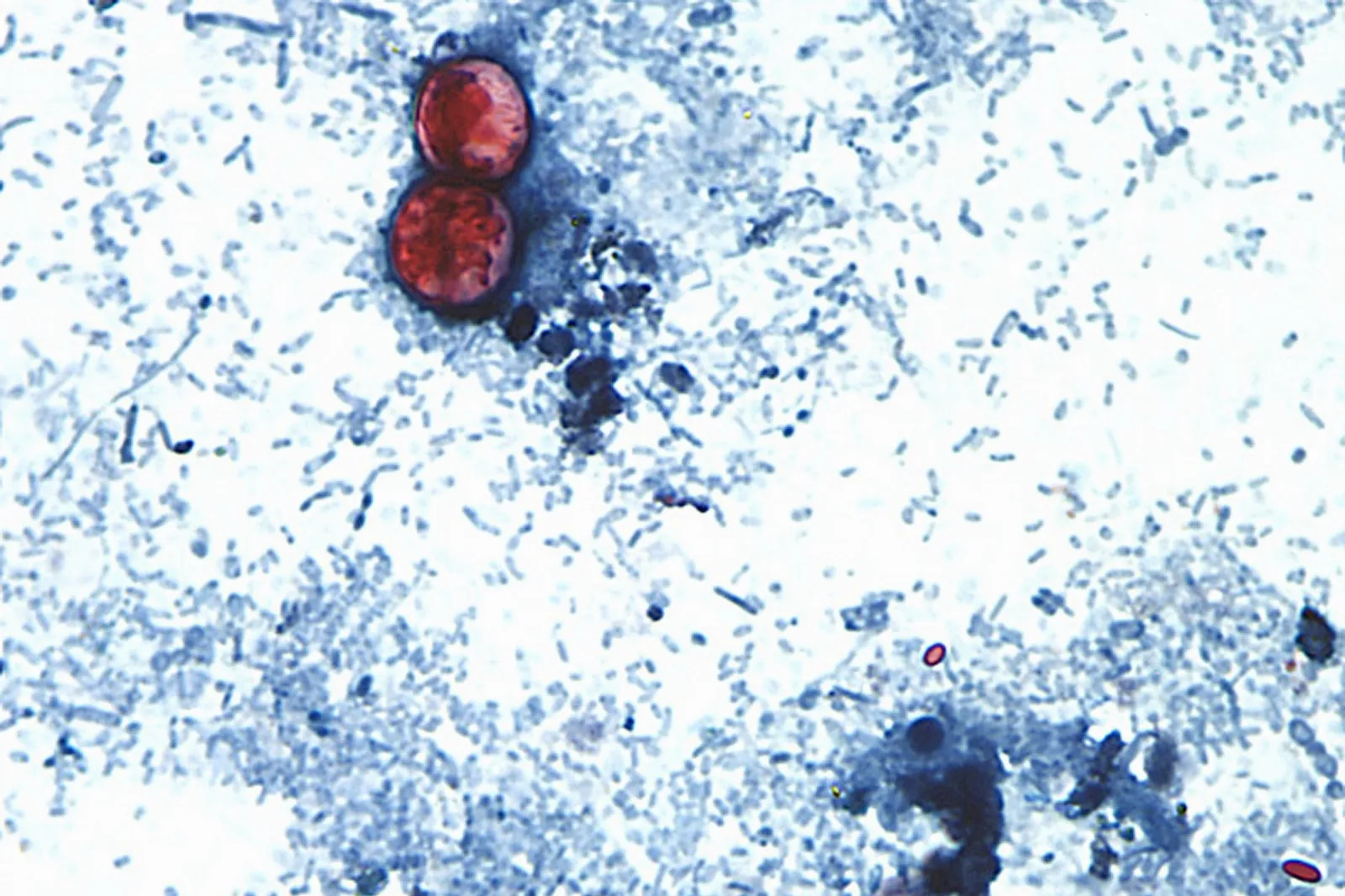
...
What Is Cyclospora?
Cyclospora is a microscopic parasite that infects food that has come into contact with human feces, most commonly when produce is irrigated or washed with contaminated water. When ingested, the parasite causes intestinal illness marked by "frequent and sometimes explosive bowel movements," according to the CDC.
How Many Cases Aren't Reported?
The CDC said the official count represented only laboratory-confirmed cases, adding that state data may include probable and confirmed cases, which could lead to higher case counts than what the CDC reports.
The agency said it was aware of more than 12,000 additional cases that either had not been laboratory confirmed or required further analysis, including to rule out whether the patients had traveled overseas before becoming ill.
The agency also said the true number of illnesses is likely even higher because some people recover without seeking medical care and are never tested, leaving many infections outside official tallies.
Cyclosporiasis Diagnosis and Treatment
Symptoms generally develop about a week after exposure. They can appear between two days and two weeks or longer afterward.
Without treatment, the illness may persist for more than a month, and symptoms can disappear before returning, according to the CDC.
Cyclosporiasis is diagnosed through stool testing, but detecting the parasite may require several samples and specialized tests that are not routinely performed.
The standard treatment is trimethoprim-sulfamethoxazole, an antibiotic combination commonly sold as Bactrim or Septra. Rest and fluids are also important, particularly for patients experiencing diarrhea. People with weakened immune systems or poor health may be more likely to develop severe or prolonged illness.
Cyclosporiasis Outbreak
Check out Newsweek's latest coverage:
- Taylor Farms Says FDA Has Apologized Over ‘False Positive’ Cyclospora Test
- Cyclospora Patient Reveals What Symptoms are Really Like as Outbreak Spreads
- Which Salad Greens Are Safe From Cyclospora Parasite? List of Companies, Where to Buy
- What Kills Cyclospora? Food Safety Tips Amid Explosive Diarrhea Outbreaks
- Medicine To Treat ‘Explosive’ Diarrhea Outbreaks Could Cause More Diarrhea
- Cyclospora Isn’t the Only Parasite in Fresh Produce—Experts Warn of Others
- How Long Does Cyclospora Incubate? Symptoms To Watch For, How to Treat It
- Where Does Cyclospora Parasite Come From? How to Protect Yourself
Contact Newsweek editors on this story: Matthew Robinson and Shakeema Edwards.
View 0 Comments
Submit Correction
View Editorial & AI Guidelines