...

By Giulia Carbonaro
Senior Reporter
0
Share
Newsweek is a Trust Project member
See more of our trusted coverage when you search.Prefer Newsweek on Googleto see more of our trusted coverage when you search.
More than one in five homes for sale in the U.S. last month had their original listed price slashed by sellers in an attempt to attract reluctant buyers, Realtor.com data showed.
It was the highest share for any June since at least 2016, when the real estate brokerage began collecting the data, and the sixth consecutive month with growing price reduction as the country faces an increasing imbalance between sellers and buyers.
Where Are Sellers Cutting Prices the Most?
Price reductions have become common in recent months across the U.S., with 20.7 percent of home listings in June having a price cut—up 2.3 percentage points from a year earlier.
Read More on News
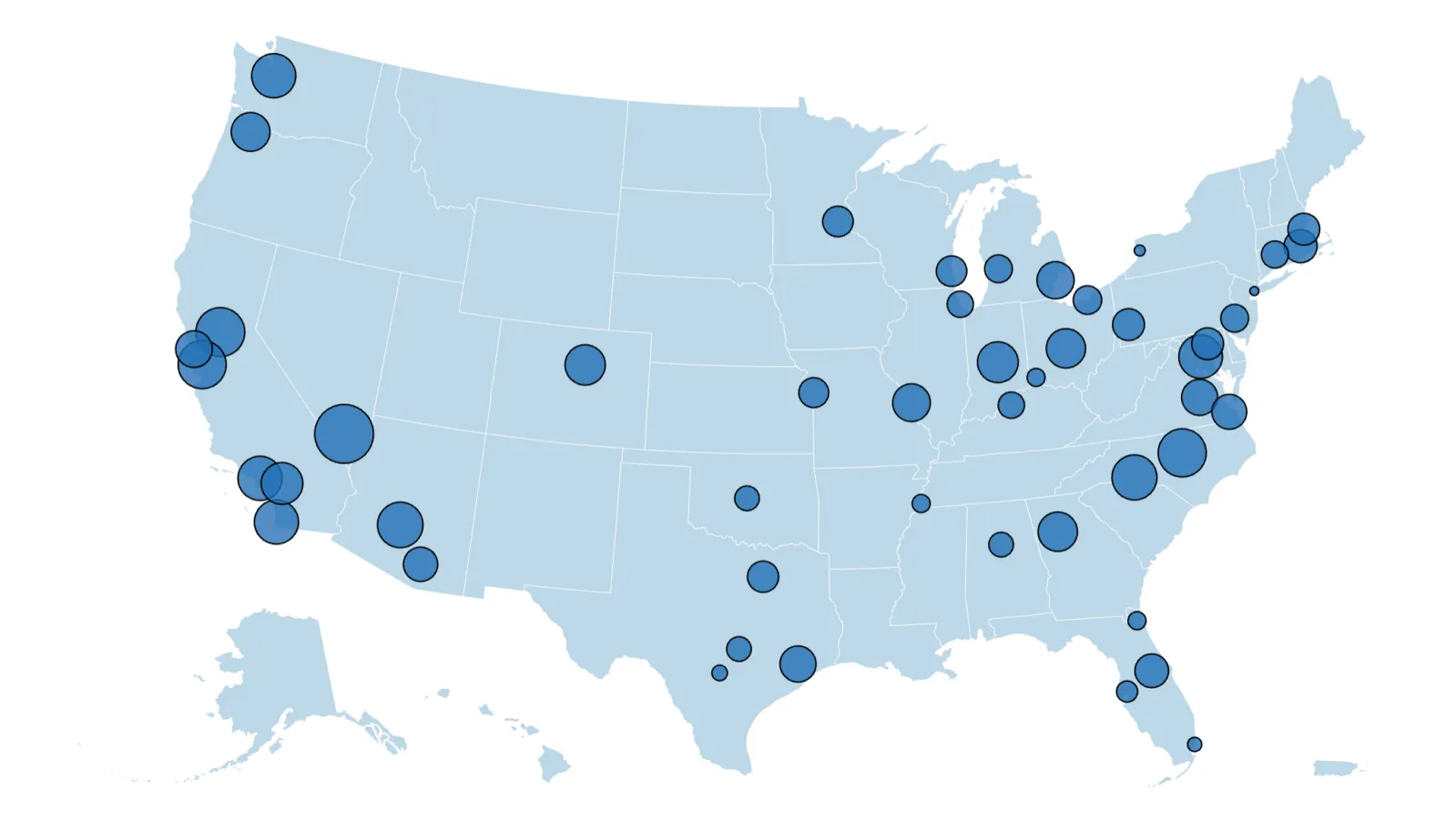
But there are significant regional differences across the country. While in the South and the West some 23 percent of listings had price reductions, only 13 percent did in the Northeast.
The highest share of price cuts in the country, according to Realtor.com—which looked at the 50 biggest metros in the U.S.—were reported in Denver (33.7 percent of listings), Phoenix (33.2 percent) and Austin (32.7 percent).
The metros that have seen the biggest year-over-year increases in the share of price cuts on their markets are Las Vegas (+8.5 percentage points), Sacramento (+5.9 percentage points), San Jose (+5.7 percentage points), Raleigh (+5.7 percentage points) and Phoenix (+5.1 percentage points).
Only one metro—Nashville—reported a year-over-year drop in the share of listings with price cuts, at -1.9 percentage points in June.
Why Are Sellers Offering Price Reductions?
In markets seeing the biggest increases in inventory, more sellers are offering price reductions. At the national level, active listings were up by 28.9 percent year over year in June, marking the 20th consecutive month of growing inventory.
But in some cities, inventory has grown even more—exacerbating the struggle of markets that are now cooling after years of overheating.
The Denver housing market is facing a significant correction after booming during the pandemic homebuying frenzy, with a surplus of homes piling up in the city's market. "Still-high housing costs in Denver have sidelined many would-be buyers, which has allowed inventory to build up in the metro," Hannah Jones, a senior economist research analyst at Realtor.com, previously told Newsweek.
Real estate analyst Nick Gerli, the CEO of Reventure App, told Newsweek in May, "No other large metro area in America has experienced such a massive spike in inventory compared to long-run norms."
Similar dynamics are playing out in two other pandemic boomtowns: Phoenix and Austin. Both markets exploded briefly during the pandemic, with home prices surging way beyond what locals could afford. Inventory is surging in these cities as newly built homes hit the market amid dwindling demand, and sellers are increasingly being forced to lower their expectations and cut prices.
As a result, in all three cities, a higher number of for-sale listings is taking pressure off prices, which have begun to fall. In the Denver metropolitan area, where inventory is now 88.1 percent higher than pre-pandemic levels, the median list price of a home was $609,950 last month, down 3.6 percent from a year earlier, according to Realtor.com.
In the Austin metro area, where inventory was up by 69.7 percent compared to a year earlier, the median list price of a home in June was $524,950, down 4.5 percent from a year earlier. And in the Phoenix metro area, the median list price of a home was $520,000, down 3 percent from June 2024.
View 0 Comments
Submit Correction
View Editorial & AI Guidelines