...

By Micah McCartney
Reporter
0
Share
Newsweek is a Trust Project member
See more of our trusted coverage when you search.Prefer Newsweek on Googleto see more of our trusted coverage when you search.
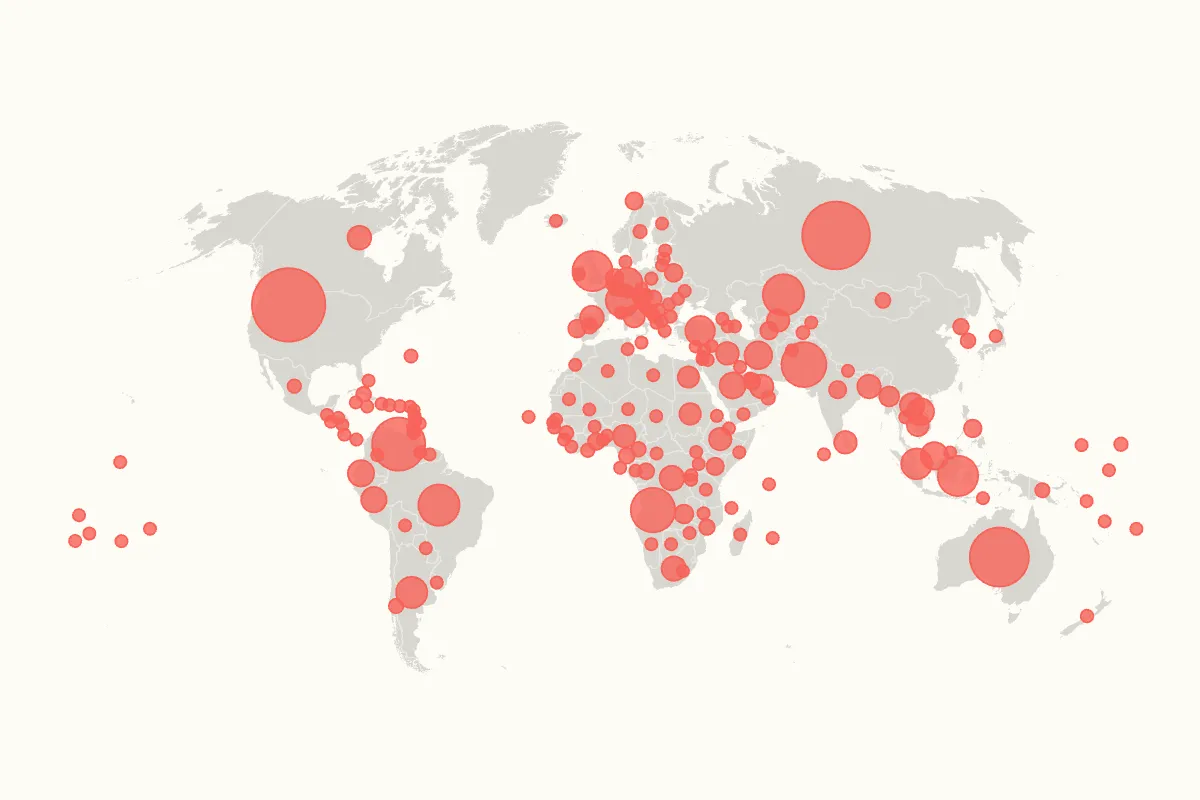
A Newsweek map illustrates the scale of China’s global loan footprint, drawing on the surprising findings of a recent report from Virginia-based research institute AidData.
Why It Matters
China, the world’s second-largest economy, is also now the largest creditor, a role that has enabled Beijing to match, and in many cases outcompete, its American rival in the race for diplomatic clout and strategic resources.
Read More on World
During its lending spree, which peaked in the 2010s, China racked up more than $1 trillion in obligations under its flagship infrastructure program the Belt and Road Initiative and made headlines over big-ticket projects in low-income countries.
Critics have described the loans, some of which led to financial distress due to high repayment demands, as “debt-trap diplomacy” and a means for Chinese state entities to gain influence over critical infrastructure. Chinese officials have rejected the debt-trap narrative, insisting that overseas lending is based on mutually beneficial, market-driven principles.
Newsweek reached out to China’s Foreign Ministry by email with a request for comment.
What To Know
The AidData report—based on a three-year study tracking 30,000 projects across 217 countries and territories—found that China’s global lending portfolio stands at $2.1 trillion, between two and four times larger than previous estimates.
The data also showed that high- and upper-middle-income nations accounted for 76 percent of these loans and nearly half the total value. This challenges long-held assumptions that Beijing’s lending was primarily focused on the developing world.
Among the top 10 recipients were three G20 economies—including the United States, which topped the list with $202 billion in Chinese state-linked loans covering 2,500 projects and activities nationwide during the study period.
...
Russia, China’s “no-limits” strategic partner and the world’s ninth-largest economy, came second with $172 billion. Australia, the 15th-largest economy, was third with $130 billion in loans.
Venezuela and Pakistan followed in fourth and fifth place with $105.7 billion and $75.6 billion, respectively. The United Kingdom, the sixth-largest economy, ranked 10th.
Because China does not disclose official data on its foreign lending to international monitoring systems, AidData compiled its analysis using loan contracts, grant records, debt restructuring agreements, and host-country documentation.
What People Are Saying
Brad Parks, executive director of AidData, was quoted as saying: “This is an extraordinary discovery given that the U.S. has spent the better part of the last decade warning other countries of the dangers of accumulating significant debt exposure to China, and accusing China of practicing ‘debt trap diplomacy.’”
Yang Baorong, director of African Studies at the Chinese Academy of Social Sciences, told state-run newspaper the Global Times in May: “China’s financing focuses on infrastructure and capacity-building to enable self-reliance, not create dependency.”
What Happens Next
The authors of the report called China a "new global pace-setter rewriting the rules and norms that govern the cross-border provision of international aid and credit." The U.S., German, Japan, and other major lenders are consequently having to readjust their credit and aid-issuing strategies to keep pace, they said.
View 0 Comments
Submit Correction
View Editorial & AI Guidelines