10
Loading video...

By Amanda Greenwood
Associate News Editor
0
Share
Newsweek is a Trust Project member
See more of our trusted coverage when you search.Prefer Newsweek on Googleto see more of our trusted coverage when you search.
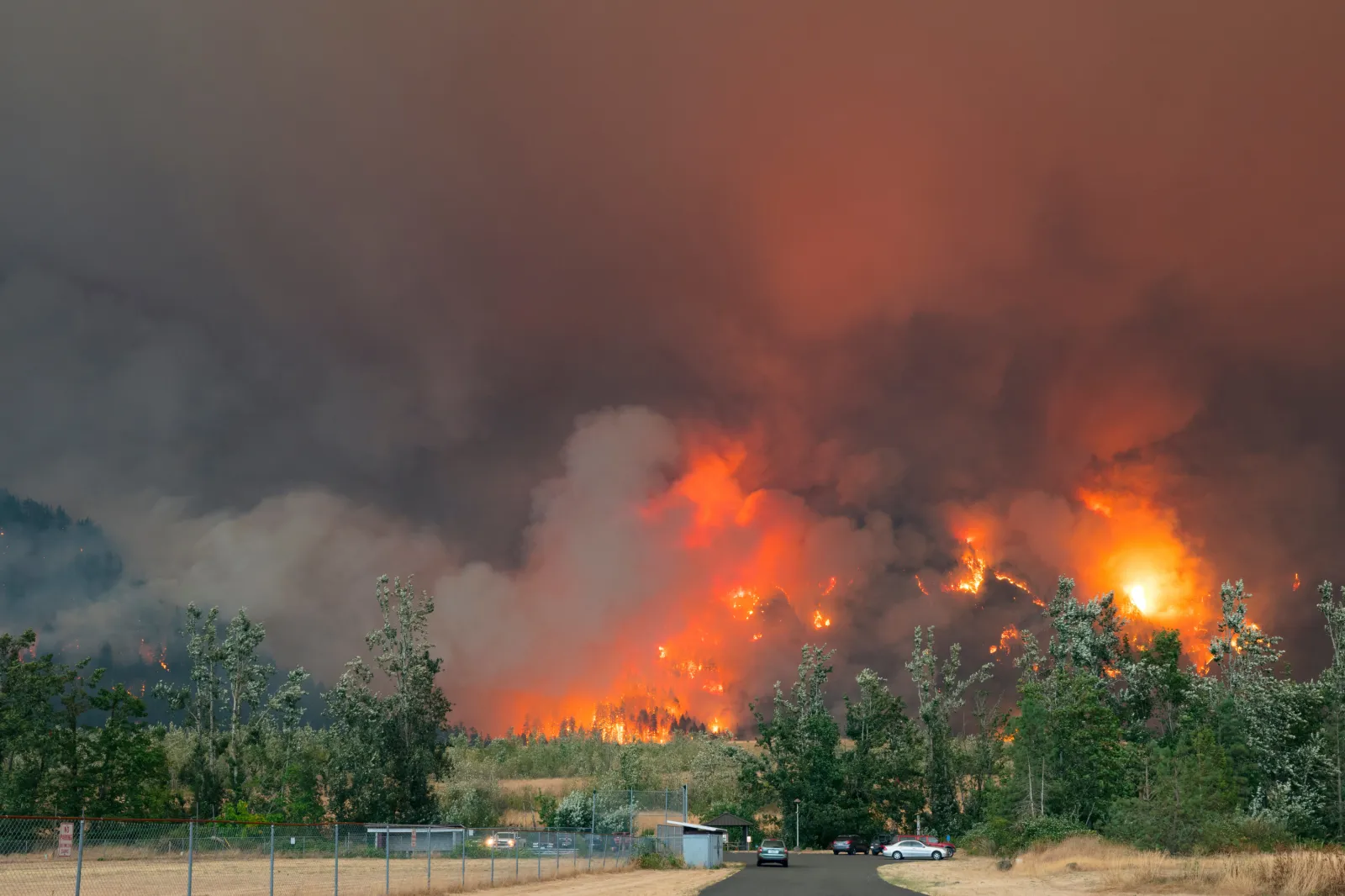
Washington Governor Bob Ferguson has declared a statewide emergency as fast-moving wildfires continue to burn across the state, including multiple major blazes threatening Spokane, where thousands of evacuations, widespread structural destruction and hazardous air quality conditions have prompted a large-scale emergency response.
One of the most significant fires affecting the Spokane area is the Old Trails Fire, which, according to the Washington State Department of Natural Resources (DNR), started on Saturday morning, northwest of Spokane and expanded rapidly because of extreme heat, strong winds and exceptionally dry conditions.
Officials on Sunday estimated that the Old Trails Fire had grown to over 3,500 acres. According to the most recent Wildfire Enterprise Geospatial Portal wildfire map, fires burning in and around Spokane have now scorched more than 7,000 acres combined and all fires currently remain uncontained.
Read More on News

...

...
In an update on Sunday, the Washington State Emergency Operations Center (SEOC) confirmed that around 18,800 homes and over 65,000 people were under evacuation orders, and that roughly 640 structures have been destroyed in the Spokane area, making it "the worst natural disaster" the region has faced according to Mayor Lisa Brown.
The DNR said that by Saturday evening firefighters still had zero containment as wind-driven flames crossed the Spokane River and pushed toward residential neighborhoods.
"We urge residents of Spokane to heed evacuation orders and to stay alert to changing conditions and evacuations as they are rapidly changing," Courtney James, a spokesperson for the DNR, said.

...
Evacuations and Emergency Response
The DNR issued multiple evacuation orders, including Level 3 "Leave Now!" warnings, the highest evacuation category, for neighborhoods northwest of Spokane and around Airway Heights, "due to the life-threatening conditions."
Thousands of residents were ordered to leave as the fire advanced toward homes and critical infrastructure.
Reuters reported that Spokane Mayor Lisa Brown said several facilities had been evacuated, including water reclamation facilities, a waste-to-energy plant and the Department of Veterans Affairs hospital.

...
The governor's emergency proclamation allows Washington to mobilize additional resources, coordinate statewide wildfire operations, expedite emergency assistance and deploy the National Guard if needed. Ferguson also announced a statewide burn ban through September 30.
"Our record-setting drought and high winds are creating dangerous conditions across the state," Ferguson said while announcing the emergency declaration, adding that he was "declaring an emergency to help prevent loss of life and property damage."
He also announced he would be visiting the area on Sunday to "meet with responders and monitor the emergency response."
Air Quality Alert Covers Spokane and Much of Eastern Washington
Even residents outside evacuation zones face growing hazards from wildfire smoke.
The National Weather Service (NWS) published an Air Quality Alert, issued by the Washington Department of Ecology, Environmental Protection Agency, and Spokane Regional Clean Air Agency.
The warning covers communities including Spokane, Airway Heights, Cheney, Liberty Lake, Medical Lake, Deer Park, Colville, Newport, Wenatchee, Moses Lake, Omak and Clarkston, among dozens of others.
Officials warned that smoke from active fires in Washington, Oregon and British Columbia could push PM2.5 pollution to unhealthy levels through the weekend, particularly in areas downwind of wildfires.
"Extremely critical fire weather Saturday will produce significant smoke from ongoing and emerging fires," the alert stated.
The warning added that shifting winds could transport smoke into Grant, Lincoln and Spokane counties, potentially causing PM2.5 concentrations to reach "unhealthy levels." Residents were advised to limit outdoor activity, avoid strenuous exercise and improve indoor air quality when possible.
Multiple Fires Burning Across Washington
...
The Spokane-area fire is only one part of a much larger statewide emergency.
Officials said Sunday that three fires, the Old Trails Fire, the Fairview Fire and the Meadowview Fire, were burning in the Spokane area as crews worked to contain rapidly changing conditions.
State officials said more than a dozen significant fires were burning across Washington as of Saturday, with wildfires affecting over 250,000 acres statewide, according to reporting by Reuters. The largest, the Kaiser Canyon Fire in northeastern Washington, had grown to approximately 134,000 acres.
Public Lands Commissioner Dave Upthegrove said roughly 450,000 acres have burned in Washington so far this fire season, describing the situation as unprecedented.
"This is not normal. Throughout the state of Washington, we're seeing fires raging," Upthegrove said.
What Happens Next?

...
About 4,000 firefighters have been battling fires across the state, joined by National Guard personnel and crews from multiple states. Emergency managers are urging residents to monitor official evacuation maps and local emergency alerts as conditions continue to change rapidly.
As of Monday morning, officials said the Spokane-area fires remained at 0 percent containment, while damage assessment teams worked to determine the full extent of losses. No deaths had been reported in connection with the Spokane-area fires.
For now, authorities say the combination of active fires, dangerous weather conditions and deteriorating air quality means much of eastern Washington remains under heightened alert as firefighters work to protect communities near Spokane and beyond.
Update 08/03/26, 03:52 a.m. ET: This story has been updated new details, updated maps and two new images.
Contact Newsweek editors on this story: Tobias Meyjes and Tony Phillips
View 0 Comments
Submit Correction
View Editorial & AI Guidelines