...

By Jasmine Laws
Reporter
0
Share
Newsweek is a Trust Project member
See more of our trusted coverage when you search.Prefer Newsweek on Googleto see more of our trusted coverage when you search.
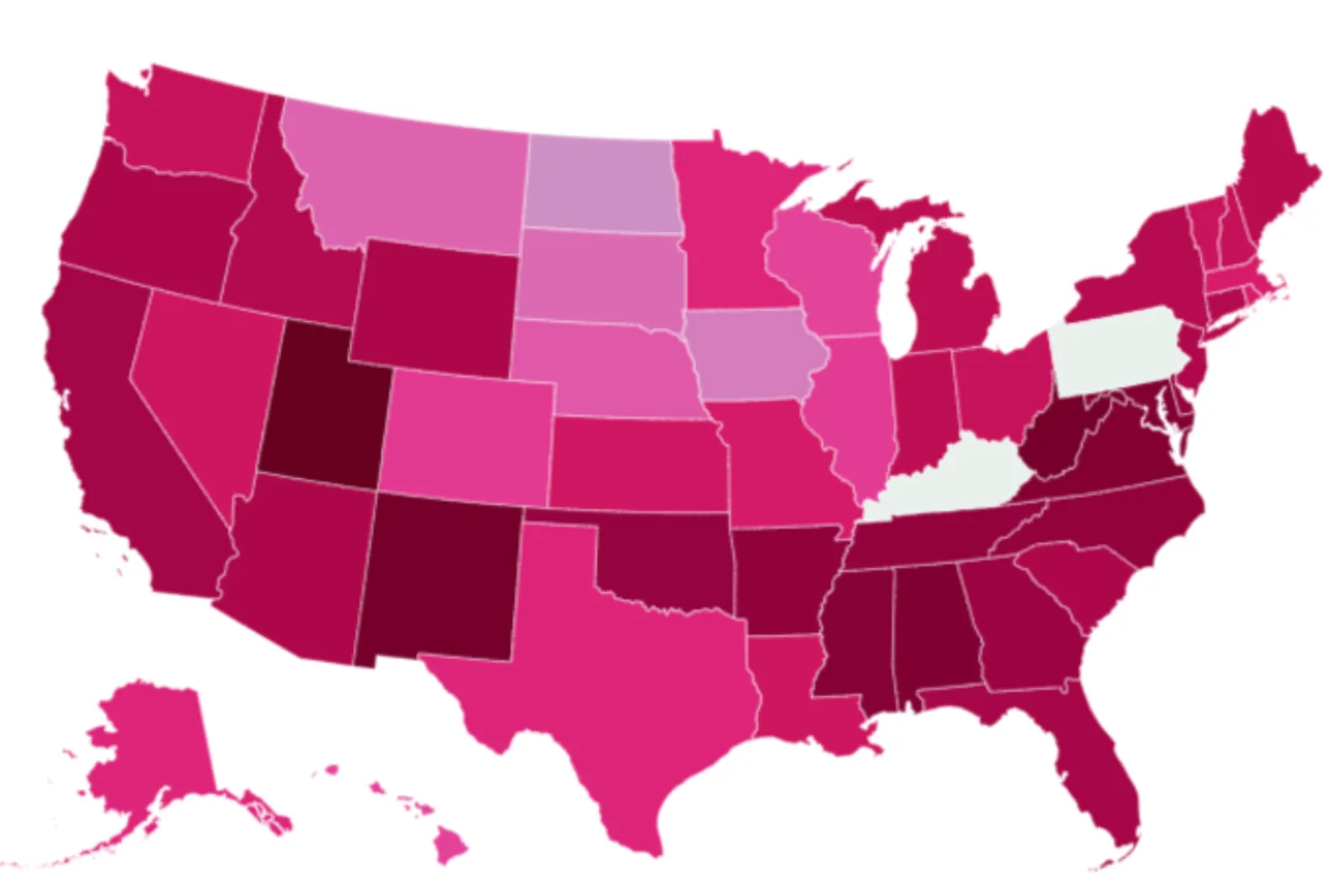
North Dakota is the state with the highest rate of binge-drinking, data from the Centers for Disease Control and Prevention (CDC) show.
Binge drinking is defined by the Substance Abuse and Mental Health Services Administration (SAMHSA) as five or more alcoholic drinks for males, or four or more for females, on the same occasion.
This means at the same time or within a couple of hours of each other, on at least one day in a month-long period.
Read More on News
When asked if they engaged in this style of drinking, the respondents to a Behavioral Risk Factor Surveillance System (BRFSS) survey in North Dakota more widely said "yes" than any other state, at 21.2 percent.
The Peace Garden State was followed by Iowa, South Dakota and Montana for having the biggest binge-drinkers.
However, the country's capital, Washington, D.C., actually exceeded the rate in those top states, having the highest prevalence of binge drinking across the U.S., at 27.1 percent.
Utah was the state with the fewest binge-drinkers, having a prevalence of 11.9 percent. Other states with lower levels of binge-drinking included West Virginia, New Mexico, Maryland and Alabama.
Discussing the data with Newsweek, Thomas K. Greenfield, who is senior scientist at the Alcohol Research Group, Public Health Institute, said: "Utah has a high percentage of Latter Day Saints in its population and still fairly restrictive state alcohol control laws, which likely reduces binge prevalence.
"The Midwest, especially Wisconsin, and Northern tier states tend to have higher binge levels and less restrictive alcohol control laws."
The vast majority of Americans have drunk alcohol at some point in their lives, at almost 85 percent among those aged over 18, according to the National Institute on Alcohol Abuse and Alcoholism (NIAAA).
Across the country 23.5 percent of those older than 18 had engaged in binge-drinking in the past month, according to the 2023 National Survey on Drug Use and Health.
However, binge-drinking is associated with many health issues, both physically and mentally.
According to drinkaware.co.uk, binge-drinking can affect mood, memory and potentially lead to serious mental health problems, with some evidence indicating a link between excessive drinking and suicide.
It has also been found that binge drinking increases risk of long-term health problems including becoming dependent on alcohol, alcohol-related cancer and heart disease.
Around 178,000 people die from excessive alcohol use every year in the U.S., according to the CDC.
Excessive drinking costs the U.S. up to $290 billion a year in lost labor and lower worker performance, as well as with property damage, crashes and criminal justice needs, according to the CDC's most recent data from 2010.
Health care for alcohol-induced injuries, and more widely for alcohol-related well-being, is lower on the list.
This cost comes to around $807 per person a year in the U.S., with every alcoholic drink consumed creating an extra $2.05 cost on alcohol-related impacts.
Update 12/03/24, 03:18 a.m. ET: This article has been updated with comment from Thomas K. Greenfield.
Do you have a story Newsweek should be covering? Do you have any questions about this story? Contact LiveNews@newsweek.com.
View 0 Comments
Submit Correction
View Editorial & AI Guidelines