...

By Jasmine Laws
Reporter
0
Share
Newsweek is a Trust Project member
See more of our trusted coverage when you search.Prefer Newsweek on Googleto see more of our trusted coverage when you search.
As the federal government shutdown continues, states have begun implementing measures to support residents who rely on the Supplemental Nutrition Assistance Program (SNAP), which has been frozen until funding legislation is negotiated in Congress.
On Monday, the Trump administration announced that it would partially fund the program through an emergency fund, following two federal judges' orders to keep the program operational. This will provide enough money to cover about half the normal monthly benefits.
"Covering SNAP benefits, even if only partial benefits, helps shield low-income families from food insecurity while also providing economic stimulus to local communities, since SNAP benefits are redeemed local at grocery stores," Colleen Heflin, a professor of public administration and international affairs at Syracuse University, told Newsweek.
Read More on News
"In states with high levels of government workers not being paid due to the government shutdown, the local stimulus SNAP provides may be particularly important this month," she added.
Why It Matters
SNAP provides food benefits to low-income families and is the U.S.'s most extensive nutrition assistance program, supporting more than 42 million people.
A number of states have been warning that if benefits are not distributed this month, it could endanger many families who will be unable to purchase enough food.
The shutdown is verging on becoming the longest in U.S. history, leaving many federal programs on pause and federal workers without pay, with ripple effects across the country. Democrats and Republicans have blamed each other for the shutdown, accusing the opposing party of carrying out a "political stunt" in refusing to agree to proposed legislation.
What To Know
States have opted to take different actions in supporting SNAP recipients, such as increasing funding for food banks or authorizing access to additional funding to cover the benefits themselves.
"State actions to address the SNAP gap matter," Heflin said. "I expect that food insecurity will vary even more by state as a result of variation in state response to the SNAP funding crisis."
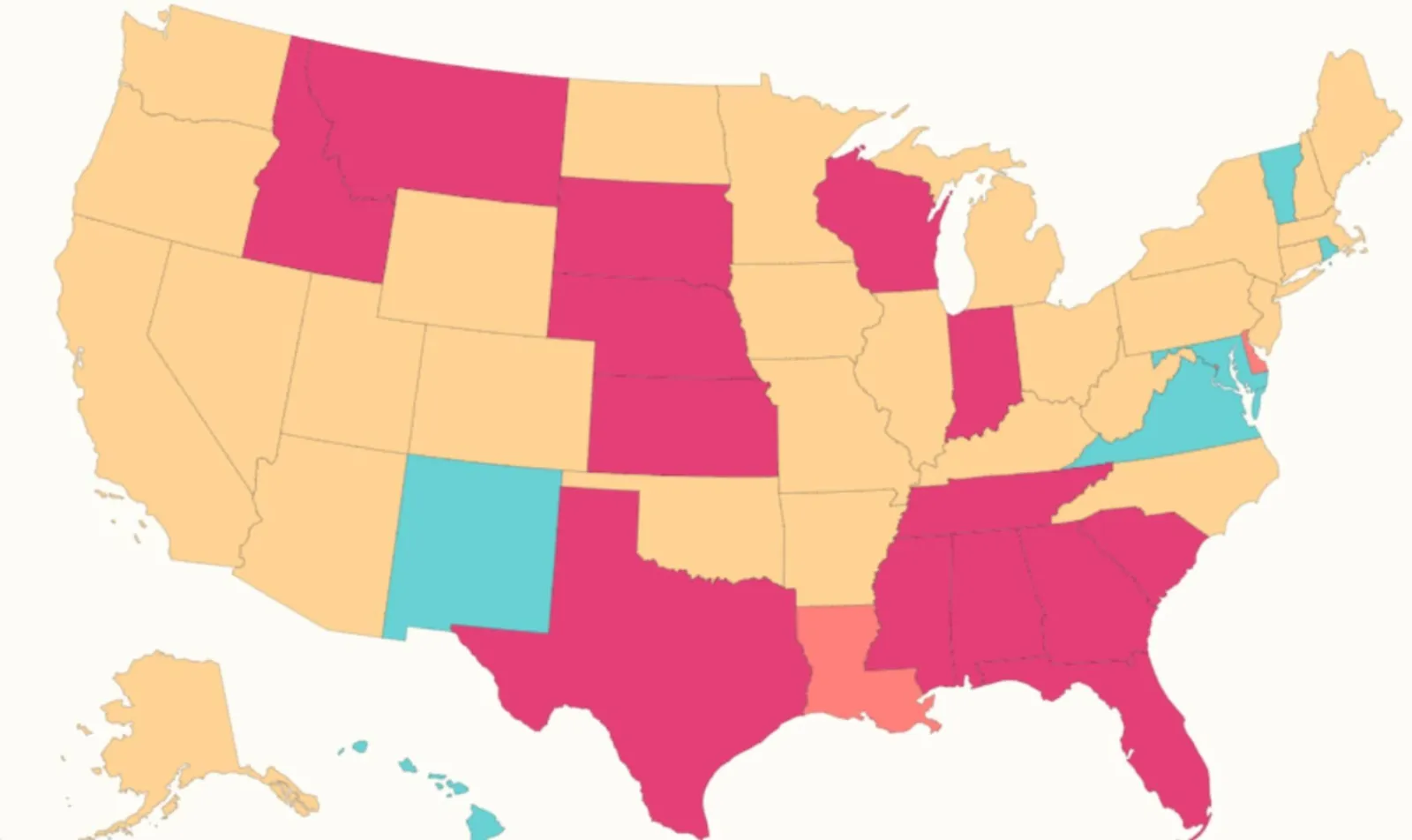
Eight states have opted to provide direct financial aid to SNAP recipients, covering the lapsed benefit to some degree for varying amounts of time. These are Maryland, Delaware, Hawaii, Louisiana, New Mexico, Rhode Island, Vermont and Virginia. The District of Columbia is also making similar provisions.
On Wednesday, Louisiana Governor Jeff Landry authorized $150 million in state funding to go toward providing SNAP benefits to those reliant on them in the state, which is as many as one in five residents.
The same day, New Mexico Governor Michelle Lujan Grisham announced that her government would provide $30 million in emergency food assistance, while New Mexico also approved millions of dollars in support for SNAP recipients.
Vermont also approved $6.3 million on Wednesday to cover SNAP benefits for 15 days and provided $250,000 for food banks.
On Monday, Maryland Governor Wes Moore announced that $62 million was being set aside to cover all November SNAP benefits for Maryland's recipients.
Long queues have been building up at food banks in various states amid the funding lapse, and in total, 28 states have increased funding for food banks to help support SNAP recipients.
Some states—including New York, Oregon and Virginia—have even declared states of emergency to provide funds that would enable state coverage of the benefits.
As of writing, the 14 states that have not implemented any measures to support SNAP recipients are Alabama, Florida, Georgia, Idaho, Indiana, Kansas, Mississippi, Montana, Nebraska, South Carolina, South Dakota, Tennessee, Texas and Wisconsin.
What People Are Saying
Maryland Governor Wes Moore said in a statement on Monday: "One of the first and most basic priorities of governing is to ensure that families do not go hungry. We will continue to do everything in our power to protect our people in these difficult times. But no state can fill the enormous gap created by Donald Trump and his administration. It's time for the federal government to do its job and fully fund food assistance."
Louisiana Governor Jeff Landry said on Wednesday: "Our priorities are specific, we're going to protect the most vulnerable population in Louisiana—which is our kids, disabled and elderly."
Colleen Heflin, a professor of public administration and international affairs at Syracuse University, told Newsweek: "Increasing food bank funds will help many households served by SNAP, but some important groups are likely to be left out. Older adults and those with disabilities, groups that may have transportation and mobility barriers as well as hearing, sight, and cognitive impairment, can find it difficult to get to food distribution centers within tight time constraints.
"In addition, to distribute more food quickly, many food banks will provide prepackaged boxes of food that may contain foods that older adults and those with health issues may not be able to eat because of concerns regarding sodium, sugar, carbohydrates, gluten, or other nutritional concerns. And some groups, such as veterans, often assume that other people that need the food more than they do and often do not seek out the assistance that is available."
She added: "All SNAP recipients are going to face heightened anxiety about their ability to feed themselves and their families due to the instability of this situation, regardless of what state they are living in. The situation is changing is very quickly and only a handful of states have committed to paying out full benefits to the entire SNAP caseload. Clearly, SNAP recipients in these states will struggle less than in states that are less responsive."
James Ziliak, chair in microeconomics and director of the Center for Poverty Research at the University of Kentucky, told Newsweek: "This will help out on the margin, but it is far short of making SNAP recipients whole in terms of their needs. For example, monthly SNAP spending in Kentucky and Oregon are in excess of $100 million, so the emergency funds to food banks only cover less than 5 percent of that gap. More generally, for every meal that a food bank provides, SNAP covers nine meals, and thus emergency food assistance, while critical, falls far short of filling the monthly grocery basket of SNAP households."
He added: "The Trump Administration announced over the weekend that the federal government will cover half of the SNAP benefit for November, and while this is a welcome development over their prior decision to offer no support, the resources are there to cover the full amount and they should exercise that authority to prevent widespread hardship among our most vulnerable families."
What Happens Next
After the Trump administration's update that it will cover some SNAP benefits this month, following judges' orders, it is still unclear how much recipients will receive or when the money will appear on the electronic benefit cards used to buy groceries.
This article contains reporting from the Associated Press.
Update 11/4/25, 9:06 a.m. ET: This article was updated with comment from Colleen Heflin and James Ziliak.
View 0 Comments
Submit Correction
View Editorial & AI Guidelines