
By Aliss Higham
Reporter
0
Share
Newsweek is a Trust Project member
See more of our trusted coverage when you search.Prefer Newsweek on Googleto see more of our trusted coverage when you search.
Across the United States, staffing levels at Social Security field offices are plummeting, according to a new report.
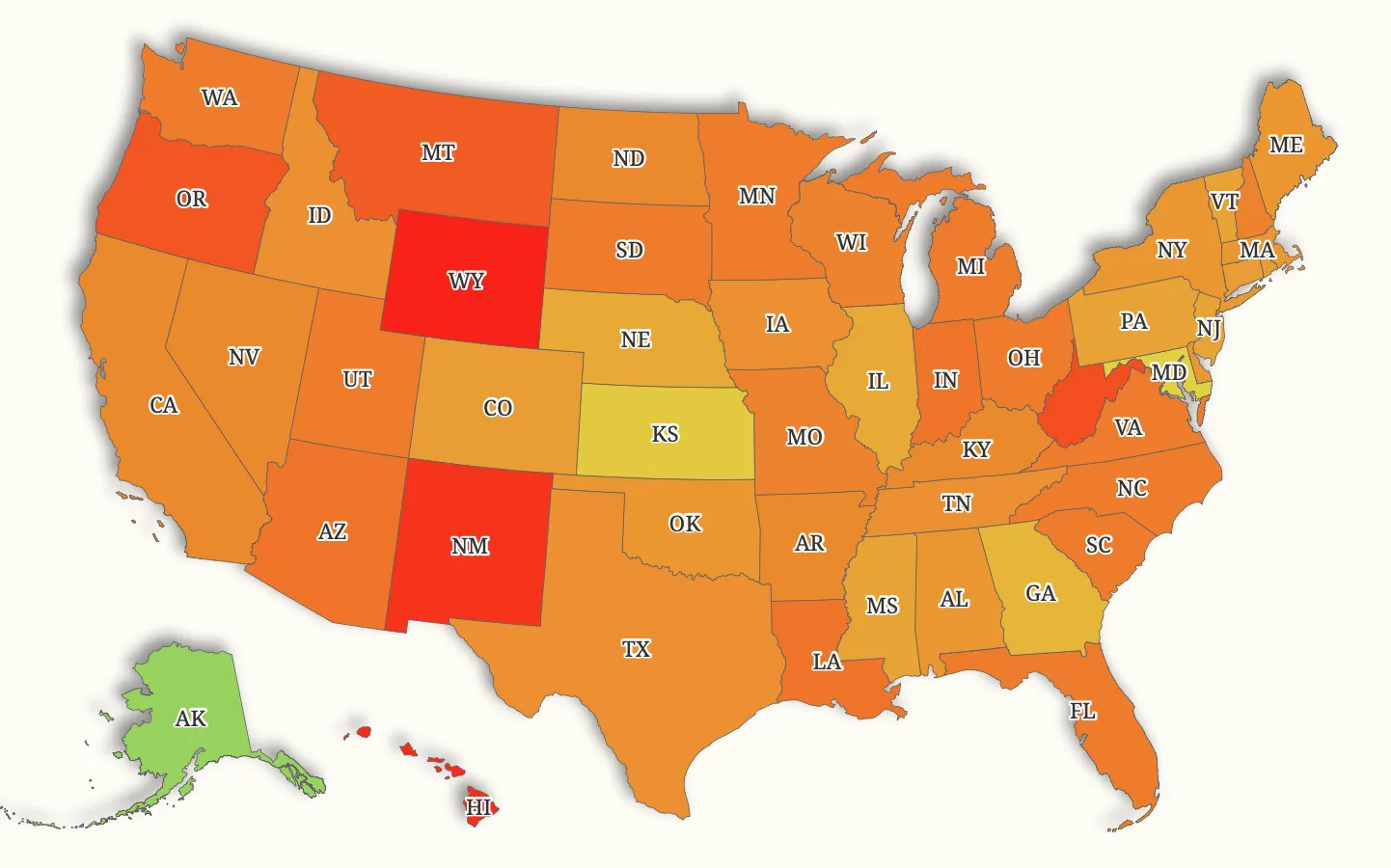
A new analysis by the Strategic Organizing Center (SOC) reveals that communities nationwide have lost 9 percent of their Social Security field office staff over the past year, with some states seeing drops above 20 percent in staffing levels at local offices.
The fallout is tangible for beneficiaries: there are now roughly 4,000 people for every field office worker—a ratio that has climbed 12 percent between March 2024 and August 2025 under the current Trump administration, the report says.
Read More on News
Why It Matters
Social Security provides monthly benefits to over 70 million Americans. Across the country, Social Security offices help people apply for benefits, obtain or replace Social Security cards, and address questions or issues related to their payments. They also assist with updating personal information, such as changes of name or address, and guide individuals through the appeals process if benefits are denied.
Earlier this year, the agency announced plans to streamline its operations, stating it would "reduce the size of its bloated workforce and organizational structure, with a significant focus on functions and employees who do not directly provide mission critical services." As part of this plan, Social Security intends to cut 7,000 staff members, reducing the workforce to 50,000.
Rising Ratios Strain Services
SOC’s analysis, based on data provided to the American Federation of Government Employees (AFGE) Social Security General Committee, measured the number of field office staff relative to the number of Social Security beneficiaries in each state and territory.
The results show there has been reduced staffing at local offices across 47 states, three territories, and the District of Columbia. As of August 2025, the median ratio reached nearly 4,000 beneficiaries per front-line worker.
Some states are feeling the effects more acutely than others. Wyoming experienced the largest staff decrease, with the ratio jumping from one field office worker per 5,814 beneficiaries in March 2024 to 1 per 7,429 in August 2025—a 28 percent increase. Other states where beneficiaries are hardest hit include Hawaii, New Mexico, West Virginia, and Oregon.
In eight states, including Alaska, New Hampshire, and Minnesota, each field office worker now serves more than 5,000 beneficiaries. These soaring ratios signal potential delays in accessing critical services such as retirement benefits, disability claims, and other Social Security programs.
Alaska has by far seen the largest staffing increase at 22 percent, followed by Maryland with 3 percent and Kansas with 2 percent.
The full list of staffing percentage changes across U.S. states is as follows:
- Wyoming: -22 percent
- Hawaii: -21 percent
- New Mexico: -20 percent
- West Virginia: -17 percent
- Oregon: -16 percent
- Montana: -15 percent
- Arizona: -12 percent
- Indiana: -12 percent
- Louisiana: -12 percent
- Florida: -11 percent
- Michigan: -11 percent
- Minnesota: -11 percent
- North Carolina: -11 percent
- Ohio: -11 percent
- South Carolina: -11 percent
- South Dakota: -11 percent
- Utah: -11 percent
- Virginia: -11 percent
- Washington: -11 percent
- Missouri: -10 percent
- New Hampshire: -10 percent
- Arkansas: -9 percent
- California: -9 percent
- Kentucky: -9 percent
- Nevada: -9 percent
- Idaho: -8 percent
- Iowa: -8 percent
- Tennessee: -8 percent
- Texas: -8 percent
- Alabama: -7 percent
- Delaware: -7 percent
- Maine: -7 percent
- Massachusetts: -7 percent
- New York: -7 percent
- Oklahoma: -7 percent
- Illinois: -4 percent
- Nebraska: -4 percent
- Mississippi: -5 percent
- New Jersey: -5 percent
- Pennsylvania: -5 percent
- Vermont: -5 percent
- Rhode Island: -6 percent
- Connecticut: -6 percent
- Colorado: -6 percent
- Georgia: -2 percent
- Kansas: +2 percent
- Maryland: +3 percent
- Alaska: +22 percent
Recent SSA Improvements
The SSA has recently touted improvements to its phone services, following a review requested by Democratic Massachusetts Senator Elizabeth Warren.
An audit by the SSA’s Office of the Inspector General examined the agency’s national 800-number system and found that overall service improved in fiscal year 2025. The review identified no data discrepancies and made no recommendations for changes.
According to the SSA, the average speed of answer remained in the single digits for five months, while call volume increased by 65 percent compared with 2024. The audit confirmed that 68 million callers were assisted through live agents and automated systems, with average wait times falling from roughly 30 minutes in January to about seven minutes by September.
However, about 25 million calls went unanswered due to disconnections, missed callbacks, or cancellations.
What People Are Saying
A spokesperson for the SSA told Newsweek: "Commissioner Bisignano has pledged to have the right level of staffing to operate at peak efficiency and deliver best-in-class customer service to the American people. We have seen significant reductions in wait times in field offices and on the phones, despite the fear-mongering by those with a political agenda.
"Through technology enhancements and strategic staffing decisions, SSA is serving more Americans at quicker speeds, which was just confirmed by an independent audit by the SSA Office of the Inspector General. By expanding our digital offerings and modernizing our systems, more Americans are choosing to resolve their needs online or over the phone."
Jessica LaPointe, president of AFGE Council 220, said in an email sent to Newsweek: "There are 10,000 Americans who turn 65 every day and, on top of escalating medical costs, they face long wait times, limited walk-in services, and less time with real people because Social Security does not have enough front line workers.
"Over the past year, we've heard assurances that services won't be cut, but this staffing data reflects what our members see every day: more beneficiaries than ever before, with not enough staff to serve them and no meaningful hiring."
The SSA said on its planned staffing reductions: "These steps prioritize customer service by streamlining redundant layers of management, reducing non-mission critical work, and potential reassignment of employees to customer service positions. Also supporting this priority is looking for efficiencies and other opportunities to reduce costs across all spending categories, including information technology and contractor spending. SSA is committed to ensure this plan has a positive effect on the delivery of Social Security services."
View 0 Comments
Submit Correction
View Editorial & AI Guidelines