
By Suzanne Blake
Reporter
0
Share
Newsweek is a Trust Project member
See more of our trusted coverage when you search.Prefer Newsweek on Googleto see more of our trusted coverage when you search.
The flu virus is surging across the United States, with positive clinical lab tests up 25.6 percent over the past week, according to the Centers for Disease Control and Prevention (CDC).
Visits to health care providers were up 6 percent for respiratory illness as the flu sweeps across the country, data found.
Why It Matters
The flu presents a high risk to many Americans, especially children and the elderly or those who have preexisting conditions.
Read More on Health
The CDC estimates that there have been at least 7.5 million illnesses, 81,000 hospitalizations and 3,100 deaths from flu so far this season.
...
What To Know
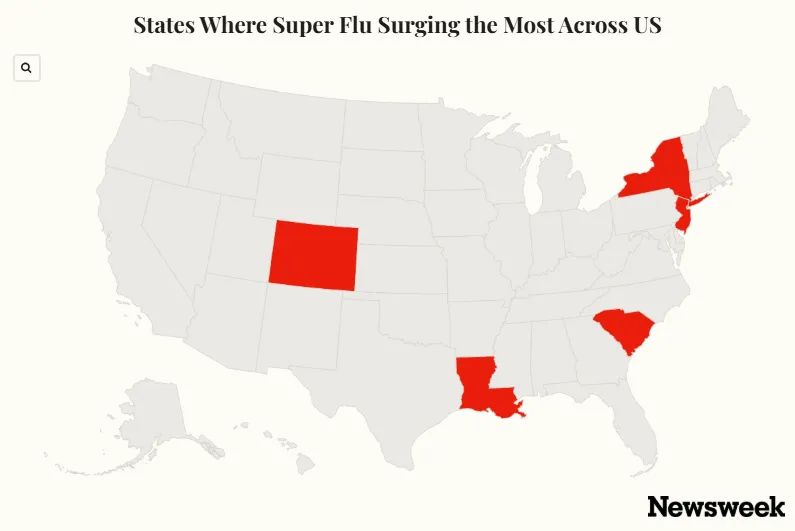
The flu virus hit certain states especially hard over the past week, according to new data from the CDC. Five states were reported to have “very high” influenza levels, showing strong risk for more vulnerable residents. The states with the most noteworthy high testing results were Colorado, Louisiana, South Carolina, New York and New Jersey.
In the past week, five influenza-associated pediatric deaths were reported to CDC, bringing the 2025-2026 season total to eight.
The super flu has been spreading mostly in those areas with more people at risk such as lower vaccination areas, according to Dr. Imamu “Mu” Tomlinson, a physician and the CEO of Vituity. Hospitals and emergency departments in those areas are reporting higher incidences.
“This has been a fairly early flu season by about four weeks,” Tomlinson said. “All signs point to a bigger-than-average flu season. The flu has spiked nationwide. The current strain [H3N2 subclade K] seems to be more active and virulent. “
Health officials have been warning about a surge in a “super flu” as the latest strain is more aggressive than others and leads to higher-than-usual hospitalizations this season.
...
Patients with the super flu reported intense symptoms of high fever, severe body aches, extreme fatigue, persistent cough, sore throat and headaches far beyond a typical flu strain.
Shortness of breath, chest pain, gastrointestinal issues and prolonged weakness can also occur for several weeks.
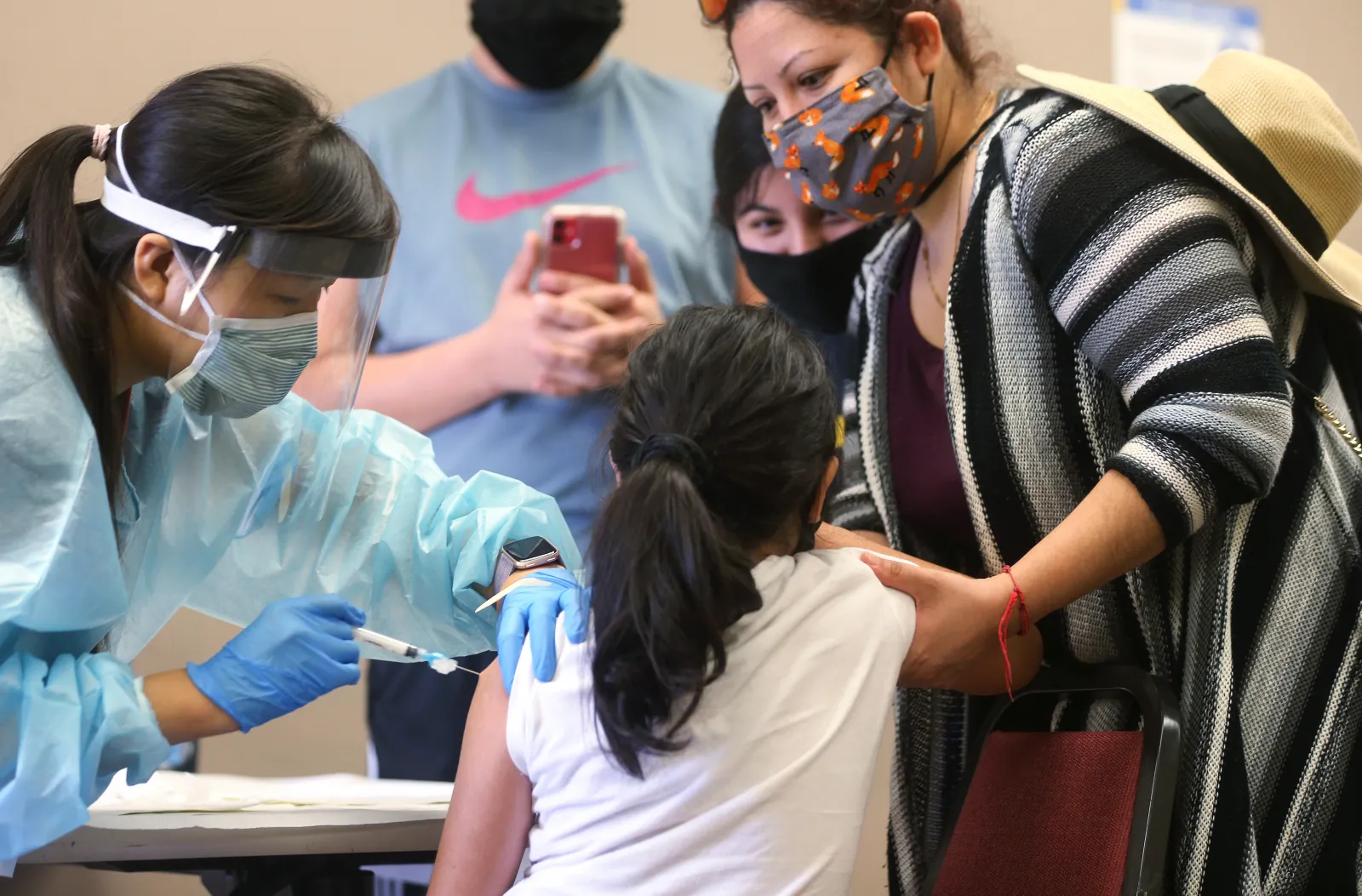
“The question I am consistently asked is whether it is too late to get the flu vaccine. The answer is no. If you have not been vaccinated for the flu this year, please go get vaccinated,” Dr. Dyan Hes, a Miami-based pediatrician at Highline Modern Medicine, told Newsweek.
“Most cases of the flu occur from December through February, with the peak in February. Remember, it takes about two weeks for the vaccine to work. This year, we are seeing the H3N2 strain, subclade K, and although it is not a perfect match to the vaccine, the vaccine prevents hospitalizations and death.
What People Are Saying
Dr. Dyan Hes, a Miami-based pediatrician at Highline Modern Medicine, told Newsweek: “The flu vaccine is available to everyone aged 6 months and up. Older people, young children, and people with immunodeficiencies, are at high risk of serious flu complications. Most children who die from the flu, die from pneumonia.”
Dr. Imamu “Mu” Tomlinson, a physician and the CEO of Vituity, told Newsweek: “Avoid areas with large aggregations or people. Avoid large crowds unless imperative. Wash hands and avoid contact if you have symptoms. Stay well hydrated and good amounts of sleep.”
What Happens Next
Hes urged Americans to get vaccinated against the flu if they aren’t already and added that about 80 percent of all flu-associated deaths in children were among those who were not vaccinated.
“Many people like to say, ‘I had the vaccine and I still got the flu.’ Well, what I say is, ‘the reason that you were not hospitalized and did not die from the flu is because you got the vaccine!’” Hes said.
View 0 Comments
Submit Correction
View Editorial & AI Guidelines