

By Gabe Whisnant
News Editor
0
Share
Newsweek is a Trust Project member
See more of our trusted coverage when you search.Prefer Newsweek on Googleto see more of our trusted coverage when you search.
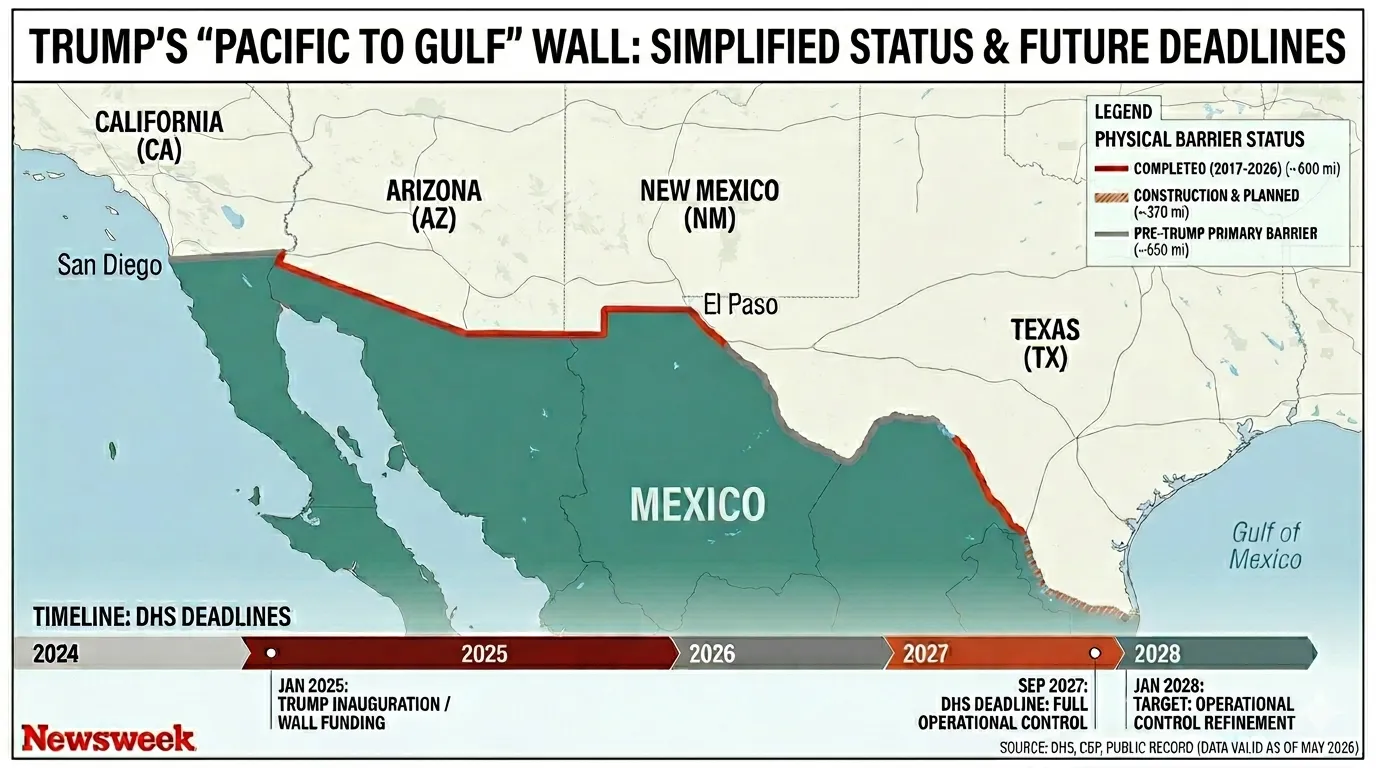
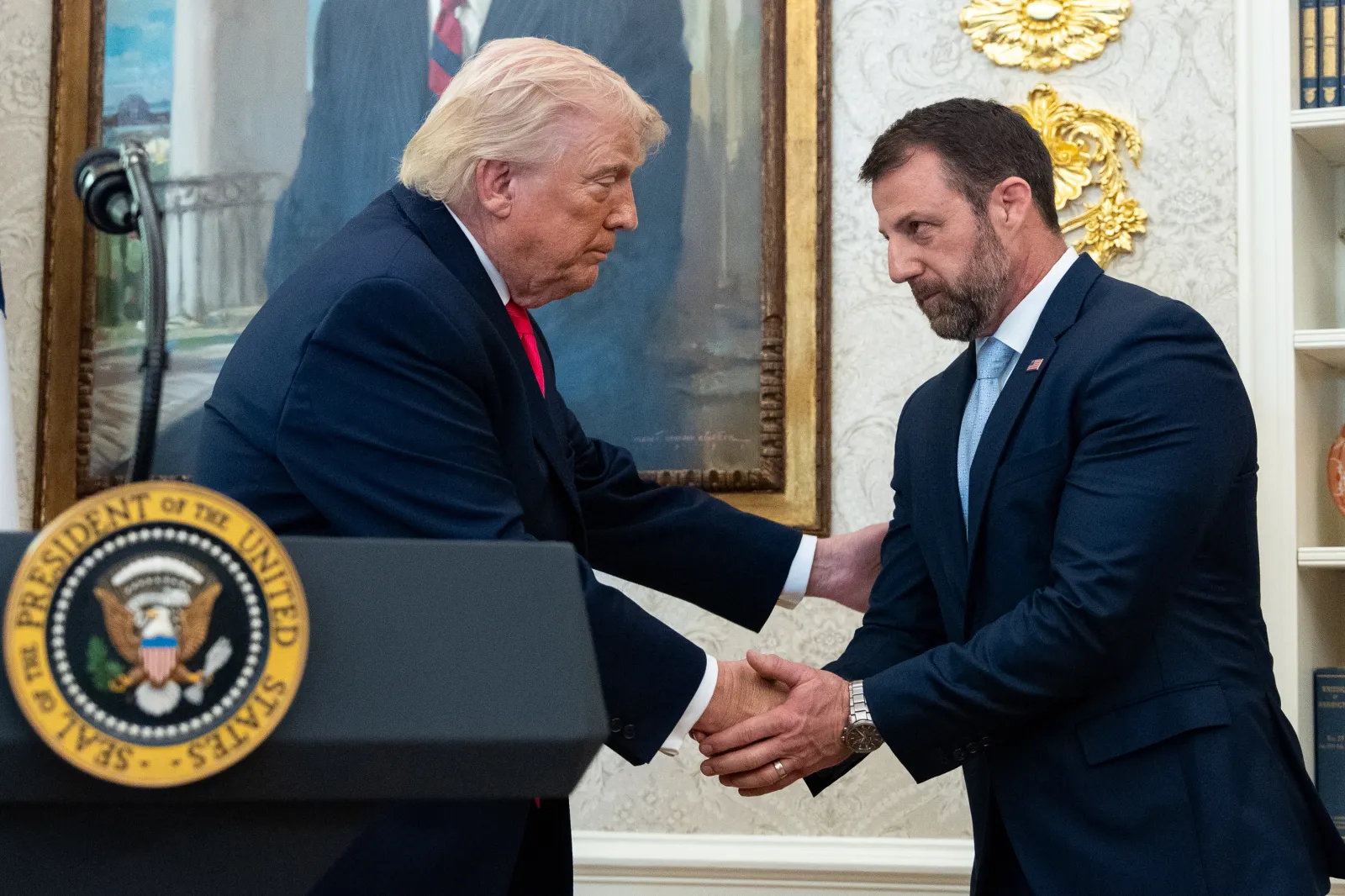
Homeland Security Secretary Markwayne Mullin said Thursday the administration expects to complete a primary southern border wall stretching from the Pacific Ocean to the Gulf of Mexico by next year, outlining an accelerated construction timeline.
The timeline highlights a renewed push to advance one of President Donald Trump’s central policy priorities, as officials argue expanded physical barriers are key to curbing illegal crossings and drug trafficking.
The plan signals increased construction and enforcement activity along the southern border in the coming months, potentially affecting border communities, federal agencies and migration patterns as additional barriers are built.
Read More on Politics
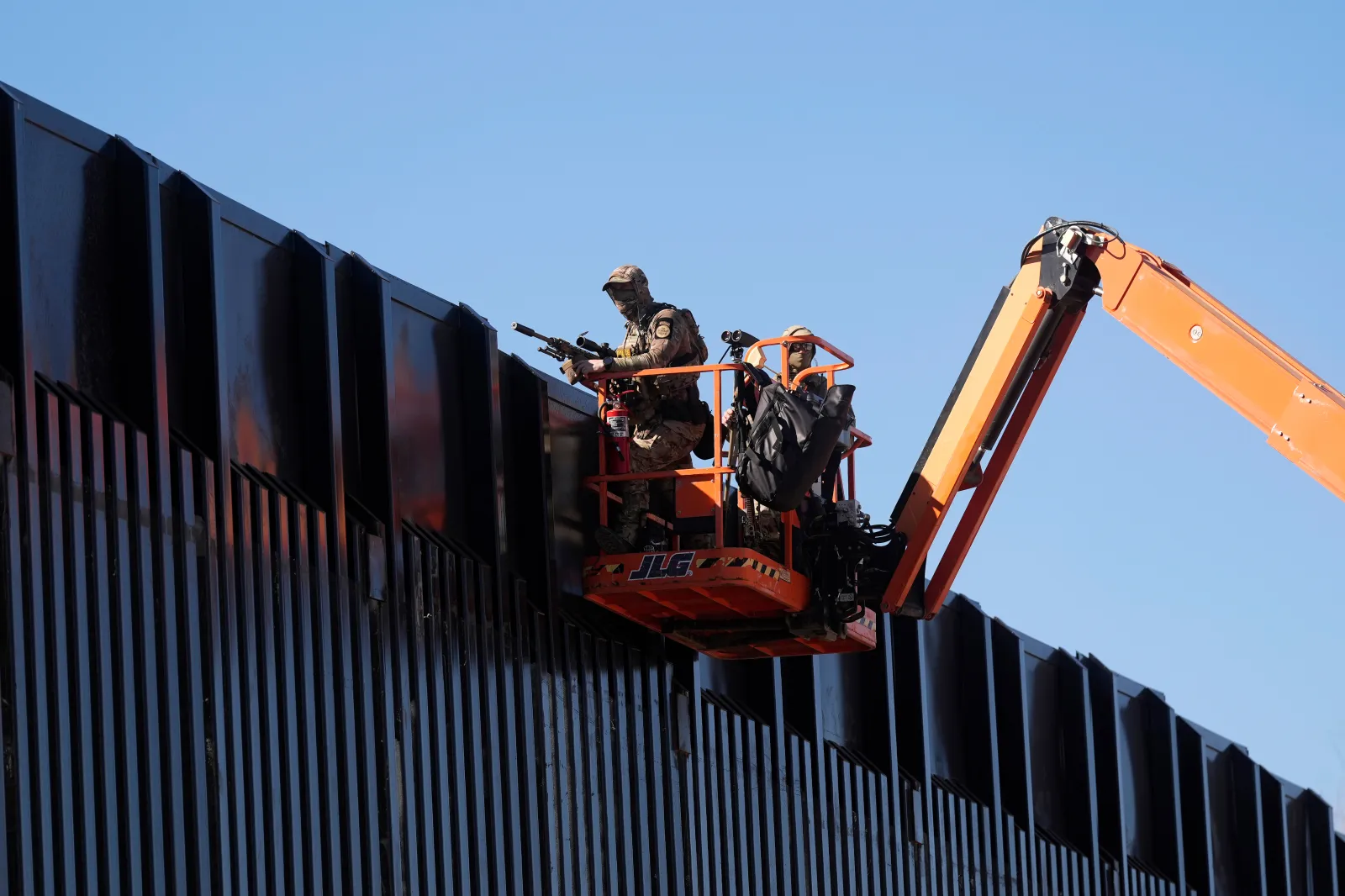
“We expect to have the first primary wall put up, and that's going to go from the Pacific to the Gulf of America by hopefully April or June of next year,” Mullin said on Mornings with Maria, adding that a secondary wall will follow and be completed before the president leaves office.
...
Trump’s Border Wall Push Traces Back to 2016 Campaign Promise
Trump’s push to build a wall along the U.S.-Mexico border dates back to the launch of his first presidential campaign in 2015, when he made the proposal a centerpiece of his immigration platform. At rallies throughout the 2016 race, Trump repeatedly promised to build a “great wall” spanning the southern border and insisted that Mexico would pay for its construction, a pledge that became one of his most recognizable campaign themes.
After taking office in January 2017, Trump moved quickly to turn that campaign promise into policy. Within days, he signed an executive order directing federal agencies to begin planning and constructing a physical barrier along the southern border as part of a broader crackdown on illegal immigration, drug trafficking and transnational crime.
...
The effort soon became one of the defining and most contentious issues of his presidency. The administration faced repeated battles with Congress over funding, including a prolonged government shutdown in late 2018 tied to Trump’s demand for billions of dollars for wall construction. Ultimately, the project was financed largely through U.S. federal funds, including appropriations from Congress and reallocated military spending.
By the time Trump left office in January 2021, hundreds of miles of border barriers had been built or upgraded, though much of the work involved replacing older fencing rather than adding entirely new sections. Government data shows the administration constructed hundreds of miles of barrier systems overall, but only a smaller portion represented new wall in previously unprotected areas.
Despite those limitations, the border wall remains central to Trump’s political identity and immigration agenda during his second term, with the president continuing to emphasize the project. Especially during Kristi Noem's tenure as DHS Secretary, Trump repeatedly framed the wall as a key tool for deterring unauthorized crossings and limiting the flow of drugs and human trafficking across the southern border.
MacArthur Park Drug Raids Highlight Cartel Pipeline, Federal Push
Meanwhile, fedderal agents arrested 18 people Wednesday in a sweeping narcotics enforcement operation centered on Los Angeles’ MacArthur Park, a neighborhood officials say has become a hub for open-air drug activity. Authorities said they seized large quantities of fentanyl and methamphetamine, including about 40 pounds of fentanyl from a single residence, as part of an effort targeting street-level distribution networks tied to organized gangs.
The raids, which involved more than 200 personnel from federal and local agencies, focused on dismantling supply chains linked to the 18th Street Gang and Mexican cartel sources, according to investigators. Officials said distributors allegedly operated out of storefronts along the park’s perimeter, supplying drugs to dealers who sold them openly in the area.
Federal prosecutors framed the operation as part of a broader push to combat trafficking and restore control in high-crime urban zones, arguing that inconsistent local enforcement and so-called sanctuary policies have complicated federal efforts. Authorities have increasingly pointed to areas like MacArthur Park as examples of how domestic enforcement challenges intersect with larger border security concerns, particularly when cartel-linked drugs such as fentanyl enter the United States and are distributed in major cities.
The crackdown comes as the administration emphasizes a more aggressive posture on both border security and interior enforcement, linking cartel activity at the southern border to drug distribution networks operating in U.S. communities.
...
This is a breaking news article. Updates to follow.
View 0 Comments
Submit Correction
View Editorial & AI Guidelines