...

By Alice Gibbs
Senior Reporter
0
Share
Newsweek is a Trust Project member
See more of our trusted coverage when you search.Prefer Newsweek on Googleto see more of our trusted coverage when you search.
The number of Americans living past 100 has soared to more than 80,000, according to new U.S. Census Bureau data—a 50 percent jump in just a decade.
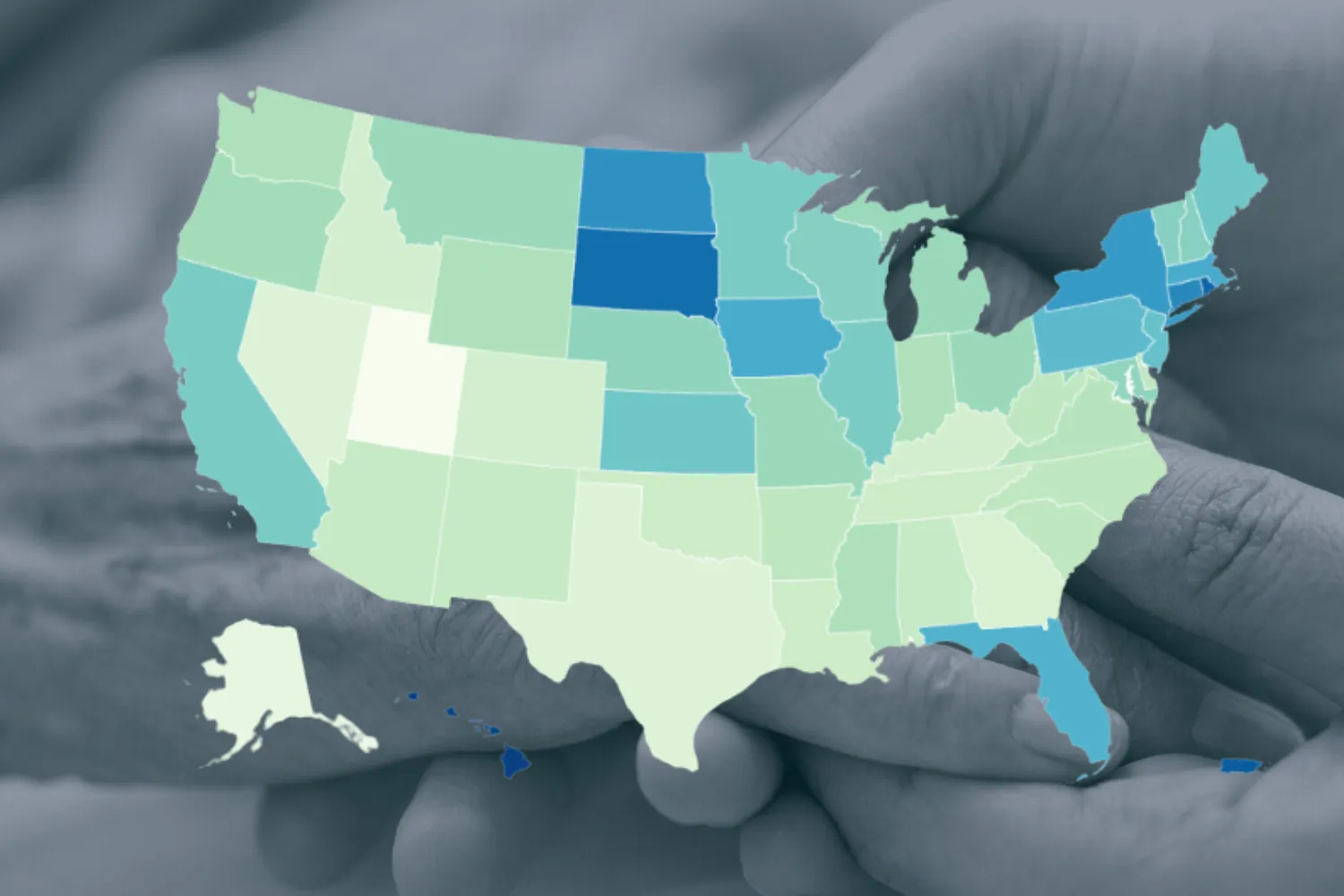
But longevity is not spread evenly across the map, with some states being home to far more residents who have reached triple digits than others.
The Leaders: Hawai‘i and Puerto Rico
Hawai‘i tops the list, with 44.4 centenarians per 100,000 residents—nearly double the national rate.
Read More on Life
Close behind is Puerto Rico, with 41.4 per 100,000.
Both places stand out for their tropical climates, strong cultural traditions, and diets rich in plants and seafood, all traits often linked to healthy aging.
Other high-density states include Connecticut (36 per 100,000), Rhode Island (39.7 per 100,000) and South Dakota (38.7 per 100,000).

By contrast, Alaska (12.8 per 100,000), Texas (15.2 per 100,000) and Utah (10.4 per 100,000) sit at the lower end of the spectrum.
When measured purely by the number of people aged 100 or over, states with large populations lead the way. California has more centenarians than any other state (10,623), followed by New York (6,921) and Florida (6,580). But because their overall populations are so large, their density rankings are lower than smaller states like Hawai‘i or Rhode Island.
A Blue Zone Connection?
Some of the states with the highest concentrations of centenarians also echo traits found in so-called blue zones—places around the world where people regularly live past 100.
Blue zones were initially identified by author and explorer Dan Buettner and a team of researchers as having unusually high concentrations of people who live past 90 or even 100.
The original five blue zones, identified in the early 2000s, were Ikaria, Greece; Loma Linda, California, U.S.; Nicoya Peninsula, Costa Rica; Okinawa, Japan and Sardinia, Italy.
Researchers found that these places shared several lifestyle factors that overlap. These include plant-based diets, daily movement, strong family and community ties and low-stress lifestyles.
Hawai‘i, Puerto Rico and even pockets of California share many of the same lifestyle factors identified in blue zones research. While the Census data doesn’t explain why these states have more centenarians, the overlap raises intriguing questions about how culture, environment and social support systems might help individuals reach the century mark.
The U.S. centenarian population is small but growing rapidly—a trend that will reshape elder care, retirement planning and health care systems in the decades ahead.
Women still make up the majority of centenarians (nearly 79 percent), though the share of men has increased slightly since 2010.
View 0 Comments
Submit Correction
View Editorial & AI Guidelines