
...

By Amanda Greenwood
Associate News Editor
0
Share
Newsweek is a Trust Project member
See more of our trusted coverage when you search.Prefer Newsweek on Googleto see more of our trusted coverage when you search.
A map, produced by PowerOutage—which collects power outage data from over 1,000 utility companies across the world, every 10 minutes—has identified that, at the time of publishing, over half a million people have been left without power in the U.S. as winter weather strikes, downing trees, snapping power lines, and causing widespread outages.
...
What To Know
According to the PowerOutage map, the total number of people in the U.S. without power was over 567,000. The areas worst affected by the power outages (at the time of publishing) are Washington and Oregon:
Read More on News
Washington: The map has recorded 377,000 customers are affected by power outages, which is affecting around 9.7 percent of the population in Washington. At times of publication early Wednesday morning, the counties most affected are: Clark (81,836 customers), Pierce (74,963), Snohomish (60,960), Island (32,541), Thurston (24,652), Grays Harbor (20,270), Lewis (15,472), Lewis (14,817).
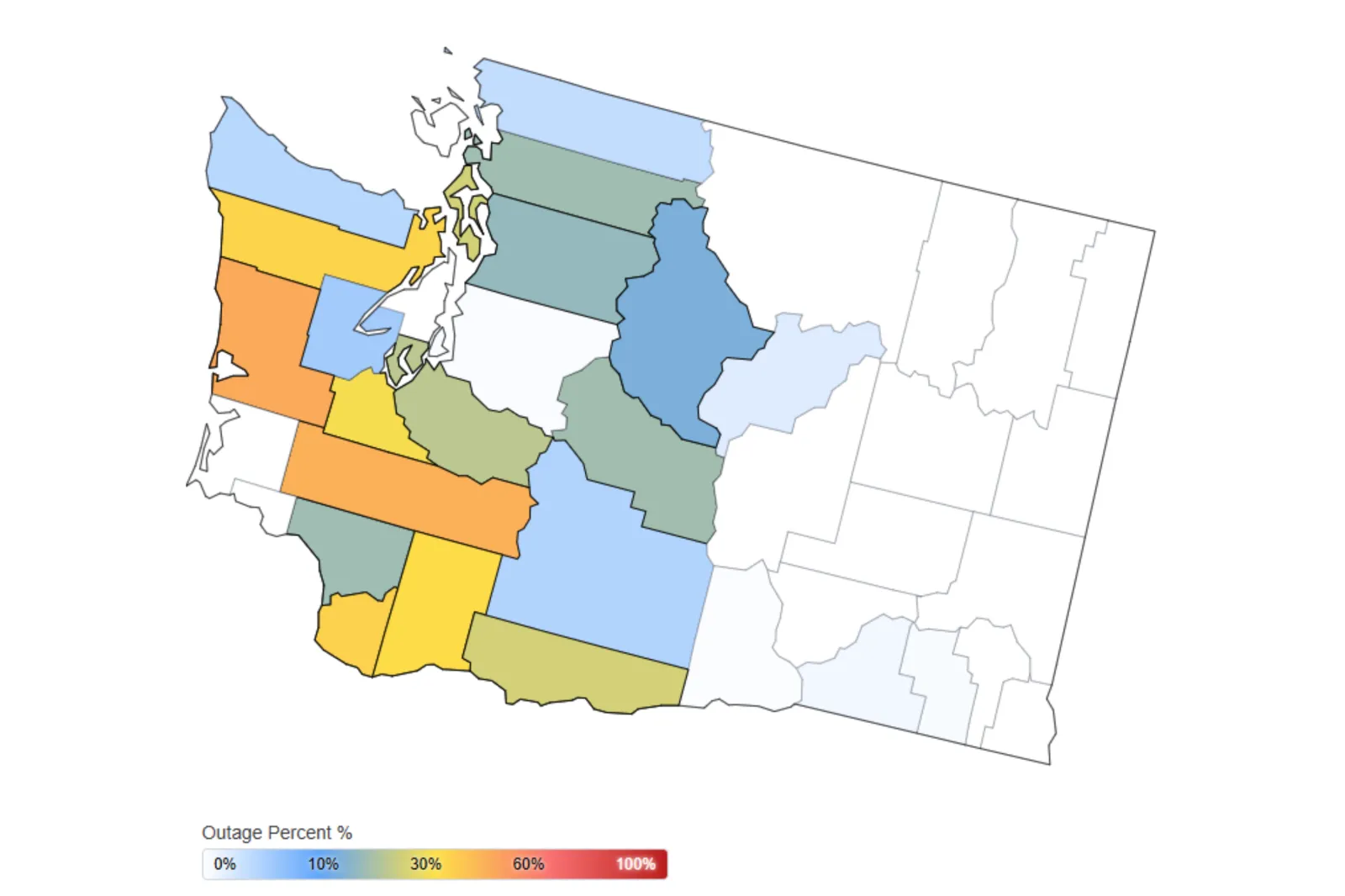
...
Oregon: More than 204,000 outages have affected 13.54 percent of people living and working in Oregon. At times of publication early Wednesday morning, the counties most affected were: Marion (40,599), Clackamas (35,900), Washington (27,561), Clatsop (26,672), Linn (15,109) and Tillamook (14,122).
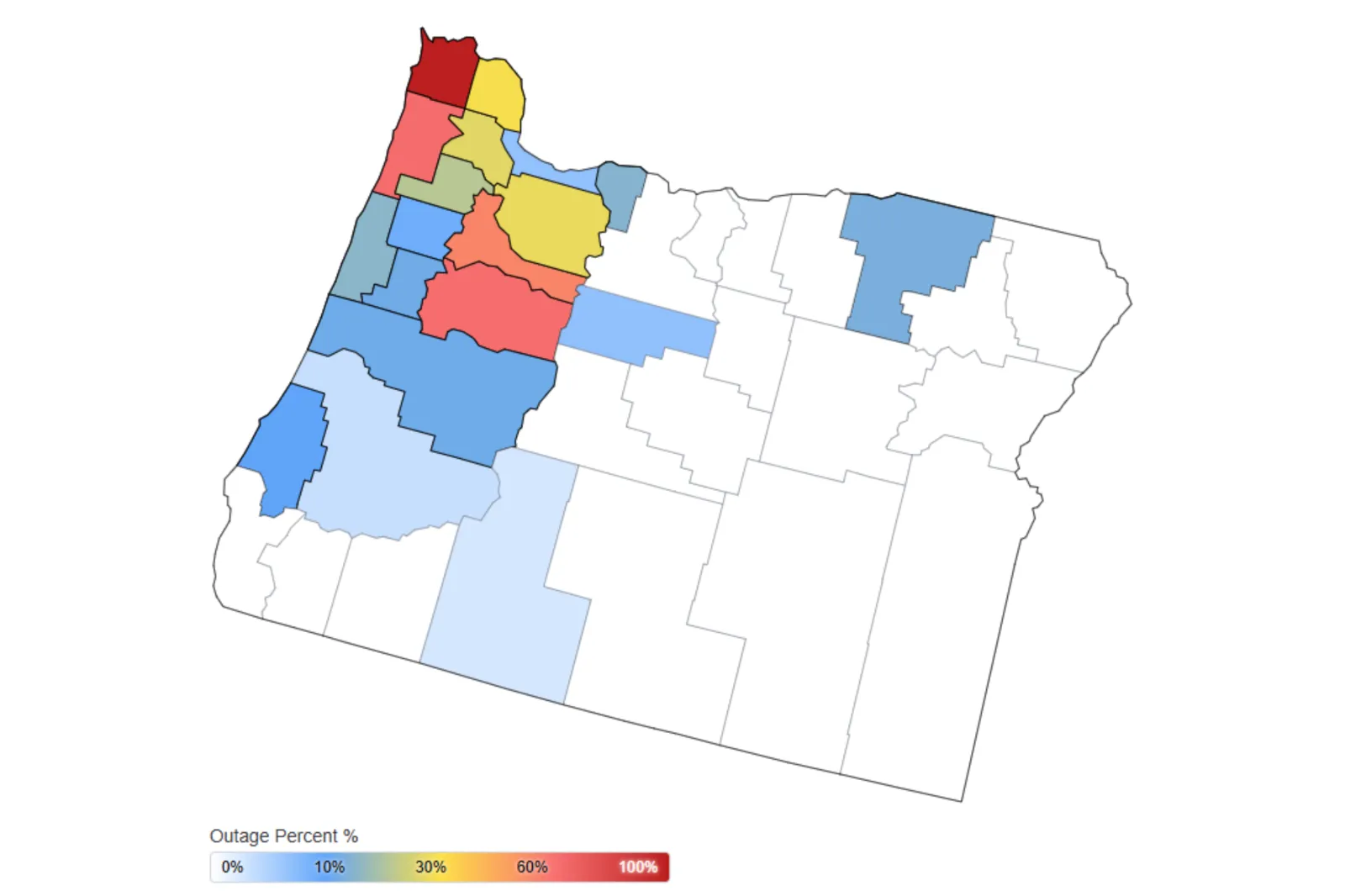
...
Although PowerOutage doesn’t specify the causes of these outages, local news outlets—including Washington-based KOMO 4 News and Oregon-based KOIN—have warned of possible outages Tuesday and Wednesday due to ongoing storms and atmospheric rivers bringing heavy rain, strong winds, and mountain snow to both states.
The Washington State Department of Health has provided guidance for those affected by the power outages, which includes:
- Use flashlights or glow sticks to see, but avoid candles or indoor generators
- Keep a battery-powered radio, a corded phone, and a backup heat source
- Unplug sensitive appliances, like computers, but leave one lamp on to indicate when the power is restored
- Stay at least 30 feet away from downed power lines
- Save water where possible
- Avoid foodborne illness by disposing of suspect food, even if it seems okay
What People Are Saying
Senior Meteorologist at The Weather Channel, Jonathan Erdman, posted: “Now over 534k w/o power in WA and OR. That number has risen over 200k in just 1-2 hours.
What Happens Next
Utility companies will continue to work to restore power to those affected, and residents are advised to follow local utility tracker websites for ongoing updates and advisories.
View 0 Comments
Submit Correction
View Editorial & AI Guidelines