...

By Anna Skinner
Associate News Editor
0
Share
Newsweek is a Trust Project member
See more of our trusted coverage when you search.Prefer Newsweek on Googleto see more of our trusted coverage when you search.
Some lakeside communities could feel as though spring arrives later than normal this year because of a rare weather phenomenon occurring on Lake Erie.
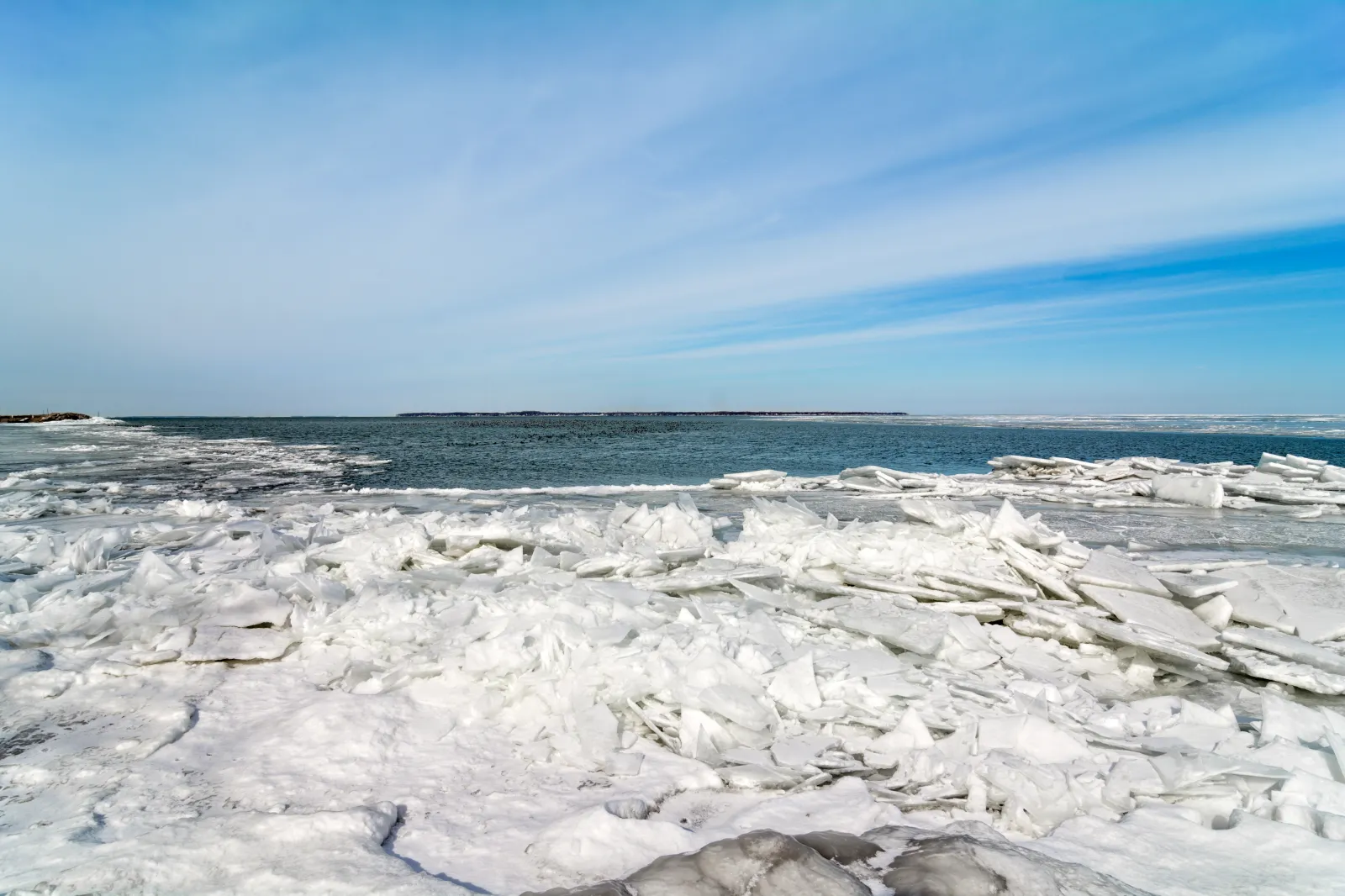
A prolonged stretch of below-average temperatures has intensified ice coverage across the shallowest of the five Great Lakes in recent weeks. Lake Erie is approaching a rare meteorological milestone as more than 95 percent of its waters are now iced over, raising the possibility of a complete freeze-over—an event that has occurred only three times during the era of modern records.
Meteorologists say the near-total freeze has been triggered by an extended period of Arctic cold across the Great Lakes region. From mid-January through early February, temperatures ran 10 to 25 degrees below historical averages, allowing ice to expand rapidly across the lake’s surface. Ice coverage surged from just 2 percent on January 14 to 85 percent one week later during a severe cold blast, with subsequent reinforcing cold keeping coverage near its peak.
Read More on U.S.
Lake Erie is especially vulnerable to rapid freezing due to its shallowness, allowing it to lose heat more quickly than its deeper Great Lakes counterparts.
...
The only times Lake Erie has reached 100 percent ice coverage occurred in 1996, 1979 and 1978, according to AccuWeather data. NOAA data shows the lake typically peaks at around 65 percent in a normal winter, underscoring the rarity of current conditions.
Newsweek reached out to AccuWeather via email for comment.
Which states might see a delayed spring?
Extensive ice on Lake Erie can also have noticeable downstream effects on spring weather, especially for shoreline communities. Thick ice limits heat transfer from the lake into the atmosphere, often prolonging chilly conditions well into March and April and making it feel as though spring arrives later than average. AccuWeather forecasters are already calling for a cooler-than-normal spring around the Great Lakes, noting that lingering ice can suppress early-season warming and reduce the frequency and intensity of spring thunderstorms by keeping the lower atmosphere more stable near the lake.
Four U.S. states border Lake Erie: Ohio, Michigan, New York and Pennsylvania. If ice coverage remains high, these states—particularly shoreline communities within a few miles of the lake, like Buffalo, New York, and Cleveland, Ohio—could see a delay in springtime warmth.
How long will the cold temperatures last?
The NWS Climate Prediction Center anticipates that a warming period will begin across the Great Lakes and much of the rest of the U.S. for the next few weeks, with the Great Lakes region expecting above-average temperatures from February 12 to February 18. This could interrupt the formation of ice and prevent Lake Erie from reaching a freeze-over this year, but the incoming weather pattern's impact on Lake Erie remains to be seen.
Whether the lake can ice over completely may depend less on temperature and more on wind in the coming days. AccuWeather Great Lakes expert Brandon Buckingham said even brief periods of strong wind can break up forming ice or push it into concentrated areas, reopening stretches of open water that prevent full coverage. As a result, forecasters say, the window for reaching 100 percent ice may be narrowing, with a potential mid-February warmup threatening to slow ice growth or trigger melting.
View 0 Comments
Submit Correction
View Editorial & AI Guidelines