
By Hugh Cameron
Reporter
0
Share
Newsweek is a Trust Project member
See more of our trusted coverage when you search.Prefer Newsweek on Googleto see more of our trusted coverage when you search.
Tax season for the 2025 fiscal year is underway, with millions of Americans facing an April 15 federal deadline to submit their returns.
But new research from the personal finance website WalletHub has underscored the significant variations across U.S. states when it comes to respective "tax burdens"—the "share of total personal income that residents pay in state and local taxes"—meaning some taxpayers will see a bigger portion of their paycheck go toward Uncle Sam when it comes time to file.
What To Know
To determine which states experience the highest tax burdens, WalletHub compared each according to property taxes, individual income taxes and sales and excise taxes, basing the state's "total tax burden" on the sum of these as a percentage of the average resident's income.
Read More on News
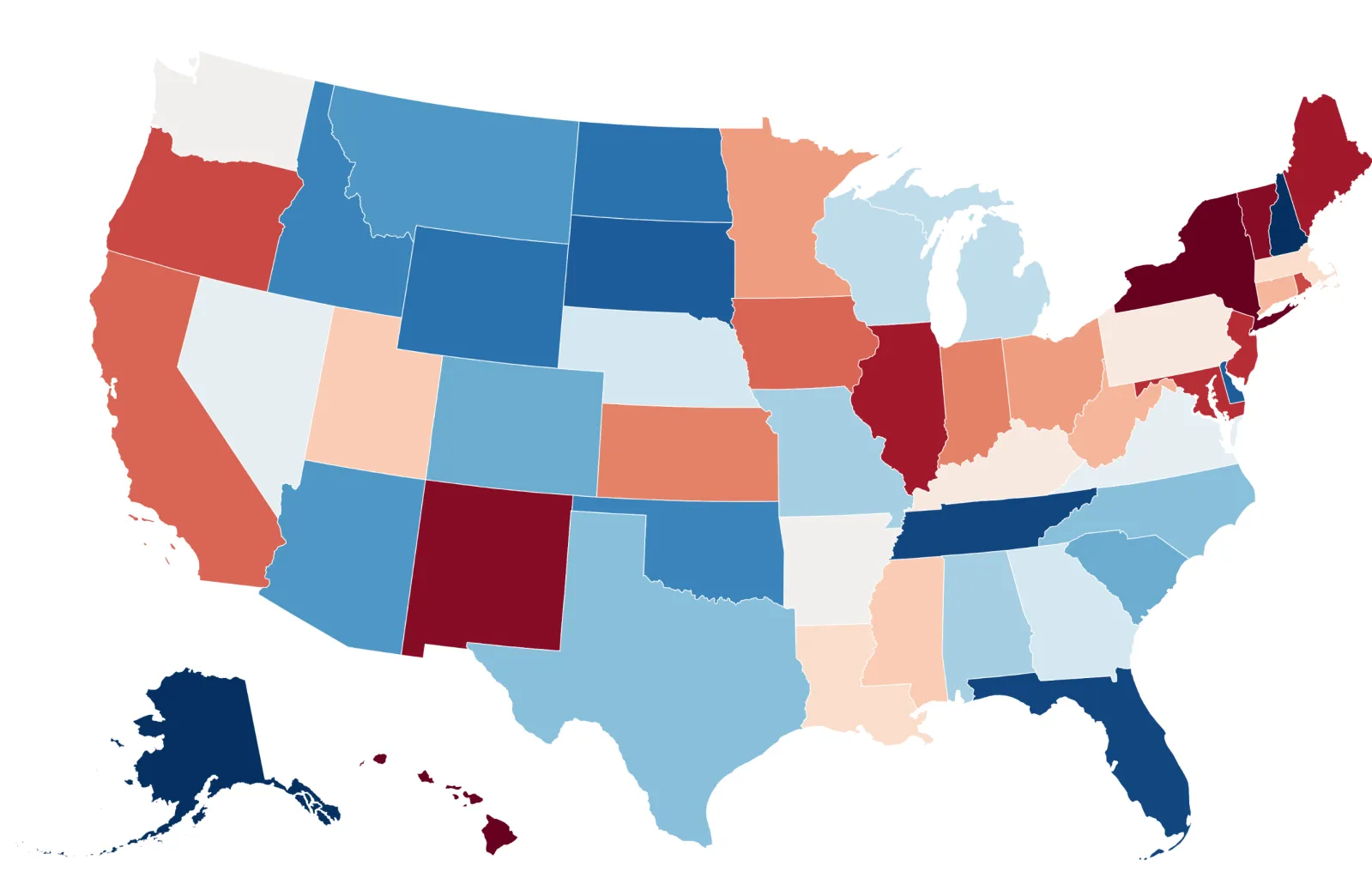
Hawaii topped WalletHub's rankings, with residents paying 13.3 percent of their income to local and state governments. This is made up of 3.2 percent spent on income taxes, 2.6 percent on property taxes and 7.5 percent on sales and excise taxes, the website reported.
New York followed at 12.4 percent, with Vermont (11.1 percent), New Mexico (10.8 percent) and Maine (10 percent) rounding out the top five.
Contrastingly, Alaska enjoys the lowest tax burden of any state in the U.S. at 4.9 percent. This is largely due to the state having no income tax, and relatively low property as well as excise and sales taxes—with residents paying 3.3 percent and 1.6 percent of their income on these, respectively.
In terms of income taxes, Oregon was singled out as the costliest state, with residents paying out 4.8 percent of their earnings. Meanwhile, Alaska—alongside Florida, Nevada, South Dakota, Tennessee, Texas and Wyoming—charge no income tax for residents.
Vermont boasts the highest property taxes, equal to 4.9 percent of residents' income and over three times the 1.4 percent charged in Alabama, the lowest in the nation.
Hawaii's sales and excise tax burden—7.5 percent—also stands out as the highest in the nation. New Hampshire, meanwhile, has the lowest burden in this regard, as the state charges no general sales tax and its excise taxes are equal to under 1 percent of the average income.
What People Are Saying
WalletHub analyst Chip Lupo said: "It's easy to be dismayed at tax time when you see just how much of your income you lose. Living in a state with a low tax burden can alleviate some of that stress. Some states charge no income tax or no sales tax, although all states have some form of property taxes and excise taxes."
What Happens Next
The administration has for months been previewing what it said would be an unusually large round of tax refunds this filing season.
According to analysts at S&P Global, an estimated $335 billion will go out through June, up over 11 percent compared to last year and providing a "tailwind" to the economy in the second quarter.
As of March 20, the Internal Revenue Service reports that the average refund for individual filers is $3,571, up 11 percent from $3,221 a year prior.
View 0 Comments
Submit Correction
View Editorial & AI Guidelines