
By Hugh Cameron
Reporter
0
Share
Newsweek is a Trust Project member
See more of our trusted coverage when you search.Prefer Newsweek on Googleto see more of our trusted coverage when you search.
Debt is rising nationwide and across nearly every lending category, as Americans grapple with recent policy changes as well as broader financial strains toward the end of 2025.
In the third quarter of 2025, 49 states saw a year-over-year increase in average total debt levels, according to a recent study by the online lending marketplace LendingTree.
Why It Matters
Rising debt burdens have continued to weigh on Americans’ finances in 2025, in part driven by broad-based economic struggles and the inability of wages to keep pace with rising costs. Student loan delinquencies have surged following the end of pandemic-era assistance, and millions are behind on payments across nearly every type of credit from mortgages to auto loans.
Read More on U.S.
What To Know
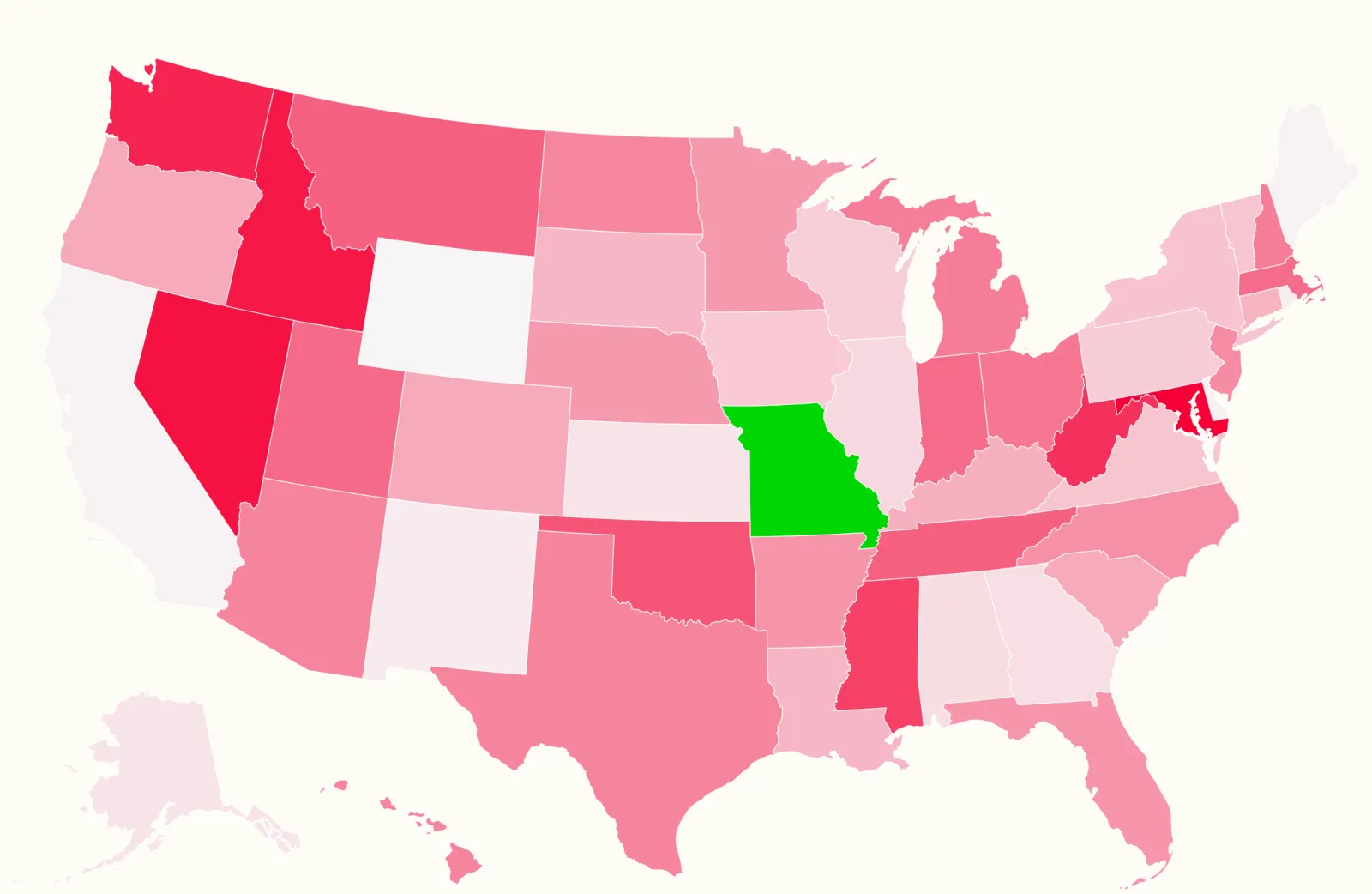
LendingTree’s study involved analyzing around 400,000 credit reports of users in July through September for 2024 and 2025, and researchers found that average total debt grew in every state barring Missouri over this period. The Show-Me State saw average debt fall from $107,045 to $106,691, a decrease of 0.3 percent.
Many states were close behind, with Wyoming registering only a 0.1 percent increase and both Maine and California seeing average total debt levels rise by 0.2 percent.
On the other end, Maryland saw the sharpest increase of 10.3 percent, with average total debt rising to $187,750 from $170,251 year over year, largely driven by gains in mortgage balances and personal loan debts. Many states—located in nearly every part of the country—saw similar increases, with Maryland followed by Nevada (9.6 percent), Idaho (9.3 percent), Washington (8.8 percent) and West Virginia (8.3 percent).
By lending types, Mississippi saw the largest increase (13.1 percent) in average mortgage debt, while Washington led in credit card debt growth with a 9.0 percent gain. Meanwhile, student loan debt saw the biggest increase in Wyoming, jumping 9.5 percent to $7,183 in the third quarter from $6,560 last year.
Consumer debt levels have this year been inflated by the end of pandemic-era student loan forgiveness. According to a recent report from the credit reporting agency TransUnion, student loan delinquencies among rental applicants doubled in early 2025, with the percentage of those 90 days+ past due rising to 32 in May from 15 in January.
What People Are Saying
Matt Schulz, LendingTree's chief consumer finance analyst, wrote: "Whenever debt rises in the U.S., it’s partly a sign of struggle and partly a sign of confidence. I have no doubt that we’re seeing that today, as some Americans feel great and are happy to spend freely, while others are just doing what they can to make ends meet. Given stubborn inflation, still-high interest rates and a tough job market, I tend to believe that most of the debt growth we’re seeing today is because of people struggling, but there’s never just one reason."
LendingTree research analyst Dragana Filipovic told Newsweek: "Several factors are contributing to the rise in debt, including rising living costs and high interest rates. While we can’t predict with certainty what will happen in 2026, it’s reasonable to expect that overall debt will continue to rise if these conditions persist."
Economist Domonkos F. Vamossy, speaking to Newsweek recently about the "highly unusual" increase in consumer debt levels: "The immediate cause, in my view, is likely the expiration of COVID-era protections [stimulus, deferrals] combined with high[er] interest rates and a cooling labor market where young graduates cannot find adequate work. Importantly, this labor weakness is decoupling from corporate health: large employers are currently reporting record profits yet are simultaneously laying off employees to prioritize efficiency and automation.
"The trend is deeply concerning and signals a potential long-term structural issue rather than a temporary blip."
What Happens Next
According to a TransUnion forecast published last week, credit card balances are expected to grow in 2026, though at a slower pace compared with recent years.
Meanwhile, other types of debt such as auto loans are set to continue rising in 2026, while cuts to Medicaid and Affordable Care Act (ACA) plans are expected to push medical debt up significantly next year.
Update 12/17/25, 10:08 a.m. ET: This article was updated with comment from Dragana Filipovic.
View 0 Comments
Submit Correction
View Editorial & AI Guidelines