...

By Hugh Cameron
Reporter
0
Share
Newsweek is a Trust Project member
See more of our trusted coverage when you search.Prefer Newsweek on Googleto see more of our trusted coverage when you search.
Newly published data from personal finance website WalletHub sheds light on how Americans are coping with financial pressures.
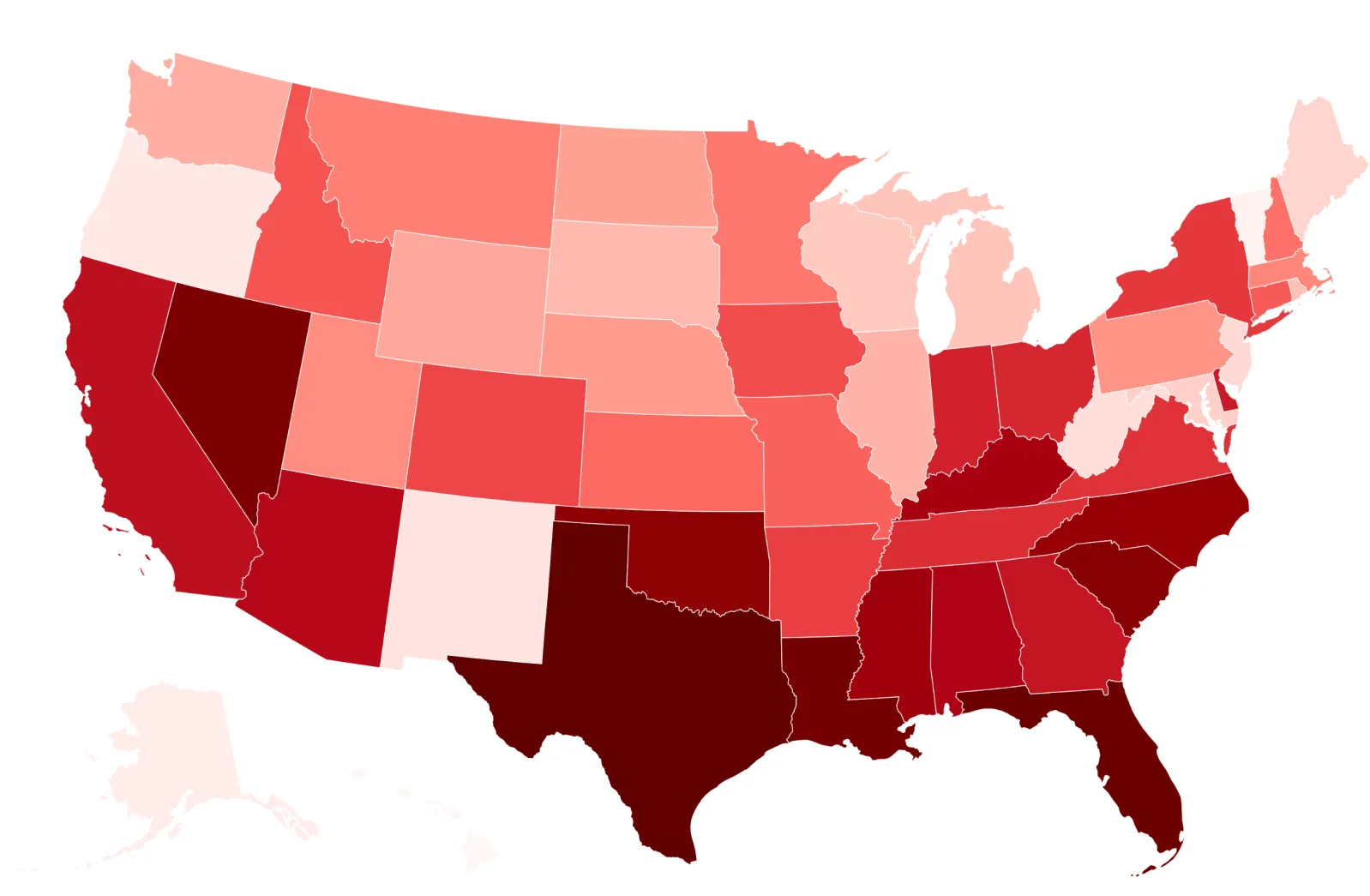
By analyzing each state across several metrics, WalletHub created a ranking of states based on their levels of "financial distress," incorporating factors such as bankruptcy rates, average credit scores and the frequency with which residents search distress-indicating terms like "debt" and "loans."
Why It Matters
Americans have faced several economic headwinds in recent years, including rising living costs, a precarious job market and mounting consumer debt, all of which are taking a toll on personal finances. Add to this recent policy changes and the economic uncertainty surrounding tariffs, the effects of which are now beginning to be reflected in inflation data, as well as the sweeping budget package signed into law earlier this month.
Read More on U.S.
What To Know
WalletHub's rankings and scoring system employed data from the Administrative Office of the U.S. Courts, credit reporting firm TransUnion, Google Trends and its own database. States were analyzed across six key, weighted categories: Credit score (both averages and how these have changed since last year); the share of people with accounts in distress and changes in this since last year; change in the number of bankruptcy filings; as well as the frequency of searches involving the terms "debt" and "loans."
The results of its analysis can be seen on the map below, created by Newsweek.
According to WalletHub's analysis, Texas is home to the highest number of financially distressed individuals. It notes that this result is somewhat surprising, given that the Lone Star State excels across the most widely recognized indicators of economic success, including gross domestic product (GDP) and business activity.
However, Texas' overall score was hurt by the personal finance issues facing many of its residents, as evidenced by low credit scores, as well as high rates and increases in the share of accounts in distress—credit accounts that are in forbearance or have had payments deferred due to financial difficulty.
This is in addition to the frequency at which Texans are searching online for "debt" and "loans," which WalletHub said: "shows that many people are desperate to borrow, despite already owing money."
Following Texas is Florida, another state with a strong economy, but with a high and growing number of accounts in distress. Louisiana is in third place, which WalletHub attributed, among other factors, to frequent searches for "loans," a "reflection of growing concern about personal finances."
The remainder of the states rounding out WalletHub's top 10 are:
4. Nevada
5. South Carolina
6. Oklahoma
7. North Carolina
8. Mississippi
9. Kentucky
10. Alabama
On the other end of the scale, residents of Hawaii, Alaska and Vermont are spared from financial distress, with low scores and favorable rankings across most categories.
What People Are Saying
WalletHub analyst Chip Lupo told Newsweek: "Regional differences in financial distress stem from a mix of credit health, consumer behavior and changes in debt management. Our data shows that states like Texas, Florida and Louisiana have high shares of people with accounts in forbearance or deferred payments, along with low credit scores and rising bankruptcy filings."
Lupo said WalletHub has observed "sharp increases in bankruptcy filings and a growing share of people with accounts in forbearance or deferred payments." This trend, he said, reflects "the lingering impact of inflation and economic uncertainty on household finances."
Update 7/16/25, 9:49 a.m. ET: This article was updated with comment from Chip Lupo.
View 0 Comments
Submit Correction
View Editorial & AI Guidelines