
By Aliss Higham
Reporter
0
Share
Newsweek is a Trust Project member
See more of our trusted coverage when you search.Prefer Newsweek on Googleto see more of our trusted coverage when you search.
A major tax package signed on July 4 is set to deliver new deductions to millions of Americans, but residents in several states and Washington, D.C., won’t see the same savings on their state returns.
Why It Matters
The One Big Beautiful Bill Act (OBBBA) introduced wide-ranging tax changes for seniors, service workers, car buyers and others.
Read More on U.S.
Among its major provisions are an expanded deduction for older Americans; a rule allowing service workers earning under $150,000 to exclude up to $25,000 in tip income from federal taxes; and a new exemption from overtime pay for up to 250 hours. Car buyers earning less than $100,000 can also deduct interest on auto loans up to $10,000.
But state tax systems do not automatically match federal rules. While many start with the Internal Revenue Code as a foundation, each state decides for itself which federal updates to adopt, and when. As a result, some residents will benefit on their federal returns but see no equivalent changes on their state filings.
Where the Federal Changes Will Not Apply
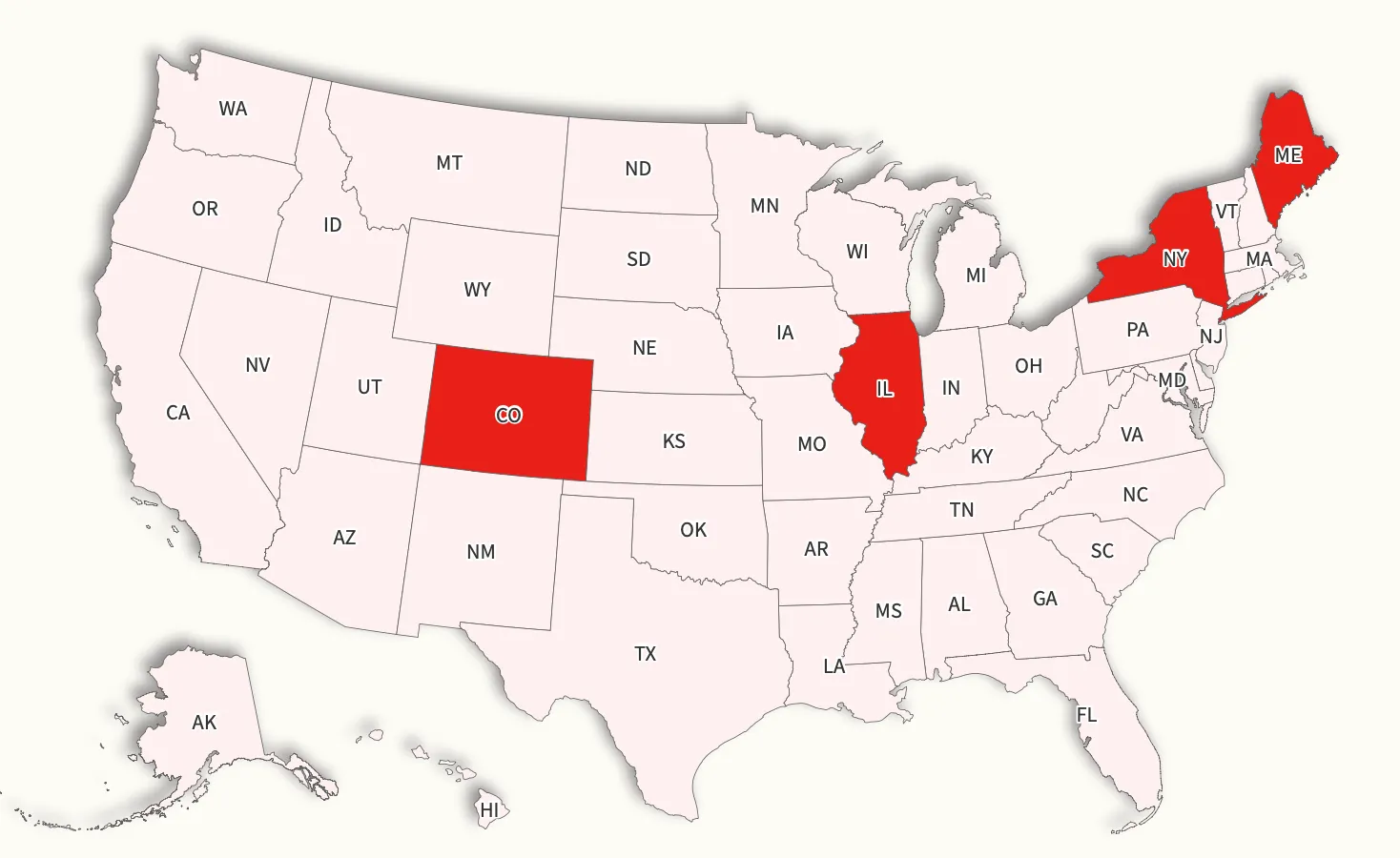
Several states and Washington, D.C., have already acted to keep key parts of the OBBBA out of their own tax codes, at least for now. Their decisions mean that taxpayers will not receive state-level versions of the new federal breaks, but all relevant taxpayers will be eligible to claim them on their federal tax returns.
District of Columbia
D.C. has temporarily blocked multiple OBBBA provisions and made the action retroactive to January 1, 2025.
Under an emergency amendment, the district is suspending the higher standard deduction, the charitable write-off for non-itemizers, the qualified small business stock exclusion, the “no-tax-on-tips” rule, the “no-tax-on-overtime-pay” rule, the car loan interest deduction, and the extra $6,000 senior deduction.
The emergency measure lasts 90 days, with a planned 225-day extension. Making any of these changes permanent would require the full legislative process.
“The District of Columbia is not alone in assessing the costs of OBBBA conformity, with lawmakers across the country evaluating the trade-offs associated with adopting or decoupling from key provisions of the reconciliation act,” the Tax Foundation wrote.
Colorado
Colorado has rejected the no-tax-on-overtime provision. A new line on the state tax form—“Excess federal deduction for overtime pay”—will require taxpayers to report the federally excluded amount and add it back on their state return.
New York
New York will continue taxing both tips and overtime. New codes on its IT-225 form—“Add-back of exempt tip income” and “Add-back of exempt overtime pay”—will require taxpayers to reverse the federal benefit.
Illinois
Illinois has not adopted the tip or overtime exemptions. The state is expected to update Schedule M so that taxpayers add back any federally exempt tip or overtime income.
Maine
Maine has rejected multiple OBBBA provisions, including the extra senior deduction and deductions for car loan interest, tips and overtime.
View 0 Comments
Submit Correction
View Editorial & AI Guidelines