
...

By Marni Rose McFall
Reporter
0
Share
Newsweek is a Trust Project member
See more of our trusted coverage when you search.Prefer Newsweek on Googleto see more of our trusted coverage when you search.
Texas is facing increasing demands for the construction of large data centers, threatening vital energy resources.
More than 480 large data centers have requested to connect to the Electric Reliability Council of Texas, Texas's main electricity operator, through 2032, according to the Houston Chronicle, citing data from ERCOT.
Altogether, those data centers are seeking over 418 gigawatts of electricity from the ERCOT grid. That comes out to nearly five times ERCOT’s record power demand of 85.8 gigawatts, which was set during a record-breaking heat wave in the summer of 2023, according to the Chronicle.
Read More on News
A spokesperson for ERCOT told Newsweek via email: "The scale and pace of requests from newer data centers, particularly those supporting AI workloads, represent a significant increase compared to historical large load requests."
The report comes as the race to develop artificial intelligence grows, and these technologies continue to rapidly reshape modern life. But concerns about data centers and their impact on nearby communities are mounting, and many are calling for stronger regulations, including Texas Governor Greg Abbott.
On Tuesday, Abbott released a series of regulatory recommendations on data centers to be passed in the 2027 session, as the Lone Star State continues to grapple with an influx of artificial intelligence infrastructure.
In response to a request for comment, Abbott's office directed Newsweek to a press release, where the governor said: "Data centers must operate in ways that reduce costs for residential electricity customers, do not drain water needed for our communities, and take into consideration the needs of our neighborhoods."
...
Where Texas Is Facing the Greatest Data Center Demands
The 10 counties in Texas facing the greatest data center demands are Ellis, Johnson, Dallas, Mitchel, Scurry, Cameron, Harris, Hill, Williamson and Tarrant, according to the Chronicle.
There are 29 requests for Ellis County, totaling 23.9 thousand megawatts of power capacity. Johnson follows with 12 requests, totaling 19.3 thousand megawatts, and Dallas is just behind with 27 requests totaling 18.9 thousand megawatts.
The report states that grid experts believe many of the proposed facilities are unlikely to be built due to constraints in grid equipment and AI chips.
It also states that ERCOT has received 500 requests from large data centers to connect to the grid. This includes 12 centers that are currently running. Thirty-four of Texas's 254 counties have received five or more requests.
A spokesperson for ERCOT told Newsweek: "ERCOT's interconnection review process is focused on ensuring the transmission system can reliably serve large load requests.
"ERCOT operates a competitive wholesale electricity market, and as with all load growth, the market is expected to respond to increased demand signals over time.
"Beyond transmission and infrastructure, ERCOT is also evaluating factors such as project maturity, site readiness, financial commitment, and system stability—all of which are central to the new Batch Zero framework."
Abbott has proposed a series of measures to ensure that data centers bear the costs and impacts of their rapid expansion in Texas, rather than shifting them onto residents and taxpayers. His recommendations would require new data centers to add power-generation capacity to the grid and to pay for their own grid interconnection and infrastructure upgrades, helping reduce strain on the state's electricity system.
Abbott also called for greater environmental accountability and transparency, including mandatory use of closed-loop water systems, annual reporting of electricity and water consumption, and adoption of best-practice standards to address community concerns such as noise. Additionally, he proposed ending sales tax exemptions and other incentives for data centers, arguing that these benefits are outdated and no longer necessary.
Where Could Data Center Bans Come in the US?
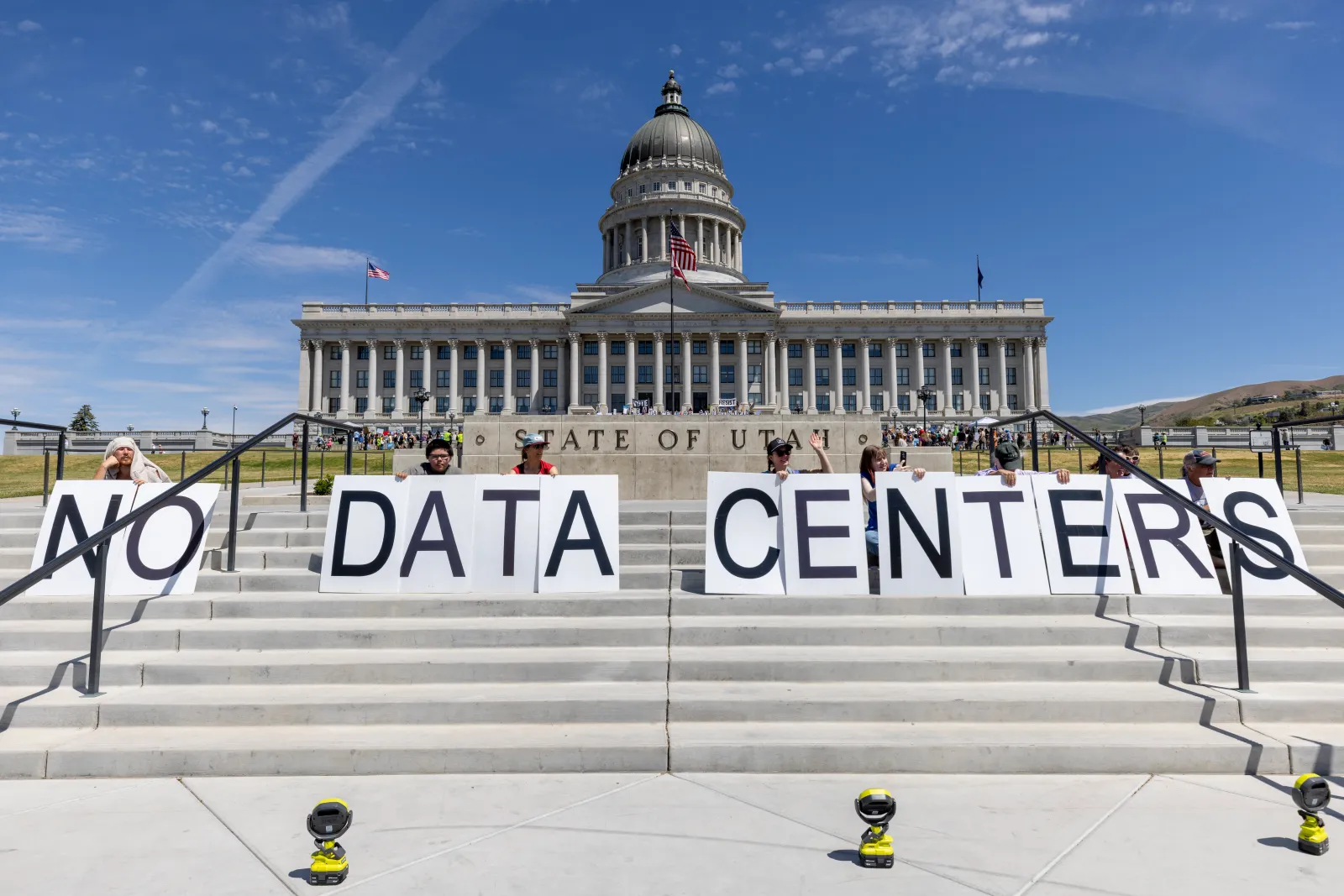
There is a growing backlash toward data center construction sweeping across the U.S. These facilities require massive amounts of water and electricity, straining local energy grids and resources.
A recent Gallup poll found that 70 percent of Americans opposed building AI data centers in their communities.
Environmental activist Erin Brockovich has amplified public scrutiny by launching a crowdsourced tracker showing more than 50 data centers under construction—many in drought‑prone regions. More than 6,600 people have submitted concerns, reflecting rising anxiety over water consumption, energy demand, land use, noise and electronic waste.
Monterey Park, California, has become one of the first cities to enact a full ban after an overwhelming 86 percent of voters supported the measure. Several Georgia cities have already taken similar steps, and many more municipalities, including in New Jersey, are preparing to follow suit.
Dozens of communities nationwide have paused development through temporary moratoriums, including Denver, Oklahoma City, Tulsa, and multiple towns in Illinois and Michigan. According to Interconnected Capital’s tracker, more than 60 moratoriums are currently active.
Sentiment toward data centers is turning sharply. A new Heatmap Pro survey shows 71 percent of Americans now oppose having one built nearby, a dramatic rise from just months earlier.
With concerns continuing to escalate, some states have introduced reporting requirements and long‑term utility contracts to protect residents, but many communities argue these safeguards don’t go far enough.
Which States Offer the Best Tax Breaks for Data Centers?
States are offering enormous tax incentives to lure data‑center development, even as many communities push back against the industry’s rapid expansion.
According to the Good Jobs First Subsidy Tracker, 16 states awarded 251 tax credits or subsidies to data‑center projects between 2020 and 2026, with Washington and Texas accounting for the overwhelming majority.
Washington issued more than 120 awards, Texas roughly 86, while states like Arizona, Utah, Wisconsin, Nebraska, Georgia, Wyoming, Ohio, Nevada and Indiana offered far fewer.
Despite issuing fewer overall deals, Indiana provided the single largest subsidy package—an estimated $8.2 billion for Amazon Data Services.
Other major "megadeals" included $1 billion from Oregon to Amazon; $891 million from North Carolina to Apple; and hundreds of millions to Meta in Texas and Georgia.
Meanwhile, Google's parent company, Alphabet, received $170 million in Indiana, while Microsoft accumulated dozens of smaller awards in Washington.
These incentives coincide with the rise of major data‑center hubs. Virginia remains the nation’s dominant cluster, while Texas, California, Ohio, Arizona, Georgia and Utah have emerged as fast‑growing centers for AI and cloud infrastructure.
Together, the top 10 states house nearly 60 percent of all U.S. data centers.
Update, 06/12/26 04:39 a.m. ET: This article has been updated with comment from ERCOT and Abbott's office.
View 0 Comments
Submit Correction
View Editorial & AI Guidelines