
By Jordan King
Reporter
0
Share
Newsweek is a Trust Project member
See more of our trusted coverage when you search.Prefer Newsweek on Googleto see more of our trusted coverage when you search.
Mark Carney is set to make an appearance Alberta for Canada Day on Tuesday, making a symbolic visit to the oil-rich province as his government seeks to ease long-running tensions with the West and push back against the movement for Alberta independence.
The Canadian prime minister will deliver remarks at a local celebration in Edmonton, Alberta, at around 6:30 p.m. local time, according to his official itinerary, a move that The Canadian Press described as “rare” and argued could be seen as a symbolic gesture aimed at demonstrating the province's importance to the federation.
It comes after recent weeks of outreach to Alberta, including backing plans for a new oil export pipeline and acknowledging that many Albertans have felt alienated by previous federal governments.
Read More on News
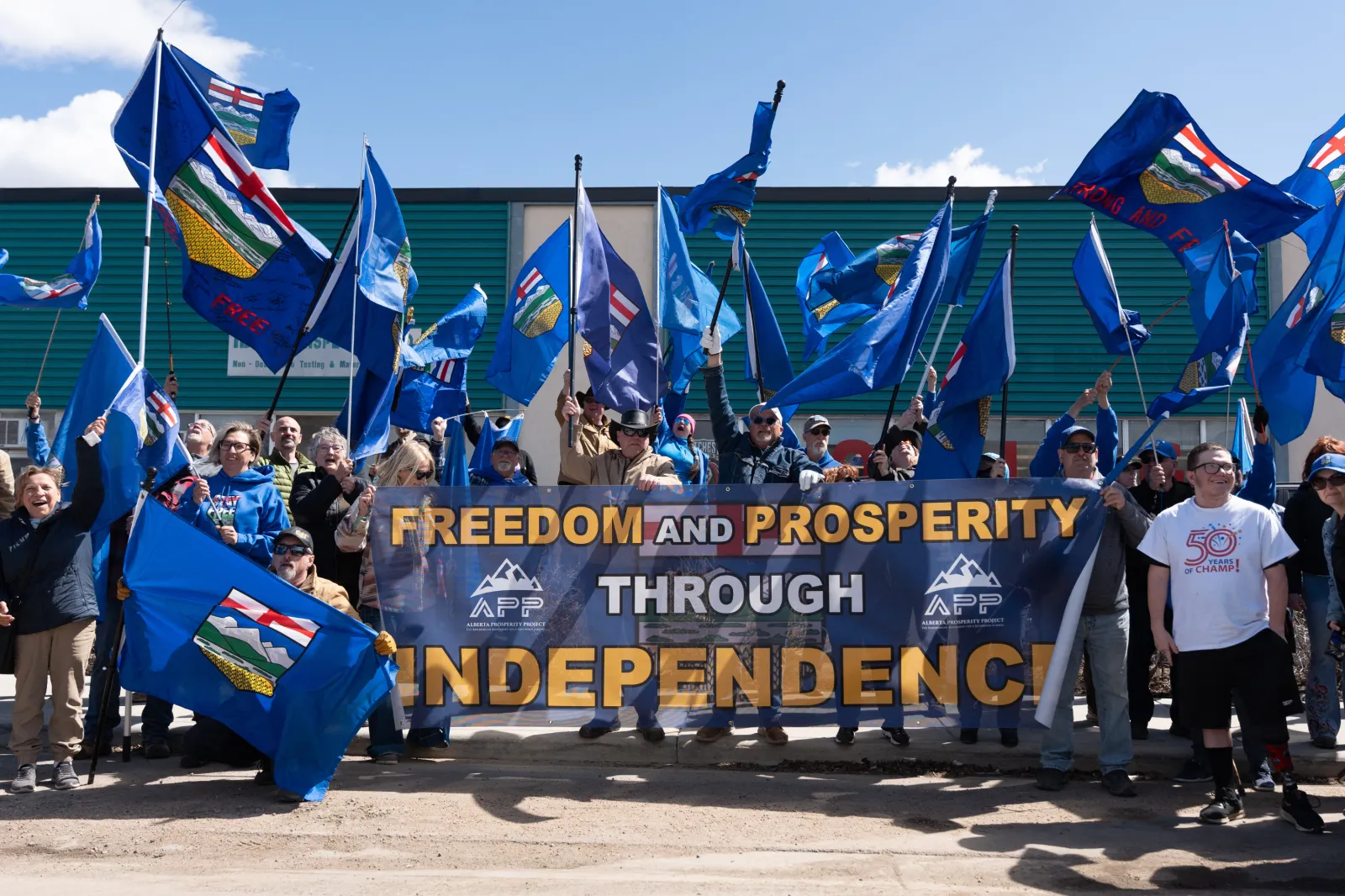
In May, Premier Danielle Smith announced in May that Albertans will vote on October 19 on whether the province should remain in Canada or begin the process toward a second, binding referendum on independence, following a court ruling that derailed a citizen-led separation petition.

...
Carney has repeatedly pushed for Alberta to remain part of Canada. Responding to the province's planned referendum in May, he said that "the best place for Alberta is in Canada" and argued that his government was focused on building "a Canada that works."
On Monday, in Carney’s latest Forward Guidance video, he made the case for expanding Canada's energy infrastructure. While he did not explicitly mention Alberta, it was possibly a nod to the province’s long-running disputes with Ottawa over oil and gas policy, an issue that has fueled support for independence.
In the address, Carney argued that Canada must "build again" and take greater control of its own energy supply as global trade and geopolitical tensions reshape the international economy.
Why Carney Chose Alberta
Carney's Canada Day visit comes as his government tries to advance one of its most significant energy initiatives: a proposed new oil pipeline linking Alberta to Canada's West Coast.
The project, backed by Carney and Smith, is intended to carry more than one million barrels of oil a day to Pacific export terminals, giving Canadian producers greater access to Asian markets and reducing their reliance on the United States, according to Canadian news outlet Global News.
The proposal has become a centerpiece of Carney's strategy to strengthen Canada's energy security and economy amid shifting global trade patterns.
The pipeline also represents an attempt to address one of Alberta's longest-running grievances with Ottawa.
For years, successive provincial governments have argued that federal environmental rules and delays to major infrastructure projects have restricted the province's ability to export its oil, fueling resentment toward the federal government and, for some Albertans, support independence.
By backing the pipeline, Carney could be trying to demonstrate that his government is willing to work with Alberta on projects the province considers vital to its economic future.
Related Story
Support for Alberta Separatism Falls Despite Referendum: Poll
What Is Alberta Voting on?
Alberta's referendum on October 19 will ask voters whether the province should remain part of Canada or whether the provincial government should begin the constitutional process required to hold a future, binding referendum on independence. The vote follows Smith's decision in May to add the separation question to a wider package of referendum proposals after a court ruling temporarily halted a citizen-led petition backed by the separatist group Stay Free Alberta.
Smith has repeatedly said she does not support Alberta leaving Canada but has argued that Albertans should have the opportunity to decide the province's future. She has said her government would respect the result of the non-binding vote, which would not itself trigger separation but could pave the way for a legally binding referendum at a later date if voters endorse that option.
The referendum announcement did not win Smith favor with many separatists, including Stay Free Alberta founder Paul Hinman, who dismissed the government-backed vote as toothless, and Jeff Rath, a lawyer with the group, who accused Smith of using the vote as a political tactic.
"We're going to have a referendum to have a referendum," Rath said at the time, arguing that even if Albertans backed the proposal in October, any binding vote on independence would be delayed until after the province's next scheduled election in 2027.
Cameron Davies, leader of the pro-independence Republican Party of Alberta, also criticized the plan, sharing a post by law professor Bruce Pardy that said Smith was "dangling the possibility" of an independence referendum rather than committing to one.
What Do Canadians Think?
A new Angus Reid Institute poll suggested that despite renewed separatist debate, most Canadians remain optimistic about the country's future as a united federation.
The survey found 58 percent of Canadians said they were optimistic about "the future of Canada as a united country," compared with 30 percent who said they were pessimistic. However, Alberta was among the least optimistic provinces, with 50 percent expressing optimism and 43 percent saying they were pessimistic.
The poll was conducted online June 4-10 among 4,237 Canadian adults who are members of the Angus Reid Forum. Because it was conducted using an online panel rather than a random probability sample, a conventional margin of error does not apply. Angus Reid noted that, for comparison purposes only, a probability sample of that size would have a margin of error of about plus or minus 1.5 percentage points, 19 times out of 20.
View 0 Comments
Submit Correction
View Editorial & AI Guidelines