...

By Kate Plummer
Senior US News Reporter
0
Share
Newsweek is a Trust Project member
See more of our trusted coverage when you search.Prefer Newsweek on Googleto see more of our trusted coverage when you search.
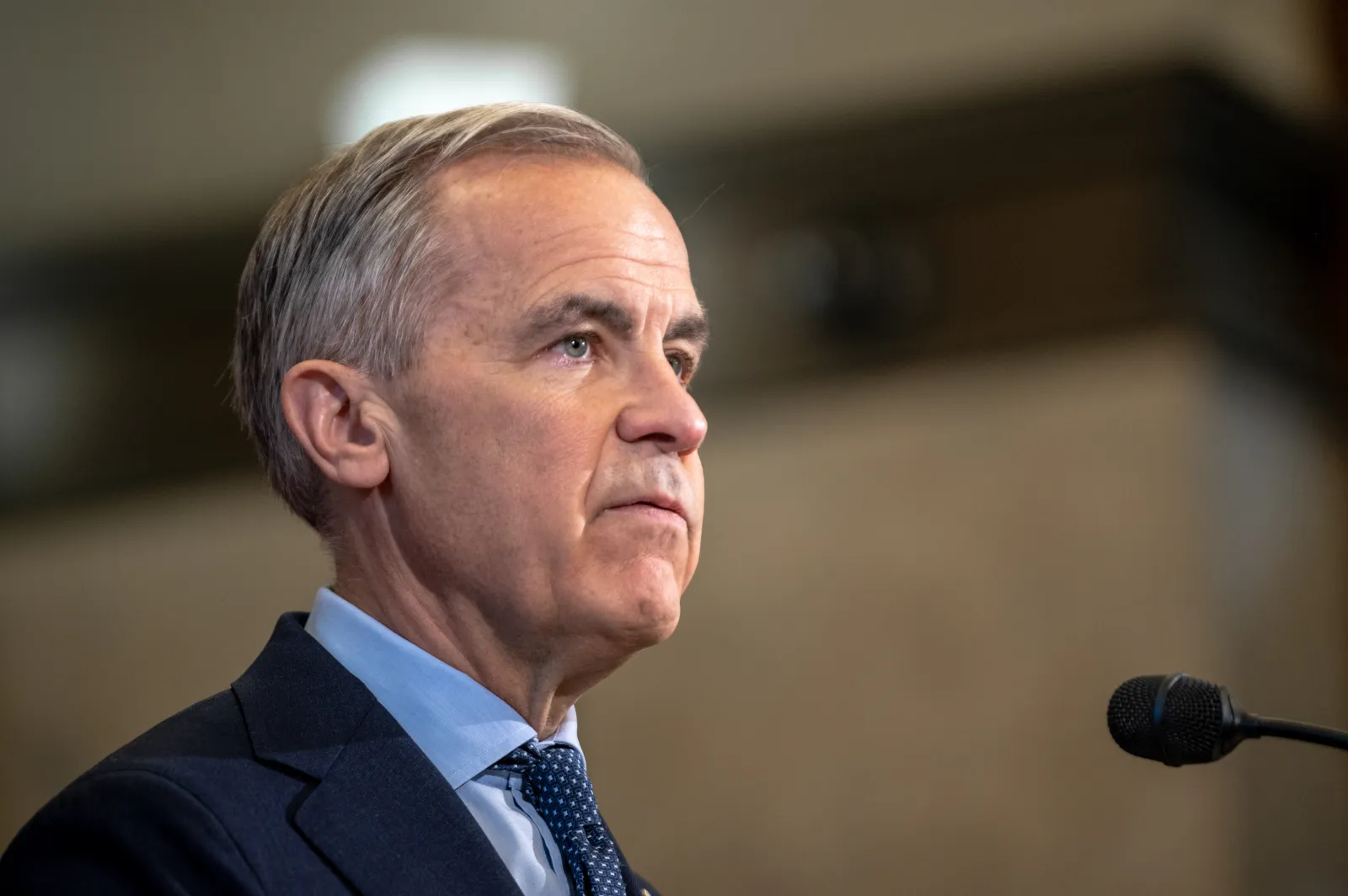
Canadian Prime Minister Mark Carney has said Canada's strong economic ties with the U.S. are now a weakness that must be corrected.
In a 10-minute video address released on Sunday, Carney signaled that Canada was seeking new investments and trade deals with other countries after the effects of U.S. President Donald Trump's trade tariffs.
"The U.S. has changed, and we must respond," the prime minister said.
Read More on World
The relationship between Washington and Ottawa has deteriorated since Trump returned to office in January 2025. The president has repeatedly called for Canada to join the U.S. as its 51st state, and the White House has implemented numerous tariffs on the country's northern neighbor.
...
The US and Canada's Trade Relationship
Carney's remarks represent an escalation of tensions between the U.S. and Canada. The White House has not responded to the prime minister, but speaking at Semafor World Economy in Washington, D.C., last week, U.S. Commerce Secretary Howard Lutnick criticized Canada and suggested that seeking other trade partners would not work for the country.
The prime minister's comments came days after he secured a majority government, following special election wins in the country. Opposition Conservatives continue to push him to deliver a U.S. trade deal, as he promised in last year's election.
The speech also followed on from a war of words between Carney and Trump, with each politician previously criticizing the other in speeches and on social media.
Just earlier this month, Carney joked “anyone had any bourbon recently?, in pointed remarks about a boycott of American goods within Canada that saw U.S. spirits exports tumble. In February, Trump said in a post on Truth Social, that he would not allow the Gordie Howe International Bridge to open between Ontario and Detroit because he believes Canada has treated the United States unfairly in their trading relationship.
What Did Carney Say?
"I will never sugarcoat our challenges. Instead, I will talk with you directly and regularly about our plan," Carney said in the video.
"The world, as I said earlier, is more dangerous and divided," he continued. "The U.S. has fundamentally changed its approach to trade, raising its tariffs to levels last seen during the Great Depression.
"Many of our former strengths, based on our close ties to America, have become our weaknesses—weaknesses that we must correct."
He added that workers affected by U.S. tariffs "are under threat," and uncertainty is resulting in lack of business investments.
Carney said Canada should attract new investments and "new partnerships abroad so we can sell into new markets."
"It's about taking back control of our security, our borders and our future," the prime minister said.
He continued: "We can't rely on one foreign partner. We can't control the disruption coming from our neighbors."
To this end, he said the country had signed "20 new deals on four continents in less than a year because Canada has what the world wants." He also said he had increased defense investment.
Carney has made previous statements signaling this changing strategy. At a recent conference, he said Canadians were "rediscovering our country," while outlining his government's plan to prioritize domestic suppliers, further diversify exports away from the U.S. and pursue a more independent economic and foreign policy.
Why US-Canada Trade Agreement Is High Stakes
A deadline for a review of the trade agreement between Canada, the U.S. and Mexico (USMCA) is set for July, six years after it came into force. If the countries do not agree to an extension, under Article 34.7, the trade deal will be subject to mandatory annual reviews until all parties agree to extend the agreement or it expires.
The U.S. has demanded changes to the agreement. U.S. trade representative Jamieson Greer told Politico in December that Trump could pull the United States out of the deal if they didn't get what they want. Any of the partners can withdraw from the agreement with six months' notice.
Speaking last week, Lutnick said Trump thought USMCA was a "bad deal".
Greer told the Hudson Institute earlier this month that the U.S. is considering separate protocols with Mexico and Canada, but it is unlikely an agreement will be in place by July 1.
Updated 04/20/2026 8:15 a.m. ET: This article was updated with more information
View 0 Comments
Submit Correction
View Editorial & AI Guidelines