
...

By Adeola Adeosun
Weekend Night Editor
0
Share
Newsweek is a Trust Project member
See more of our trusted coverage when you search.Prefer Newsweek on Googleto see more of our trusted coverage when you search.
Mary Trump, President Donald Trump's estranged niece and frequent critic, is pushing back against remarks made by her uncle's personal spiritual adviser at a recent Easter event, in a post titled "The Politics of Blasphemy"—calling the comparison of Trump to Jesus Christ something that goes beyond blasphemy.
Her criticism lands amid a broader week of religious controversy surrounding the president, including a public feud with Pope Leo XIV and backlash over two artificial intelligence (AI)-generated images depicting Jesus Christ.
The White House has not responded to Mary Trump's latest piece, though Communications Director Steven Cheung has previously called her "a stone-cold loser who doesn't have a clue about anything."
Read More on News
Why It Matters
Trump's relationship with white evangelical Christians has been a cornerstone of his political coalition, but his faith has become a rare fault line within the MAGA movement in recent weeks. Evangelical leaders, conservative commentators and former allies have all weighed in, with even figures like former Republican Georgia lawmaker Marjorie Taylor Greene, Candace Owens and Tucker Carlson criticizing the president over the AI Jesus images.
Mary Trump argues the dynamic is no accident—that Trump's spiritual adviser is deliberately engineering a Christ-like mythos around the president to consolidate religious loyalty and political power.
...
What To Know
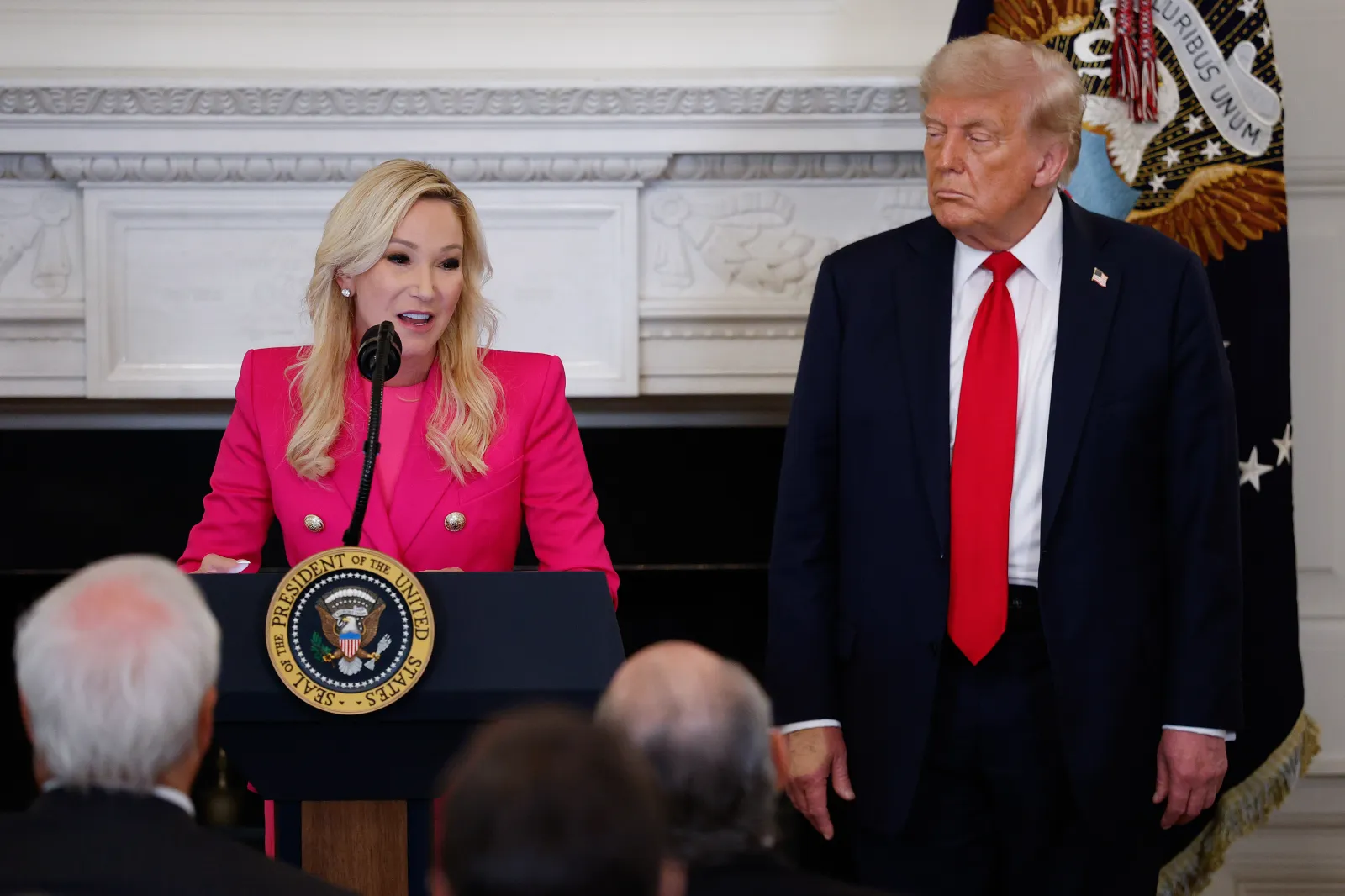
At an Easter event with Trump present, Paula White-Cain—his personal spiritual adviser and head of the White House Faith Office—drew immediate scrutiny for remarks comparing Trump's political persecution to the suffering of Jesus Christ. "No one has paid the price like you have paid the price," White-Cain told Trump. "You were betrayed and arrested and falsely accused. Because of his Resurrection, you rose up."
Mary Trump, writing on Substack Monday, said the comparison went beyond blasphemy. "I don't think 'blasphemy' is a strong enough word to describe White-Cain's comparison of a corrupt heathen like Donald Trump to Christians' Lord and Savior," she wrote. She argued that White-Cain, who built her career preaching the prosperity gospel, has moved past the traditional evangelical framing of Trump as an "imperfect vessel"—and is now casting opposition to Trump in the language of spiritual warfare. In a prayer from Trump's first term, White-Cain said: "We break every assignment of the enemy against Donald."
Mary Trump traces the ideological roots of this movement to Norman Vincent Peale, the Manhattan pastor whose proto-prosperity gospel influenced Trump's father, Fred Trump, and whose teachings she argues laid the groundwork for figures like White-Cain. She also notes the financial stakes: IRS filings show Paula White Ministries reported approximately $166,000 in total income in 2024, with White-Cain paying herself $143,000 in compensation—a fraction of the $80 million she has accumulated through her television ministry.
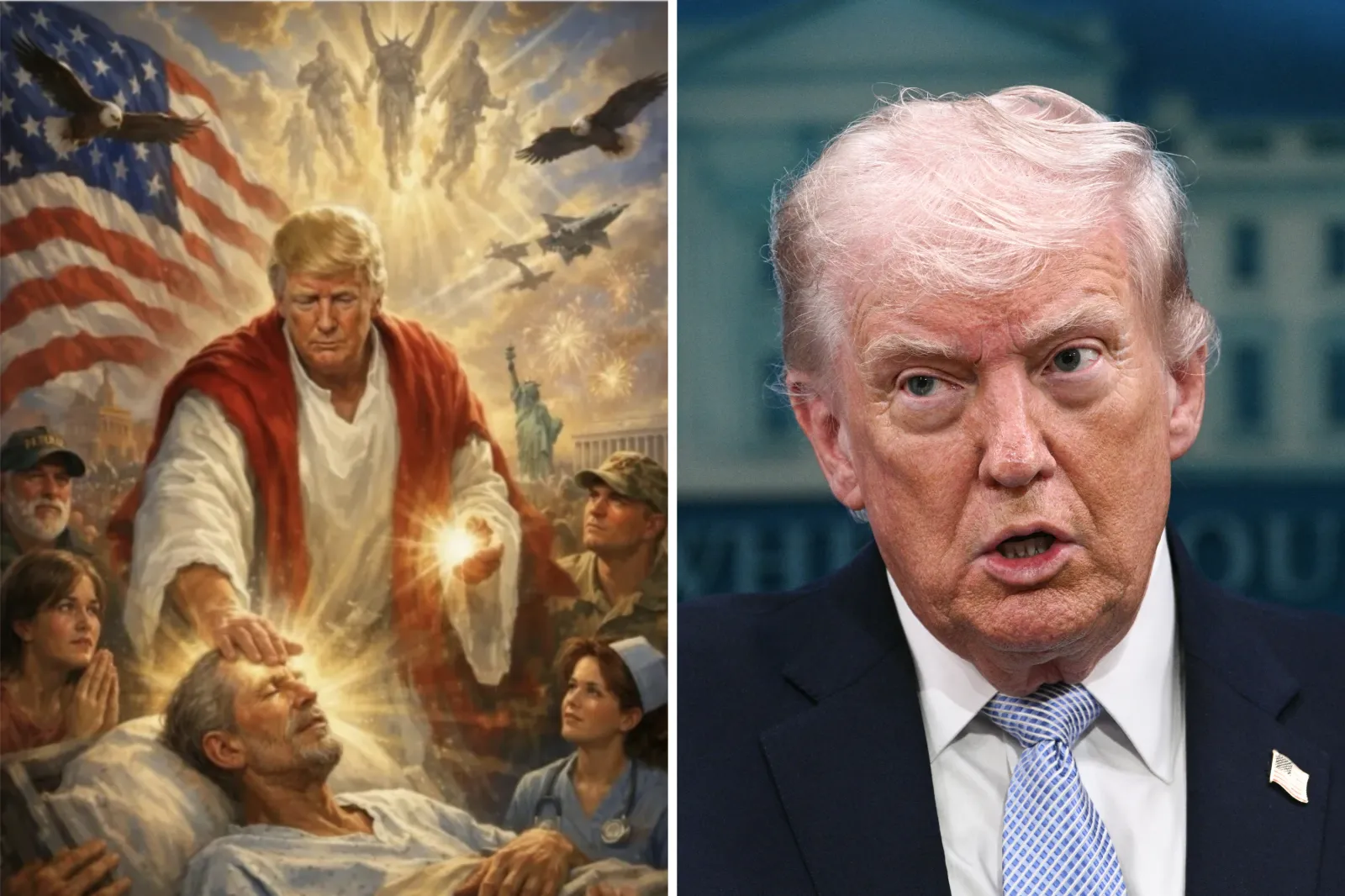
The Easter remarks came during a week that also saw Trump post an AI-generated image on Truth Social appearing to depict him as Jesus Christ—a robed figure healing a man—before deleting it and saying it showed him as a Red Cross doctor. On April 15, he shared a second AI image showing Jesus with his arms around Trump, writing that he thought it was "quite nice." Vice President JD Vance defended Trump, saying he took the first image down because people weren't understanding his humor.
Newsweek reached out to White-Cain via email on Monday for comment.
...
What Mary Trump Is Saying
Mary Trump argues that White-Cain's Easter remarks were not an aberration but the logical conclusion of a decades-long ideological project. "White-Cain has left that dubious rationale in the rear-view mirror," she wrote, referring to the evangelical "imperfect vessel" framework. "Now we are told saying no to Donald would be like saying no to God."
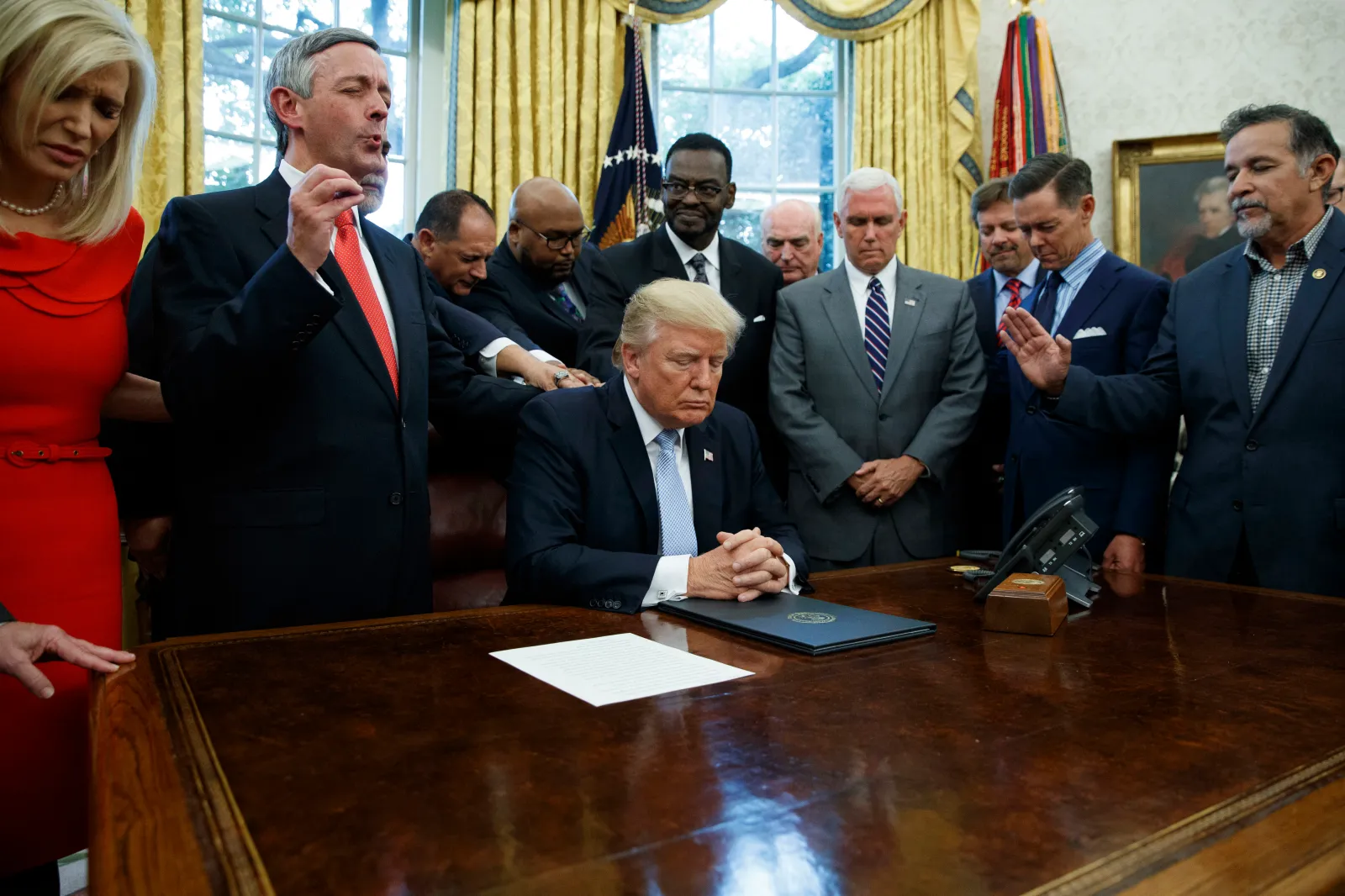
She describes White-Cain as one of the chief architects of a movement that conflates wealth with righteousness and political victory with divine mandate. "She conflates political victory with divine mandate, and loyalty to Donald with loyalty to God," Mary Trump wrote. Despite her outsized influence—White-Cain has participated in a laying on of hands in the Oval Office and delivers prayers extolling Trump's divine virtues as public performance—Mary Trump argues she should be a marginalized figure. "Paula White-Cain should either be in prison for being a snake-oil-selling grifter or in a psych ward, but instead of being a reviled figure who is forced to exist on the periphery, she's actually a very powerful person in our government."
Peale also shaped Donald Trump's worldview, by extension, Mary Trump said. Peale preached that successful people were successful because God believed they were better than everyone else—a message, Mary Trump argues, that Fred Trump internalized completely. "Fred conflated financial worth with self-worth, monetary value with human value," she wrote. "The more he had, the better he was." White-Cain, she argues, carries that same zero-sum selfishness into the political arena, using it to reinforce Trump's megalomania rather than challenge it.
The result, Mary Trump writes, is a president who has fully absorbed the myth built around him. "Donald has no ideology. His belief system, such as it is, is comprised solely of his self-interests and the conclusion he has reached, thanks to his own psychological deformities and the myths people like my grandfather [Donald's father] and the Paula White-Cains of the world have perpetuated, that it is he who is the higher power."
She argues that White-Cain's rhetoric doesn't just flatter Trump—it confirms his most dangerous delusions. "It bolsters his dangerous notion not simply that he's at the center of the universe, but that he is the universe."
...
What Happens Next
Trump is scheduled to deliver a recorded Bible reading Tuesday as part of America Reads the Bible, a weeklong event at Museum of the Bible in Washington, D.C., commemorating 250 years of the Bible in America.
View 0 Comments
Submit Correction
View Editorial & AI Guidelines