...

By Khaleda Rahman
National Correspondent
0
Share
Newsweek is a Trust Project member
See more of our trusted coverage when you search.Prefer Newsweek on Googleto see more of our trusted coverage when you search.
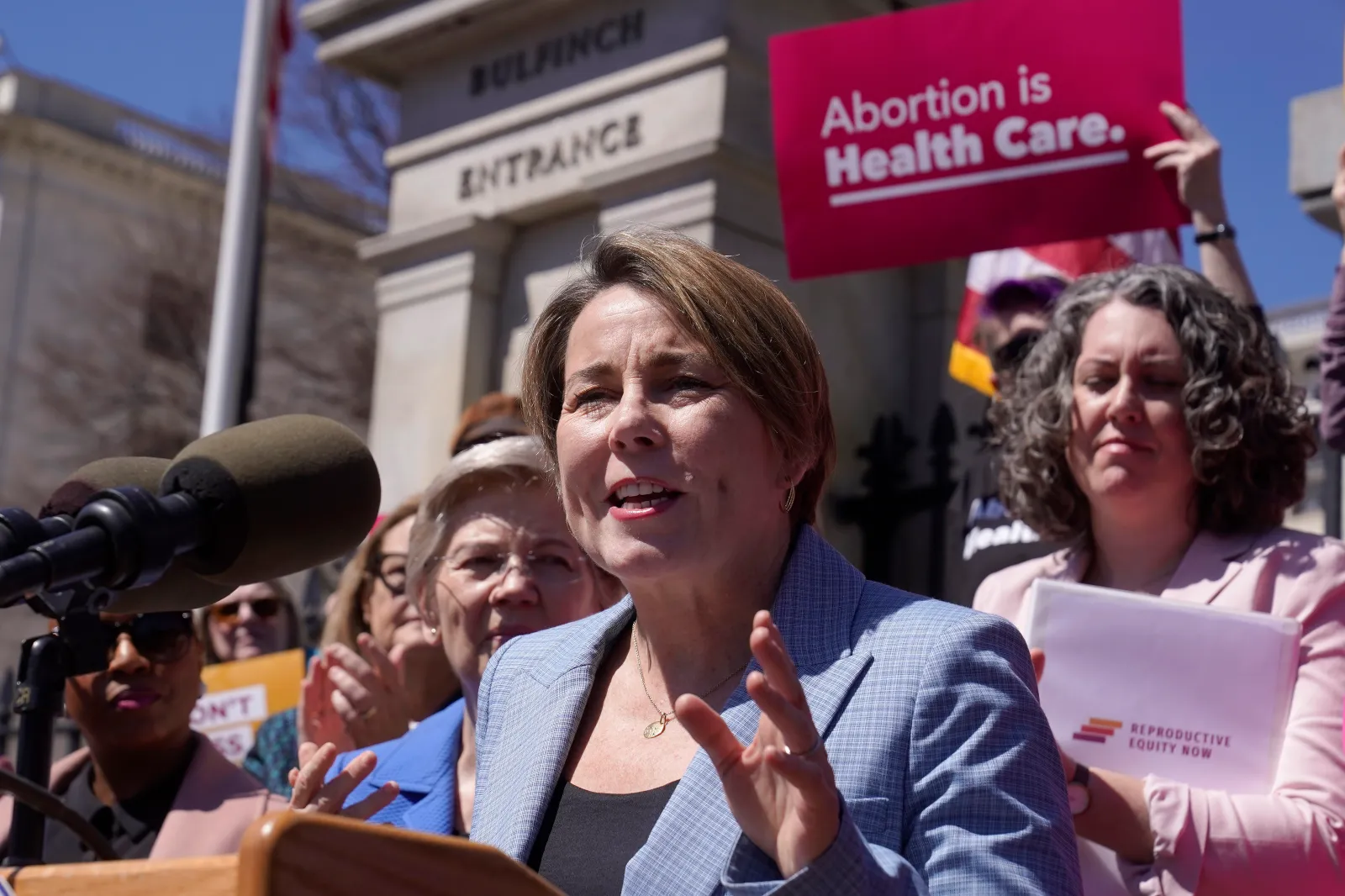
Massachusetts Governor Maura Healey signed legislation on Monday that gives doctors the final say on whether an abortion should be allowed late in pregnancy, making it the 10th state to allow the procedure at any point in pregnancy.
The Prioritizing Patient Access to Care Act removes the state’s prior framework for abortions after 24 weeks of pregnancy.
The former law permitted abortions after that point only under certain circumstances, including if a physician using best medical judgment says it is necessary to preserve the life, physical or mental health of the patient or because of a lethal fetal anomaly. The new law takes out the list of specific reasons and simply says that it would be allowed “based on the professional judgment of the physician.”
Read More on News
“I've heard heartbreaking stories from women and families who were preparing to welcome a healthy baby into their family, only to receive devastating news later in their pregnancy. Instead of being able to rely on the doctors they knew and trusted at home, they were forced to travel hundreds of miles and pay out of their pockets while navigating unimaginable grief,” Healey, a Democrat, said in a statement.
“That should never happen in Massachusetts. This law continues our efforts to have the strongest abortion protections in the country because in Massachusetts, we believe health care decisions should be made between women and their doctors.”
...
The legislation received support from medical groups, including the Society for Maternal-Fetal Medicine.
"Historically, the Commonwealth’s laws have interfered with healthcare providers’ ability to provide evidence-based care for their patients, forcing many patients to travel out of state for care," Lynn M. Yee, vice chair of the society's Health Policy and Advocacy Committee, said. "By expanding access to abortion care later in pregnancy, this act ensures Massachusetts patients can access high-quality, equitable reproductive healthcare in their communities.”
But opponents have argued the law would allow abortion until birth, even on healthy fetuses.
Related Story

Is the WNBA a Sports League or a Soap Opera, and Does That Even Matter?
“Legalizing elective abortion up to birth on healthy mothers and healthy, pain-capable unborn children is not about protecting the doctor-patient relationship,” Myrna Maloney Flynn, president of Massachusetts Citizens for Life, said in a statement after Healey signed the bill into law.
Flynn said it was about "normalizing the deaths of fully-developed infants and pressuring vulnerable women to permit their unborn children to die in heinous acts of violence."
Which States Have No Gestational Limits on Abortion?
The new law makes Massachusetts one of 10 states, plus Washington, D.C., without a gestational limit on abortion, according to KFF, a nonprofit that does research on health policy.
The other nine states are: Alaska, Colorado, Maryland, Michigan, Minnesota, New Jersey, New Mexico, Oregon and Vermont.
Massachusetts is among the Democratic-controlled states that have moved to strengthen abortion protections since the Supreme Court's ruling in Dobbs v. Jackson Women’s Health Organization that overturned Roe v. Wade, stripping away constitutional protections for abortion and clearing the way for states to enforce bans.
Currently, 13 states ban abortion at all stages of pregnancy, with some exceptions. Another four ban abortion after about six weeks of pregnancy, which is often before many women realize they are pregnant, according to The Guttmacher Institute, a research organization that supports abortion rights.
Contact Newsweek editors on this story: Ben Kelly and Cristina Diciu.
View 0 Comments
Submit Correction
View Editorial & AI Guidelines