
10
Loading video...

By Anna Skinner
Associate News Editor
0
Share
Newsweek is a Trust Project member
See more of our trusted coverage when you search.Prefer Newsweek on Googleto see more of our trusted coverage when you search.
Representative Thomas Massie, a Kentucky Republican, said Saturday he plans to introduce legislation to strip federal funding from municipalities and police departments that use automatic license plate readers (ALPR) and other mass surveillance systems.
Massie, known for his libertarian stances on government surveillance and privacy, announced the impending legislation in a post on X.
"I'll soon be sponsoring a bill to withhold federal money from municipalities and police departments that deploy Flock (and other style) cameras to surveil law abiding citizens," the congressman wrote.
Read More on U.S.
The proposal targets systems such as those manufactured by Flock Safety, an Atlanta-based company that has become a leading provider of ALPR technology. The company works with more than 5,000 law enforcement agencies across more than 6,000 communities nationwide, operating a network comprising tens of thousands of cameras. Those cameras capture images of passing vehicles and record information such as license plate numbers, vehicle make, model and color, along with the time and location of a sighting.
Flock Safety Responds
A Flock Safety spokesperson told Newsweek that Massie's bill would "have real consequences for public safety."
"Withholding federal funding from the thousands of police departments that rely on license plate reader technology would have real consequences for public safety," the spokesperson said. "In 2025, we estimate Flock technology supported more than one million public safety investigations, assisted in 20% of solved cases in jurisdictions that partner with Flock, and helped locate more than 10,000 missing people."
The spokesperson continued: "Rather than banning a critical public safety tool, Congress should consider strong, clear safeguards that ensure accountability, oversight, and responsible use are enshrined in law. We do not have to choose between protecting privacy and giving law enforcement the tools it needs to keep communities safe. We can—and should—do both."
Newsweek reached out to Massie's office by email for comment outside of normal business hours.

...
The Broader Surveillance Debate
Massie's announcement underscores a deepening national debate over the rapid expansion of ALPR networks. Supporters contend the technology is vital for solving crimes, recovering stolen vehicles, and issuing Amber Alerts. Critics, however, argue that continuous tracking creates expansive databases capable of monitoring the movements of citizens not suspected of any wrongdoing.
The upcoming bill builds on legislation Massie introduced earlier this year alongside Representative Lauren Boebert, a Colorado Republican. That measure, the Surveillance Accountability Act, would require government agencies to secure probable-cause warrants before conducting specific surveillance activities, while prohibiting the warrantless deployment of facial recognition and vehicle-tracking technologies tied to individuals. The lawmakers argued the legislation is necessary to strengthen Fourth Amendment protections against unreasonable searches and government surveillance.
Law enforcement officials frequently champion ALPR systems as force multipliers that help stretch limited departmental resources. However, the technology has also faced pushback at the local level. NPR reported earlier this year that several municipalities—including Flagstaff, Arizona; Cambridge, Massachusetts; and Santa Cruz, California—have recently ended or declined to renew contracts with Flock, citing concerns over data ownership, privacy, and information-sharing policies.
Related Story
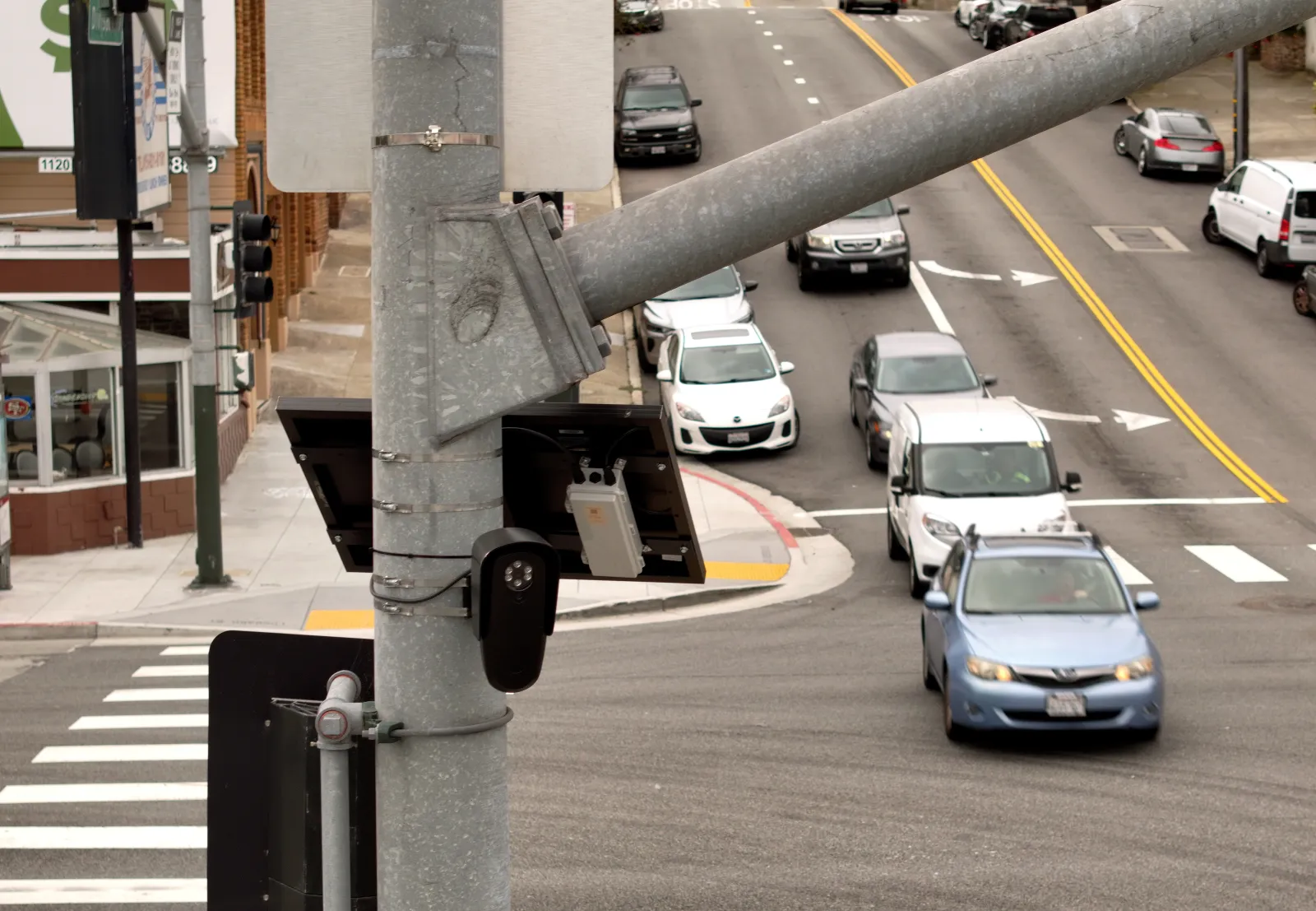
FBI Plan to Access License Plate Data Could Track Drivers Nationwide
Legislative Outlook
Massie's proposal faces an uphill battle in Washington. While surveillance skepticism resonates with select lawmakers on both the political left and right, police organizations and many members of Congress traditionally support funding for law enforcement crime-fighting tools.
Newsweek reached out to the Fraternal Order of Police by email for comment.
Any legislative effort to penalize departments utilizing the systems is expected to draw stiff resistance from lawmakers focused on public safety and local agencies that have heavily invested in the infrastructure. Massie's proposal remains in its preliminary stages, and formal bill text has not yet been released.
Contact Newsweek editors for this story: Steve Mollman and Anthony Murray.
View 0 Comments
Submit Correction
View Editorial & AI Guidelines