10
Loading video...

By Pandora Dewan
Senior Science Reporter
0
Share
Newsweek is a Trust Project member
See more of our trusted coverage when you search.Prefer Newsweek on Googleto see more of our trusted coverage when you search.
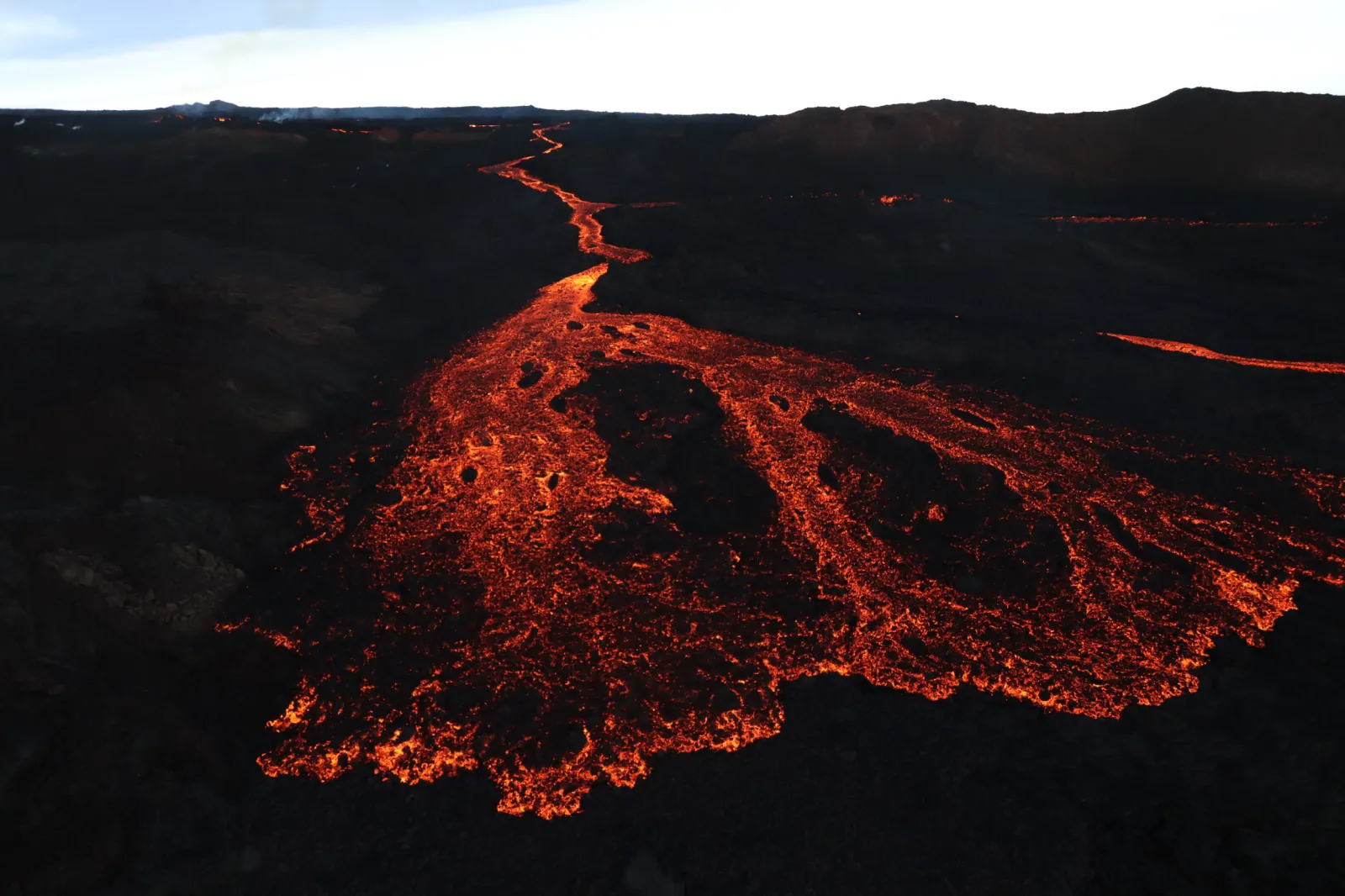
Ten days after the largest active volcano in the world, Hawaii's Mauna Loa, began erupting, activity at the volcano's Northeast Rift Zone is still going, and flows of lava have been filmed pouring down the volcano's flanks at speeds of up to 18 miles per hour.
The flow front is moving due north toward one of the island's major highways, the Daniel K. Inouye Highway, known locally as Saddle Road. However, while the lava is traveling at high speeds close to the volcano's vents—as seen in a video released by the United States Geological Survey—the lava front itself is advancing much more slowly, at an average speed of only 68 feet per hour.
The direction of these flows is expected to change over the next few days, making it difficult to estimate when or if the flow will impact the highway.
Read More
Mauna Loa Eruption Map Shows Where Lava Flow Is Heading on Hawaii3 min read

Stromboli and Mount Semeru Erupt on Same Day, a Week After Mauna Loa4 min read

How Mauna Loa Went From a Hot Blob to the Biggest Volcano in the World3 min read

...
How dangerous is Mauna Loa?
The last time Mauna Loa erupted was in 1984. No one was injured during the eruption, but lava flow caused significant disruption to the island's infrastructure and came within four miles of the Big island's largest city, Hilo.
"The main hazards from Mauna Loa eruptions are related to lava flows," David Pyle, a volcanologist at the University of Oxford, told Newsweek.

...
Mauna Loa is mostly known for its effusive eruptions—when erupting magma forms free-flowing lava that seeps down the volcano's sides. Explosive eruptions occur when gas gets trapped inside the magma, eventually resulting in an explosive burst that sends ash and magma into the atmosphere.
While lava flows can be threatening to local communities, Pyle said that the danger posed by Mauna Loa was not as severe as that posed by more explosive eruptions.
"In explosive eruptions, there may be little warning of eruption, and the consequences can be devastating," he said. "For example, at Mount St. Helens in 1980, the size of the explosion and the vast area that was affected in just a few minutes by the eruption were both unexpected."
The 1980 eruption in Washington state caused 57 deaths and extensive damage to properties and infrastructure.

...
While effusive eruptions like Mauna Loa tend to be less destructive, they can still release large amounts of volcanic gas, air pollution, and airborne strands of volcanic glass—known as Pele's hair—which can damage lungs and cause skin and eye irritation. Therefore, people on the Big Island have been advised to avoid outdoor exercise and other activities that involve heavy breathing during the eruption.
The volcano is being continuously monitored by the Hawaii Volcano Observatory and emergency partners, who are using historical data to prepare for what might happen next.
Do you have a tip on a science story that Newsweek should be covering? Do you have a question about volcanoes? Let us know via science@newsweek.com.
View 0 Comments
Submit Correction
View Editorial & AI Guidelines