10
Loading video...

By Hatty Willmoth
Food & Nutrition Reporter
0
Share
Newsweek is a Trust Project member
See more of our trusted coverage when you search.Prefer Newsweek on Googleto see more of our trusted coverage when you search.
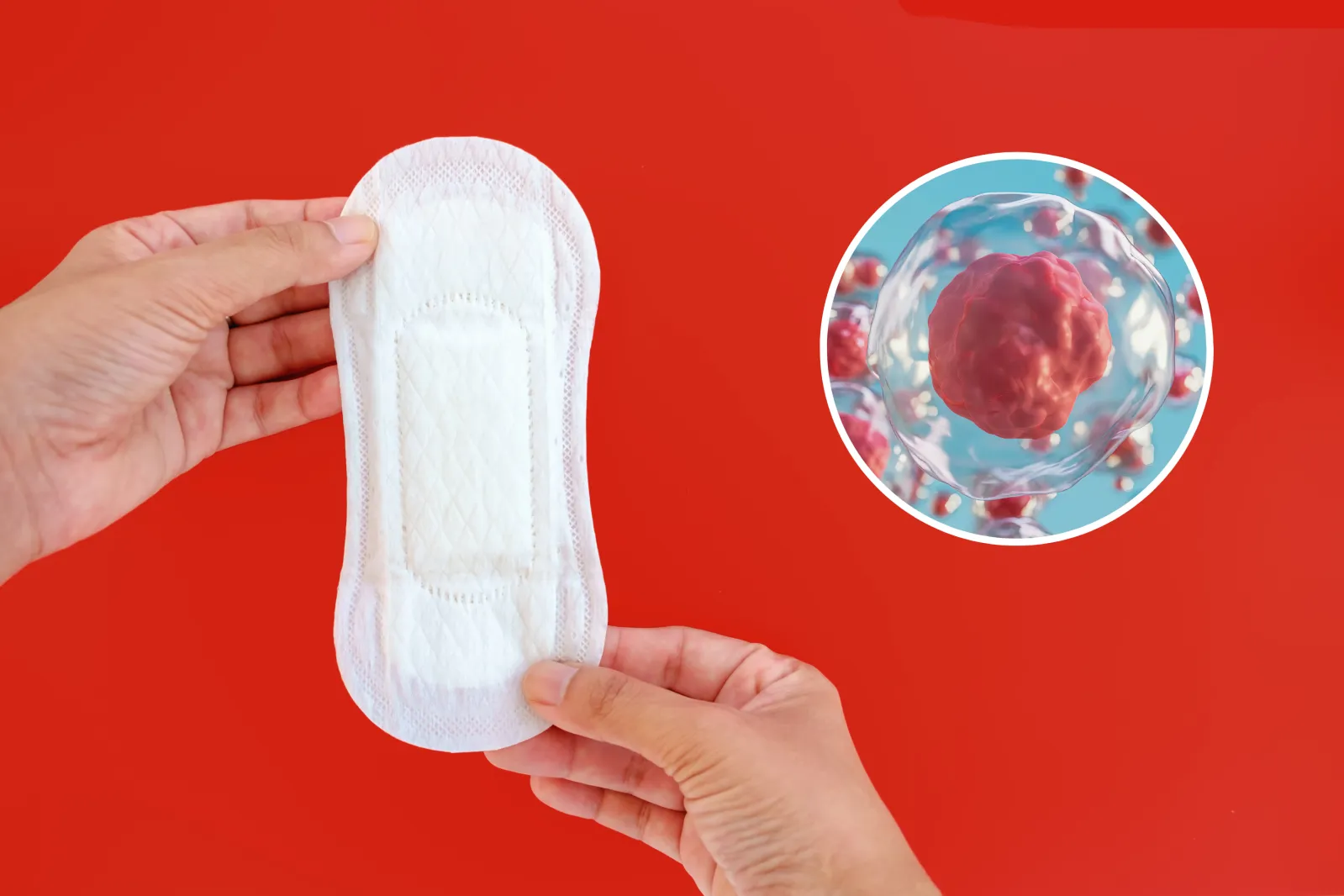
Stem cells in menstrual blood could transform the future of medicine, according to a doctoral research scientist called Alice van der Schoot who is sharing her studies on TikTok.
Known as @ditto.daily online, van der Schoot posted a video titled "Is Period Blood the Future of Alzheimer's Treatment" on TikTok, December 19, and it quickly racked up more than 5 million views and more than 500,000 likes.
"Stem cells self-renew and transform into different cells (brain, muscle)," the video said. "We usually take them from bone marrow. They are a game-changer for regenerative medicine. But menstrual stem cells are supercharged!!"
Read More on Health
The video referenced research that showed menstrual blood stem cells (MenSCs) improved memory and cleared plaques in the brains of mice with Alzheimer's.
Newsweek contacted van der Schoot for comment via Instagram.
Gynecologist Dr. Mary Claire Haver, @drmaryclaire, made a video responding to Alice—with 228,000 likes on Instagram—where she said she "flipped out" after finding out about stem cells in menstrual blood.
"Growing up, periods were shrouded in shame and secrecy—something we hid and barely talked about," wrote Haver in the caption of her video. "Yet here we are, learning that menstrual blood is a literal source of life with the potential to change the world."

...
What Are Stem Cells?
Christian Drapeau, founder of a supplement company called Stemregen, told Newsweek: "Stem cells are your body's innate repair system. From the second you are born, any time you have an injury, your stem cells are able to repair your body.
"Stem cells were originally believed to be very rare and found only in specific and unique tissues, like the bone marrow—but as research continued, it became clear that stem cells are in fact ubiquitous, in virtually all tissues of the human body."
Dr. David Woznica, a regenerative medicine physician at Woz Wellness, told Newsweek: "Stem cells are generally considered as cells that have an ability to replicate extensively, and also have the ability to transform based on environmental cues into other cell types.
"For example, a bone marrow derived stem cell could be manipulated in a laboratory setting to become a cartilage producing cell (chondrocyte) or a fat cell (adipocyte)."
Associate Professor Jonathan Anderson, a stem cell scientist at the University of California and CEO of Peptide Systems, told Newsweek that MenSCs were first discovered in 2007 by scientists in San Diego.
"Stem cells are a promising new class of therapies that have the potential to revolutionize the way a variety of disease states are treated," he said.
...
How Are Stem Cells Used in Regenerative Medicine?
Stem cells are used for arthritic pain and joint disorders, brain disorders such as Parkinson's or cerebral palsy, tissue repair and biohacking or longevity medicine, the experts said.
Woznica said their use in regenerative medicine was "extensive, though not always necessarily backed fully by scientific studies."
He explained: "Stem cells used for regenerative medicine mainly do not turn into other tissues, but rather they cause change by releasing substances that make the native cells present in the area act to heal the area on their own."
What Could Menstrual Blood Research Mean for the Future of Medicine?
Stem cells are often taken from bone marrow, requiring a doctor to insert a needle into someone's hip bone.
"Likely the greatest plus of menstrual blood stem cells is how easy they are to obtain; no invasive procedures are required," said Woznica. "The stem cells present in menstrual blood are similar to those present in bone marrow, though they are able to proliferate more than their bone marrow counterparts, and there is roughly two to four times higher yield of stem cells in menstrual blood than an equivalent volume of bone marrow."
Woznica said that breakthroughs in menstrual blood stem cell research could help doctors tackle inflammation in autoimmune conditions, repair or prevent heart tissue damage after heart attacks, treat lung injuries and more.
Drapeau said they were already being studied "with very promising results" for wound healing, heart disease, brain disorders, diabetes and fertility.
Why Hasn't This Been Studied Until Recently?
Anderson said that MenSC research had not been studied much previously because scientists still struggled to define MenSCs, and because this research was high cost but underfunded.
Drapeau said it was probably due to the "general perception" of menstrual blood.
Is there a health problem that's worrying you? Do you have a question about menstrual blood? Let us know via health@newsweek.com. We can ask experts for advice and your story could be featured in Newsweek.
View 0 Comments
Submit Correction
View Editorial & AI Guidelines