10
Loading video...

By Eileen Falkenberg-Hull
Senior Editor, Autos, Travel and Lifestyle
0
Share
Newsweek is a Trust Project member
See more of our trusted coverage when you search.Prefer Newsweek on Googleto see more of our trusted coverage when you search.
Sitting at a table, sipping his latte, Mercedes-Benz's Chief Technology Officer Markus Schäfer is candid: He is working to change the mindset not just of the engineers who work for him, but of the larger Mercedes-Benz company.
Today's Mercedes-Benz management structure is decades in the making, with origins that come from Tuscaloosa, Alabama, of all places. It's designed to be agile, enable quicker decision making and prepare the company for its future, where software and hardware are more intermingled than in the previous century.
In his first overseas assignment, 15 years ago, Schäfer was sent to work in Alabama as the then-vice president and CEO of Mercedes-Benz U.S. International Inc. "They put me in an office with 250 engineers - open office, only desks. They put me right in the middle," he said, chuckling as he remembered his reaction. "And I said, 'This is kind of new to me.' But, I loved it after a while."
Read More on Autos
When he was reassigned to Germany three years later, after a position move to vice president of manufacturing engineering Mercedes-Benz passenger cars at Daimler AG, Schäfer brought the office style with him. "Wherever I went after that, I was tearing down walls, bringing people together because I saw the speed of decision-making could be so fast," he told Newsweek.
...
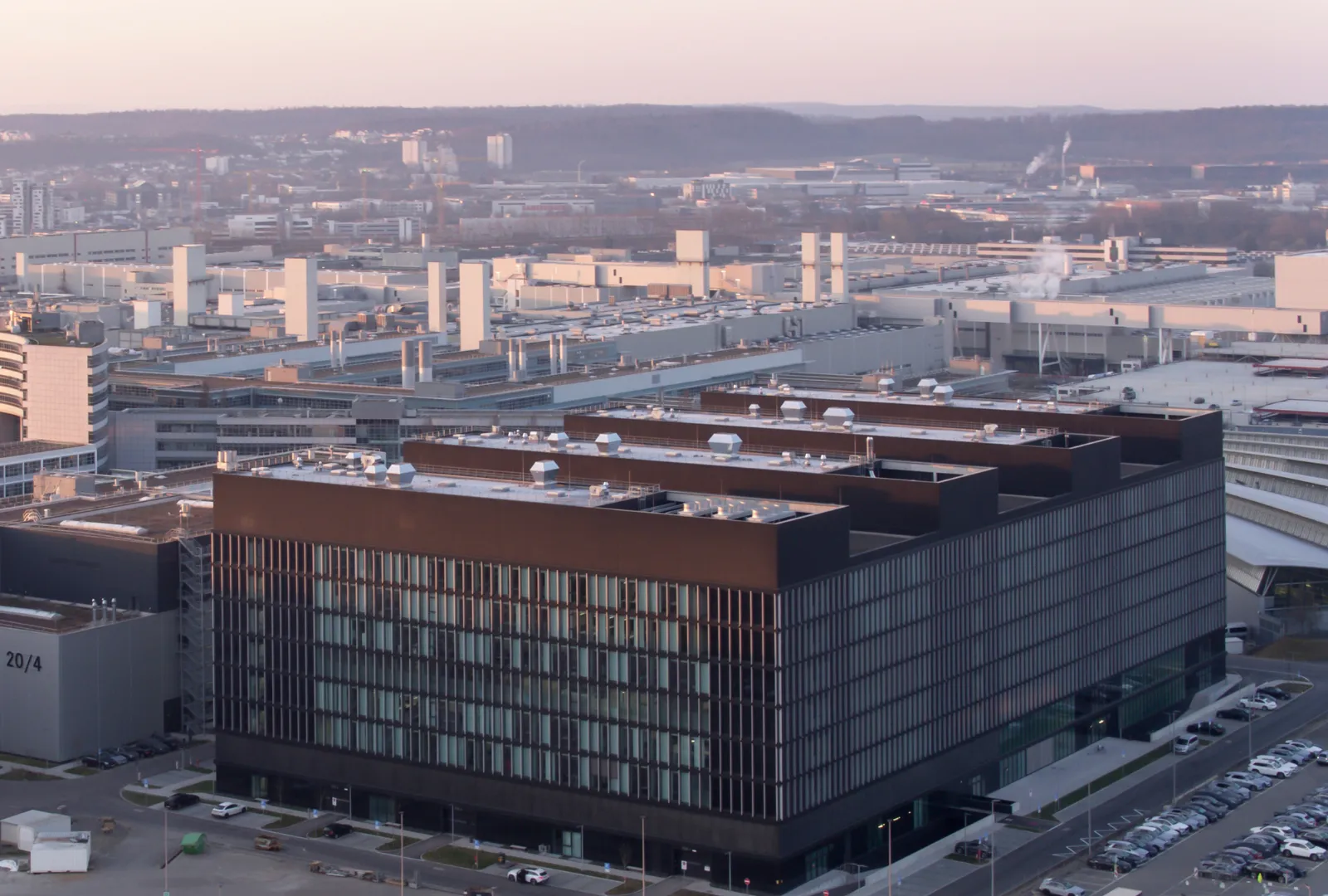
Today, his office inside the company's Electric Software Hub at the Mercedes Technical Center in Sindelfingen, Germany, has no walls. Schäfer shared: "There's no walls in my office, in the meeting rooms, only glass because I want full transparency. People said, 'You know, let's put some blinds because we have confidential stuff.' There is no confidential stuff. It's all transparent what we do. Internally, we are not hiding anything. Totally transparent. And this was quite new in the German traditional automaker environment."
That lack of hard division for Mercedes-Benz is a model for how the automaker sees its software and hardware development groups. "There was an initial discussion a couple of years ago, whether we should have a separate software organization versus a hardware organization," Schäfer said.

...

...
1 of 2
The company had software in its cars long before it was writing its own software. Looking ahead, as hardware and software become even more intermingled, the CTO saw a clear answer to how the teams could work together. "I was always convinced it has to be a fully integrated organization, and people sit literally side-by-side in a no-silo environment. And I think this was the key for our success," he said.
At the Hub, Schäfer repeated what he'd learned in Alabama. "I was tearing down offices. I put all my next-level reports next to me. No more offices, an open-office environment, fast communication. You don't have to wait for an appointment with your colleague for a week, which was common 20 years ago. You speak literally every day, every hour, communicate, make decisions quickly."
The Hub opened in 2022.

...

...
1 of 2
"Part of my work, next to the engineering work I'm doing, is to further work on the culture and the company to work as one team. There is no silo. Sharing information, learning, creating a learning organization, accepting failure and moving on, and accepting different influences, creating that challenge, among the engineering teams all the time," he said.
View 0 Comments
Submit Correction
View Editorial & AI Guidelines