


By Amanda Castro, Hannah Parry, and Anna Commander
0
Share
Newsweek is a Trust Project member
See more of our trusted coverage when you search.Prefer Newsweek on Googleto see more of our trusted coverage when you search.
One of the most anticipated celestial events of the year is set to dazzle skywatchers as the Perseid meteor shower reaches its peak on the night of August 12 into the early hours of August 13. Known for producing bright fireballs and up to 100 meteors per hour under ideal conditions, the Perseids offer a stunning display — even with moonlight interference — and can be viewed live online or outdoors with the naked eye.
What to Know:
- The Perseid meteor shower peaks overnight August 12–13, with best viewing between 2 a.m. and 4 a.m. local time.
- The Virtual Telescope Project will host a free livestream starting at 5 p.m. EDT on August 12, featuring real-time views and expert commentary.
- The shower originates from debris left by Comet Swift-Tuttle and appears to radiate from the constellation Perseus in the northeastern sky.
- A waning gibbous moon, 86% illuminated, may obscure fainter meteors, but bright fireballs should still be visible.
- No equipment is needed — just a dark sky location, patience, and time for your eyes to adjust.
- The Perseids are active from July 17 to August 23, but the peak nights offer the most dramatic views.
Newsweek's live blog is closed.
Aug 12, 2025 at 09:27 PM EDT
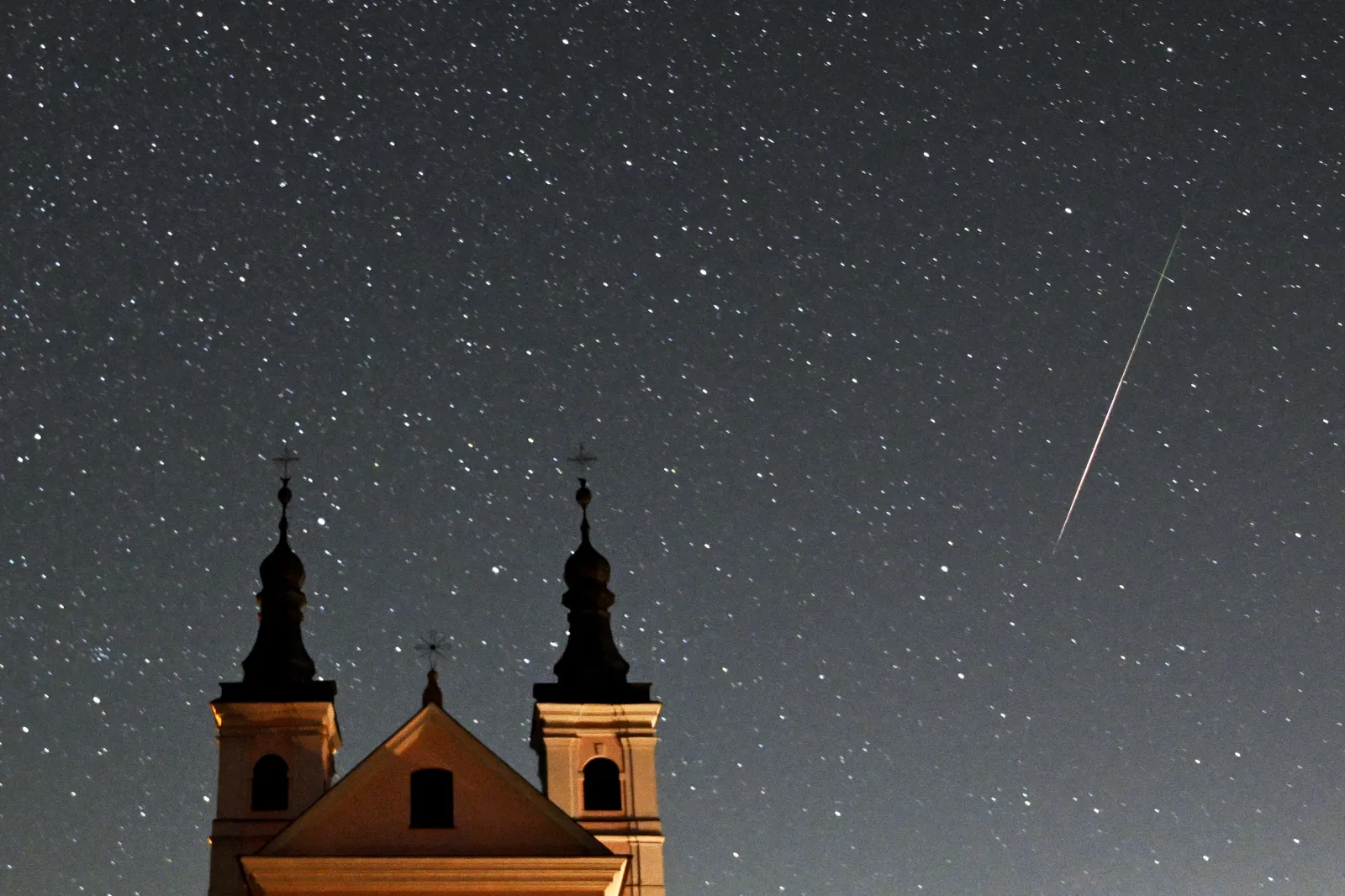
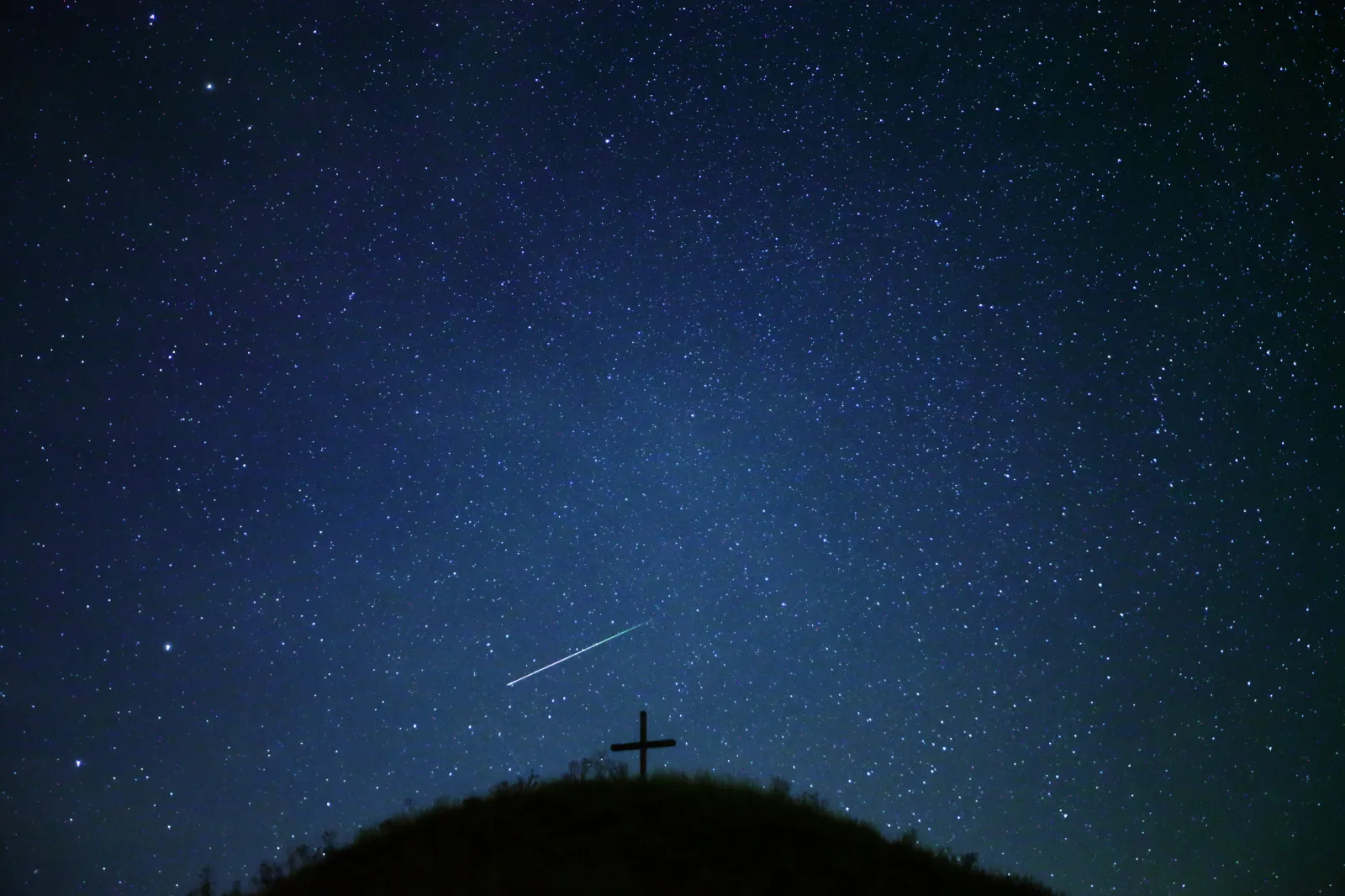
Poland and Austria Experience Perseid Meteor Shower
Photos show the Perseid meteor shower in the European countries.
...
...
Aug 12, 2025 at 09:10 PM EDT
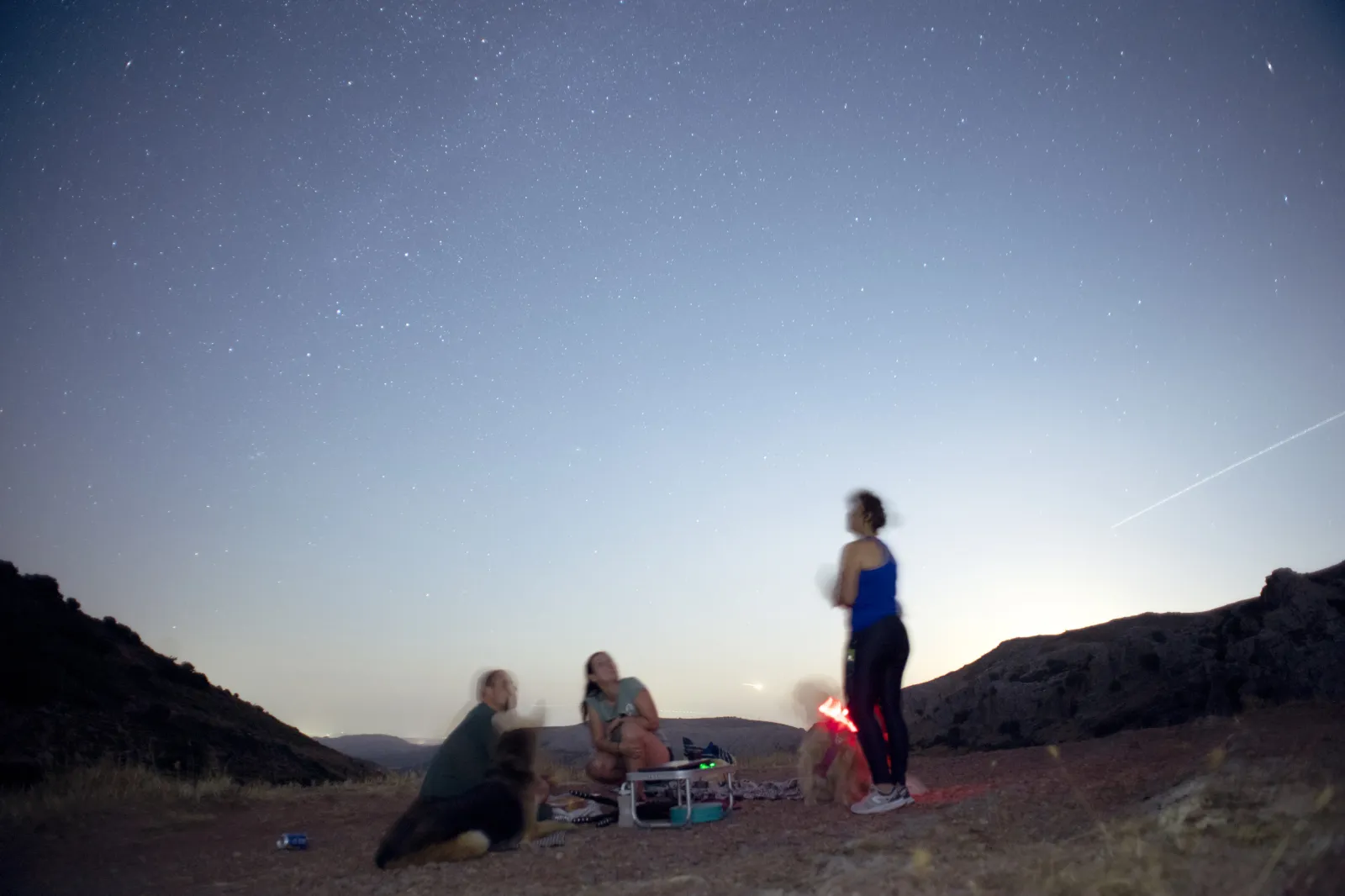
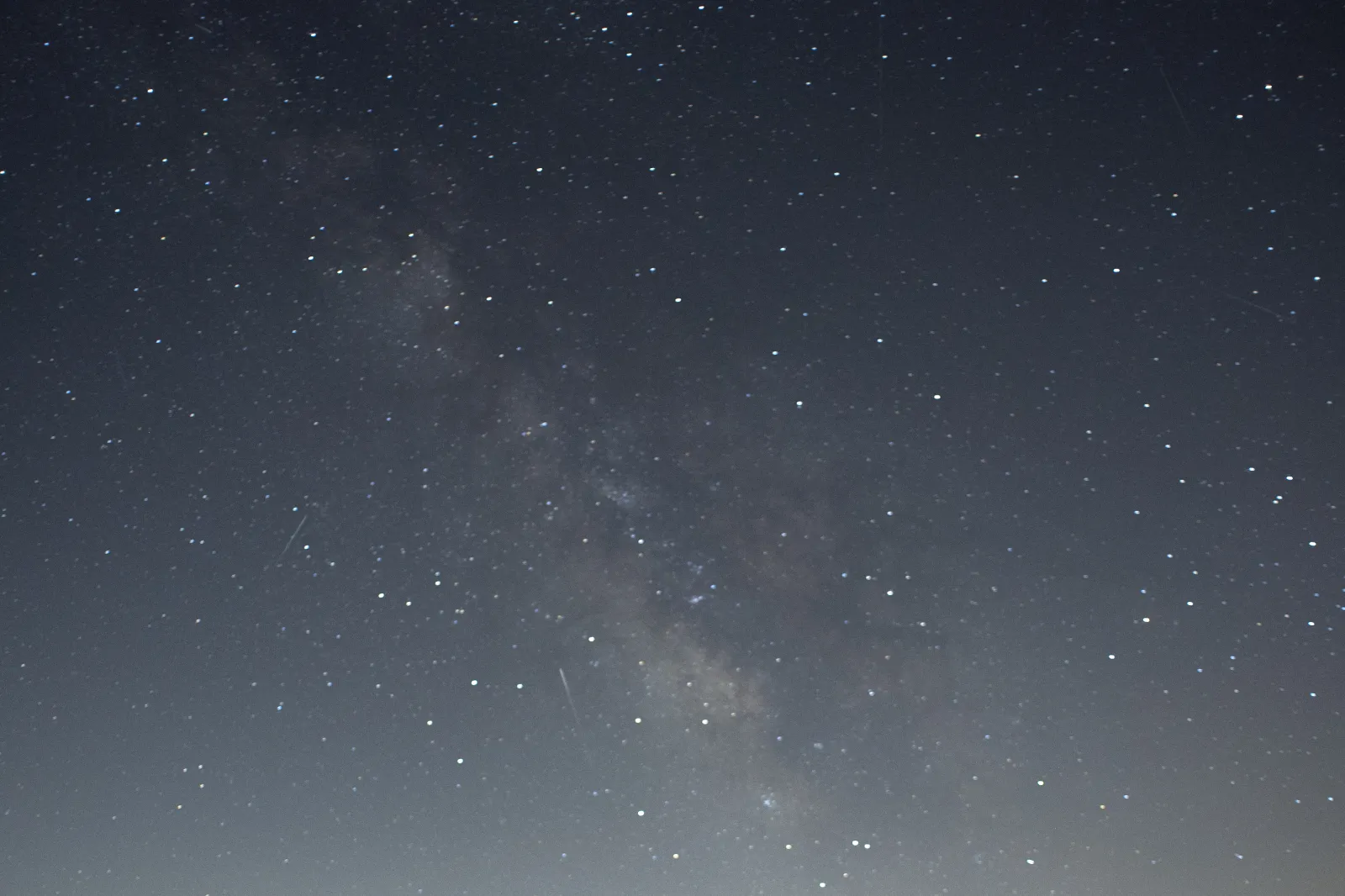
People See Meteors Streak Across The Sky in Spain
People in Spain observed meteors streaking across the sky on Tuesday night.
Below are photos of the moment:
...

...
...
Aug 12, 2025 at 08:58 PM EDT
Moon Projected To Impact Number of Visible Meteors
Meteorologist Cecily Tynan said on X that the bright moon on Tuesday will impact the number of visible meteors during the Perseid meteor shower.
"In a good year you could see around 100 meteors/hour at peak, but this year since you will only see the brightest ones, it is only expected to be around 15 meteors/hour," Tynan said in part.
Aug 12, 2025 at 07:48 PM EDT
IN PICTURES: Star gazers gather at Berlin’s Archenhold Observatory to watch Perseids

...

...

...
Aug 12, 2025 at 07:30 PM EDT
Where can you watch Perseids from indoors?
The Virtual Telescope Project is hosting a free livestream on Tuesday evening which will allow would-be star gazers to watch the shooting stars from their own couch.
See the livestream here.
Aug 12, 2025 at 07:13 PM EDT
Five essentials for watching a meteor show
A meteor shower can be an unforgettable experience, but to ensure it's also a comfortable one, consider bringing the following:
1. Comfort & Warmth
- Reclining chair or blanket – So you can lie back and see the sky without neck strain.
- Warm clothing – Even summer nights can get chilly; layer up.
- Blankets or sleeping bag – Extra warmth and comfort.
2. Viewing Essentials
- Red-light flashlight – Preserves night vision while moving around.
- Star map or stargazing app – Helps you find the radiant and constellations.
- Binoculars (optional) – Not for meteors (they move too fast), but great for other celestial sights.
3. Snacks & Sustenance
- Hot drinks – Coffee, tea, or cocoa to stay warm and alert.
- Light snacks – Energy bars, fruit, or sandwiches for the wait.
4. Practical Items
- Bug spray – Mosquitoes love a still night as much as stargazers do.
- Ground tarp – If sitting or lying directly on the ground.
- Weather protection – Poncho or light jacket in case of unexpected changes.
5. Patience & Company
- Friends or family – More eyes mean more meteors spotted.
- Time – Plan to stay out at least an hour; showers often have bursts and lulls.
Aug 12, 2025 at 06:48 PM EDT
WATCH: The Perseid Meteor shower: What you need to know
Aug 12, 2025 at 06:37 PM EDT
Why are the meteors called Perseids?
The meteors in tonight's shower are called Perseids because they appear to radiate from the direction of the constellation Perseus.
In astronomy, meteor showers are named after the radiant—the spot in the sky from which the meteors seem to originate due to perspective.
Aug 12, 2025 at 06:26 PM EDT
Could comet Swift–Tuttle strike Earth?
The Swift–Tuttle comet is the largest object that approaches Earth as its orbit intersects with our own.
The huge meteor, which measures around 16 miles across, passes close enough the astronomers watch its orbit closely.
Dr Richard Parker, an astrophysicist at the University of Sheffield, told The Guardian that Swift–Tuttle visits the inner solar system every 133 years, with the next close approach to Earth set to occur in 2126.
"Notably, the comet is the largest object that approaches Earth – but thankfully, it's not predicted to come dangerously close for thousands of years," Parker added.
Aug 12, 2025 at 06:07 PM EDT
Swift–Tuttle comet is bigger than the asteroid that wiped out the dinosaurs
The Swift–Tuttle comet measures around 16 miles across, making it significantly larger than the meteor believed to have wiped out the dinosaurs.
The meteor that wiped out the dinosaurs, called the Chicxulub impactor, is estimated to be between 6 to 9 miles in diameter. This asteroid, or comet fragment, struck what is now the Yucatán Peninsula in Mexico about 66 million years ago, creating the Chicxulub crater, which is over 110 miles wide and about 12 miles deep.
The impact released energy equivalent to billions of nuclear bombs, causing massive shock waves, global wildfires, a "nuclear winter"–like cooling from dust and aerosols blocking sunlight, and the collapse of ecosystems—leading to the extinction of about 75 percent of all species, including the non-avian dinosaurs.
If Swift–Tuttle ever struck Earth, the results would be catastrophic.
However, while its orbit does intersect with Earth's path, there is no threat in the foreseeable future.
Aug 12, 2025 at 05:52 PM EDT
What is the Swift–Tuttle comet?
The Swift–Tuttle comet—officially 109P/Swift–Tuttle—is the parent body of the Perseid meteor shower.
The large, periodic comet has an orbital period of about 133 years.
It was first discovered independently by two American astronomers—Lewis Swift on July 16, 1862, and Horace Tuttle on July 19, 1862—hence its double-barreled name. The comet's last perihelion (closest approach to the Sun) was in 1992, and it will return again in 2126, when it's expected to be a spectacular naked-eye object brighter than many stars.
Swift–Tuttle is believed to be around 4.6 billion years old—essentially as old as the solar system itself.
Like most comets, it formed from the leftover icy and dusty material that didn't coalesce into planets when the solar system was taking shape. These primitive bodies have been preserved in the cold outer reaches of the solar system—mainly in the Oort Cloud or Kuiper Belt—acting as time capsules containing some of the earliest material from the Sun's formation.
Aug 12, 2025 at 05:27 PM EDT
What causes the Perseid meteor shower?
The Perseids are a prolific annual meteor shower caused by the debris left behind by the comet Swift–Tuttle.
The Earth passes the debris every year as we orbit the Sun. That debris then burns up when it enters the planet's atmosphere causing bright meteors or shooting stars.
"Because we orbit the Sun year after year, we keep hitting into it at the same time and from the same orientation," Dr. Ed Bloomer, an astronomer at the Royal Observatory, Greenwich, told The Guardian. "So from our point of view, standing on the Earth, it looks as if [the Perseids] come from that same part of the sky every single year."
The meteors most visible from mid-July to late-August.
Aug 12, 2025 at 04:56 PM EDT
What is the myth behind the Perseid meteor shower?
The Perseid meteor shower takes its name from the constellation Perseus, which is tied to one of the most famous Greek myths—the story of Perseus and Andromeda.
In Greek mythology, Perseus was the son of Zeus and Danaë. He's best known for slaying Medusa, the snake-haired Gorgon whose gaze could turn people to stone. Using gifts from the gods—Athena's polished shield, Hermes' winged sandals, Hades' helm of invisibility, and a sword—Perseus beheaded Medusa and later used her head as a weapon. On his way home, he encountered the princess Andromeda, who was chained to a rock as a sacrifice to a sea monster, Cetus. Perseus rescued her by slaying the monster and later married her.
The constellation Perseus represents the hero in the night sky, often depicted holding Medusa's severed head (marked by the star Algol, sometimes called the "Demon Star"). The Perseid meteors appear to radiate from this constellation, which is why the shower is named after him. In a way, the "falling stars" are seen as a celestial tribute to Perseus's legendary adventures.
Aug 12, 2025 at 04:48 PM EDT
What are the best conditions to see a meteor shower?
To see a meteor shower at its best, choose a dark, open location far from city lights, ideally at higher elevation for clearer skies. A wide horizon without obstructions like buildings or trees will let you take in more of the sky. Rural areas, national parks, or official dark-sky sites are excellent choices for avoiding light pollution and maximizing visibility.
Timing matters just as much as location. Plan to watch during the shower's peak night, preferably in the late night to pre-dawn hours (around 2–4 a.m. local time) when the radiant is highest in the sky. Avoid nights with a bright moon if possible, or block it from view to reduce glare. Clear skies with low humidity and calm weather will make faint meteors easier to see.
Once in position, let your eyes adjust to the dark for 20–30 minutes and avoid bright lights, including phone screens. Use a reclining chair or blanket so you can look up comfortably, and dress warmly for early morning temperatures. Don't stare directly at the radiant; instead, scan the sky and use your peripheral vision for the best chance of catching faint streaks. Be patient—meteor activity can come in bursts.
Aug 12, 2025 at 04:23 PM EDT
Which direction should I look for the Perseid meteor shower?
The point in the sky where meteors appear to originate, known as the radiant, is in the constellation Perseus, which rises in the northeast.
To best see the tonight's meteor show, face northeast, but don't stare directly at the radiant. Meteors can appear anywhere in the sky, and they often look more dramatic when viewed at an angle from their origin point.
Pre-dawn hours offer the most meteors because the radiant is high in the sky.
Tonight a bright waning moon will be in the sky so meteor views should try to avoid looking at its position.
Aug 12, 2025 at 03:58 PM EDT
What causes meteor showers and why we call them ‘shooting stars’

...
When tiny fragments from space enter Earth's atmosphere, they ignite into brilliant streaks of light we call meteors — commonly known as "shooting stars." Meteoroids cause these glowing trails, small pieces of debris shed by comets or asteroids, burning up due to friction with the atmosphere.
Meteor showers occur when Earth passes through a dense stream of meteoroids left behind by a comet's orbit. As our planet intersects this debris field, the number of visible meteors dramatically increases for a short period, creating a celestial spectacle.
The Perseid meteor shower, for example, originates from Comet Swift-Tuttle and peaks each August as Earth crosses the comet's dusty path. No special equipment is needed to enjoy the show — just a dark sky, patience, and a clear view overhead.
Aug 12, 2025 at 03:46 PM EDT
What time does the meteor shower start tonight?
The annual Perseid meteor shower is set to reach its peak overnight on August 12 and 13, offering one of the year's most vivid skywatching events. Known for producing fast, bright meteors — some of which leave glowing trails — the Perseids will be most visible after midnight and into the early morning hours.
Skywatchers are advised to head outside between 2 a.m. and 3 a.m. local time for the best chance to catch dozens of meteors streaking across the sky. No telescopes or binoculars are required; find a dark, unobstructed location and allow your eyes time to adjust.
With clear skies and minimal light pollution, viewers could see up to 100 meteors per hour at peak.
View 0 Comments
Submit Correction
View Editorial & AI Guidelines