...

By Giulia Carbonaro
Senior Reporter
0
Share
Newsweek is a Trust Project member
See more of our trusted coverage when you search.Prefer Newsweek on Googleto see more of our trusted coverage when you search.
Mexican President Claudia Sheinbaum praised the growth of Canadian tourism during a press conference with Canadian Prime Minister Mark Carney on Thursday, highlighting a trend that has coincided with a decline in international visitors to the United States.
"I didn't say this in the meeting, Prime Minister Carney, but I'm saying it right now. We celebrate the constant growth of Canadian tourism in Mexico. We truly celebrate it, because we have an increasingly growing number of families and visitors choosing Mexico as their tourist destination," Sheinbaum said during the press conference in Mexico City.
"We express our will to continue facilitating this because it strengthens human and cultural ties, as well as economic ties, between our two societies."
Read More on World
The two leaders were in Mexico City to discuss a new partnership between their countries, which have both been targeted by President Donald Trump's sweeping tariffs. These same policies, it seems, are turning many Canadians away from the U.S., whether for vacationing or buying a home.
International Tourists Are Flocking to Mexico, With North Americans Leading the Way
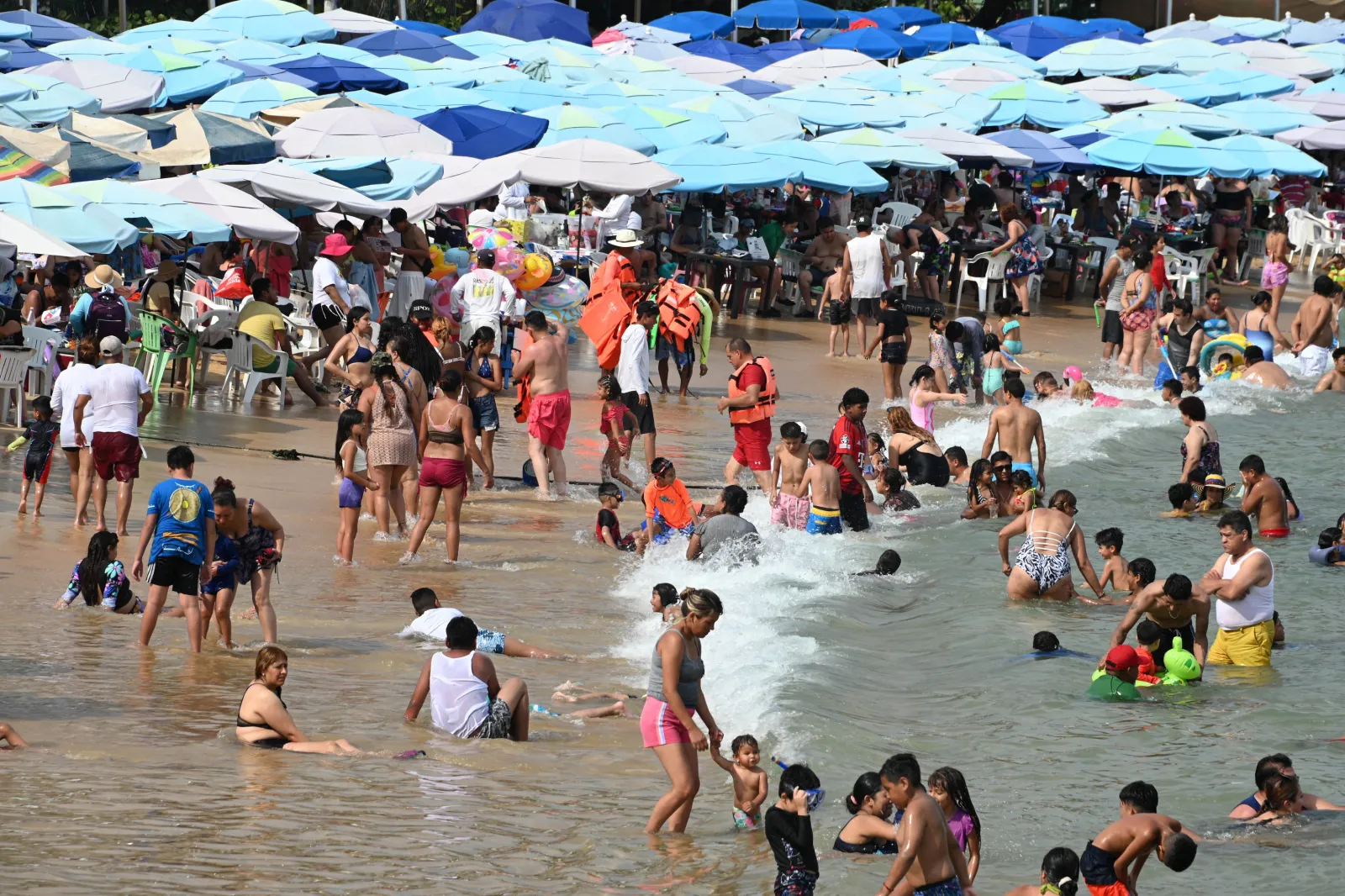
It is not just Canadian visitors who are flocking to Mexico; the country is reporting record numbers of tourists from all over the world, including the U.S., which in turn is fueling a boom in hotel development. This boom started in 2023, when the country started recovering from the disruptions caused to the sector by the COVID-19 pandemic.
According to Mexican Secretary of Tourism Josefina Rodríguez Zamora, Mexico welcomed 23.4 million international tourists in the first six months of the year, up 7.3 percent from the same period a year earlier and 6.2 percent above 2019 levels. In the month of June alone, international tourism grew 10 percent year-over-year.
In July, according to official data, Mexico reported a 12.3 percent increase in international arrivals from the previous year, led by visitors from the U.S. and Canada, many of whom flocked to its beaches.
...
Of all visitors that went to Mexico between January and June, 5.7 million were cruise passengers—up 9.6 percent from the first six months of 2024—who brought the country $484.2 million in revenues. Overall, revenues from international tourists reached $18.68 billion between January and June, representing a 6.3 percent increase from the same period a year earlier.
"Tourism continues to grow and strengthen its contribution to the national economy thanks to coordinated efforts with the private sector and all levels of government," said Rodríguez Zamora during a recent press conference covered by local media.
While several factors contribute to Mexico's tourism growth, including a surge in investment in the sector, the country appears to have benefited from a decline in visitors to the U.S. since Trump's return to the White House, particularly among Canadians.
The majority of the 23.4 million international tourists who visited Mexico in the first six months of the year came from the U.S., totaling 7.36 million people. The second-highest share of visitors within the same period, totaling 1.68 million, came from Canada. This number increased by 11.8 percent from the previous year, indicating a significant shift between 2024 and 2025.
The 'Trump Slump' Explained
International tourism to the U.S. has declined in recent months, as the country experienced what some have called the "Trump Slump."
Between January and May, international arrivals were down 2.4 percent compared to the same period in 2024, according to data by the U.S. Department of Commerce's International Trade Administration (ITA).
In July, the latest data from Tourism Economics' Global Travel Service showed that overseas arrivals to the U.S. dropped 3.1 percent year-over-year, bringing the year-to-date decline to 1.6 percent. In August, the number of overseas visitors to the U.S. reported another year-over-year decline, with 3.5 million arrivals, down 2.9 percent from the same period a year earlier.
"The slowdown is clear across a wide range of destinations, from major cities to smaller markets," Sean Dixon, President of Visit Topeka in Kansas, told Newsweek. "Here in Topeka, we’ve seen about a 2.5 percent year-to-date decline in overall visitation, and some larger markets like Kansas City and Las Vegas are experiencing even sharper drops," he said.
"These numbers mirror what my colleagues across the country are reporting, demand has softened, and international interest isn’t what it was even a couple of years ago. The World Travel & Tourism Council even stated that the U.S. is the only country expected to see a decline in foreign visitor spending this year, a $12.5 billion negative hit to the economy."
A majority of this decline can be attributed to a drop in visitors from Western Europe, Asia, and Canada. The number coming from the Great White North was down 25.2 percent year-to-date as of July, including a 37 percent drop in land arrivals in July alone—a loss that affected states bordering Canada the most.
In the first half of the year, the number of Canadians traveling to the U.S. by land was down about 33.1 percent year-over-year, while the number of those traveling by air had fallen roughly 22.1 percent, according to Canada's national statistics agency.
This slowdown in tourism appears to be a direct response to Trump's immigration policies, which earlier this year raised concerns among visitors from around the world about being denied entry to the country upon arrival.
"Lengthy visa interview wait times, stricter border and immigration policies, potential tariffs, the dollar's strength, and U.S. travel restrictions for certain countries" are all factors that a recent report from the Congressional Research Service mentioned as possibly linked to the recent plunge in international tourism.
"There are several factors, but tariffs are not helping," Dixon said. "They’ve raised costs across the board, from restaurants and attractions to the retail experiences visitors enjoy. A recent H2R Market Research survey found that 36 percent of respondents shared that they intend to spend less on travel this year due to rising costs. We have one small chocolate maker in downtown Topeka which has seen the cost of cacao rise by as much as 400 percent this year, which forces him to pass along higher prices to his customers," he added. "That kind of ripple effect makes the U.S. a more expensive destination overall."
Beyond tariffs, "economic uncertainty in key markets, unfavorable exchange-rate shifts, visa and entry hurdles, and the overall perception of how welcoming the U.S. feels all play a role," Dixon said. "Tourism is built on relationships and storytelling, and when international travelers see antagonism in headlines, it makes it harder for us as destinations to extend a warm welcome. The Las Vegas mayor recently made public appeals for Canadians to return, which can show you how desperate the situation has become."
While Americans are leading the way in Mexico's tourism boom, Mexicans seem to be returning the favor, boosting tourism to the U.S. Mexican visitation to the U.S. increased by nearly 14 percent in the first six months of the year compared to the same period in 2024.
This, however, is not enough to prop up the sector alone. According to estimates by the World Travel & Tourism Council, international visitor spending in the U.S. is expected to fall below $169 billion this year, down from $181 billion last year.
Update, 9/23/2025 11:35 a.m. ET: This article has been updated to include comment from Sean Dixon.
View 0 Comments
Submit Correction
View Editorial & AI Guidelines