10
Loading video...

By Lucy Notarantonio
Senior Reporter
0
Share
Newsweek is a Trust Project member
See more of our trusted coverage when you search.Prefer Newsweek on Googleto see more of our trusted coverage when you search.
After seeing the same issue in clients and her own life, a millennial therapist took to TikTok to ask baby boomers one question.
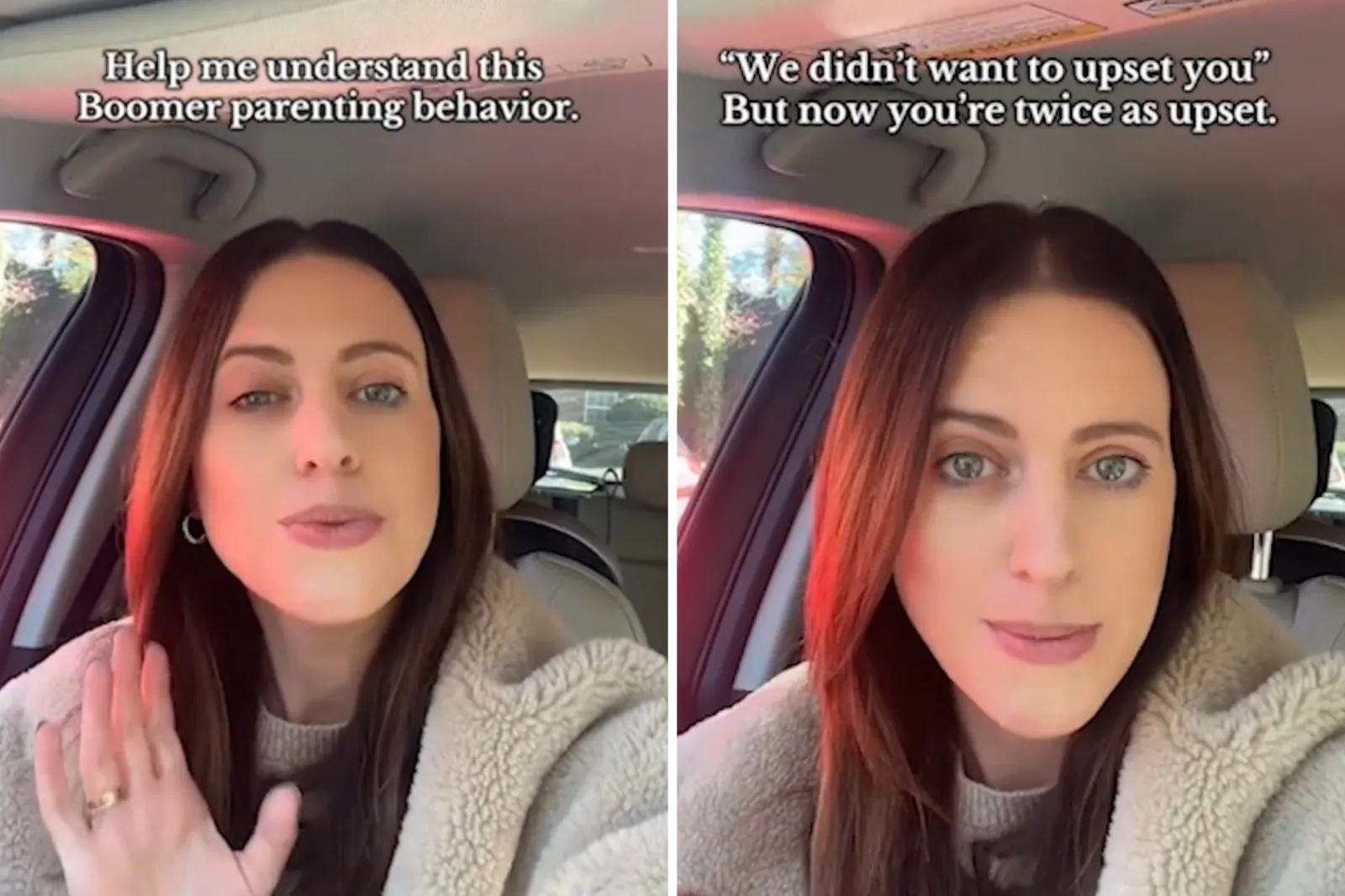
Mary Beth Somich, 34, has over 10 years’ experience as a licensed clinical mental-health counselor. During her career, she has noticed something that parents born between 1946 and 1964 "consistently do" that she "truly doesn’t understand."
In the 1.2 million-view video (@yourjourneythrough), Somich acts out a series of phone calls in which she plays a parent aged 61 to 79. In each skit, the "parent" drops serious news at the last minute—like, "your dad had open-heart surgery today"—then justifies the delay by saying she didn’t want to worry her child about his health.
Read More on Family & Parenting
Somich, based in Raleigh, North Carolina, told Newsweek: "Many boomers grew up believing that love is shown through providing and protecting, not through verbal affirmation or vulnerability."
...
She added that boomers often keep personal or medical information private because they were raised in a culture where independence, emotional restraint, and handling problems quietly were seen as signs of strength and love. Many genuinely believe they are protecting their children from worry by minimizing or delaying updates, and they view sharing health issues as burdening others or exposing vulnerability.
Meanwhile, younger generations—raised with more openness around mental health and the normalization of sharing life events—interpret that silence as exclusion or lack of trust. So, while boomers are trying to care by shielding, their children feel more cared for when they are included.
How It Lands With Younger Generations
However, this approach can make millennial or Gen Z children feel "twice as upset." Somich said that withholding information about family health or crises can lead to feelings of betrayal, anger, sadness, and a loss of trust.
The clip, captioned "respectfully, why?" has resonated widely, earning over 103,000 likes and almost 13,000 comments.
"They seem to be downplaying things because they’re so uncomfortable with emotions," suggested one user.
Another wrote: "I think it truly is the fact that they were taught to keep things private and not worry their kids. Simple as that."
A third said: "Also a therapist here. I think sometimes it’s meant as a gift of ignorance they can give that they wish they could give themselves, which is based in avoidance as a coping skill. They also get to avoid being vulnerable as long as possible."
'A Social and Cultural Phenomenon'
Somich, who specializes in family dynamics, told Newsweek: "It is a social and cultural phenomenon I have witnessed in my personal and professional life."
After many clients shared the same hurt and frustration, Somich decided it was time to poll her audience—particularly baby boomers—to better understand the behavior.
She said the video was also intended to help millennial children feel less alone and realize that the experience is extremely common.
How Millennials and Gen Z Parent Differently
Over the years, social media has filled with younger people swearing to parent differently from their parents. Somich said: "Millennials and Gen Z encourage children to name feelings, seek support, and share personal struggles rather than hide them."
Those born between 1981 and 2012 value "transparency and frequent communication." Parents from these generations also frequently compare their children’s upbringing with their own, with one mom saying she is learning to regulate her emotions alongside her 4-year-old daughter.
The Mental Load for Parents Today
"Both eras have strengths, but the mental load of parenting today is undeniably heavier," Somich said, explaining that younger parents are exposed to unlimited information, pressure, and comparison online.
"They are exposed to constant expert advice on social media, conflicting rules (sleep training vs. not, screen-free vs. tech-forward), pressure for perfect decisions (car seats, milestones, etc.), and awareness of trauma cycles, attachment, and mental health impacts," Somich said.
"This additional (often visible) stress on Gen X and millennials may also play a role in boomer parents’ unwillingness to ‘burden’ them further."
View 0 Comments
Submit Correction
View Editorial & AI Guidelines