10
Loading video...

By Lydia Patrick
Life & Trends Reporter
0
Share
Newsweek is a Trust Project member
See more of our trusted coverage when you search.Prefer Newsweek on Googleto see more of our trusted coverage when you search.
A new generational debate has taken off on TikTok — and this time, it’s all about camera framing.
The discourse around what has been coined the "millennial gap" was sparked by creator Taylor Knott (@taylormknott), whose viral video claims she can instantly identify someone’s age based on how they film their TikToks. According to Knott, the giveaway is how much space appears above a creator’s head.
What is the 'Millennial Gap'?
“So, like, say there's like a ton of space between, like, the top of their head and the top of the screen,” she said. “That is a one-hundred percent a millennial.”
Read More on Life
Knott contrasted that approach with what she sees as Gen Z’s signature style, which places the face much closer to the camera — sometimes cutting off part of the forehead.
...
“If, like, their foreheads, like, you got the like, the following. And for you page, like, cutting off the forehead right here, that is a gen Z, I promise you,” she said.
Dismissing what she framed as outdated filming habits, Knott added: “Like, forget the millennial pause. It's the millennial, like, whatever. This is like eight thousand billion feet between, like, the top of their head and screen.”
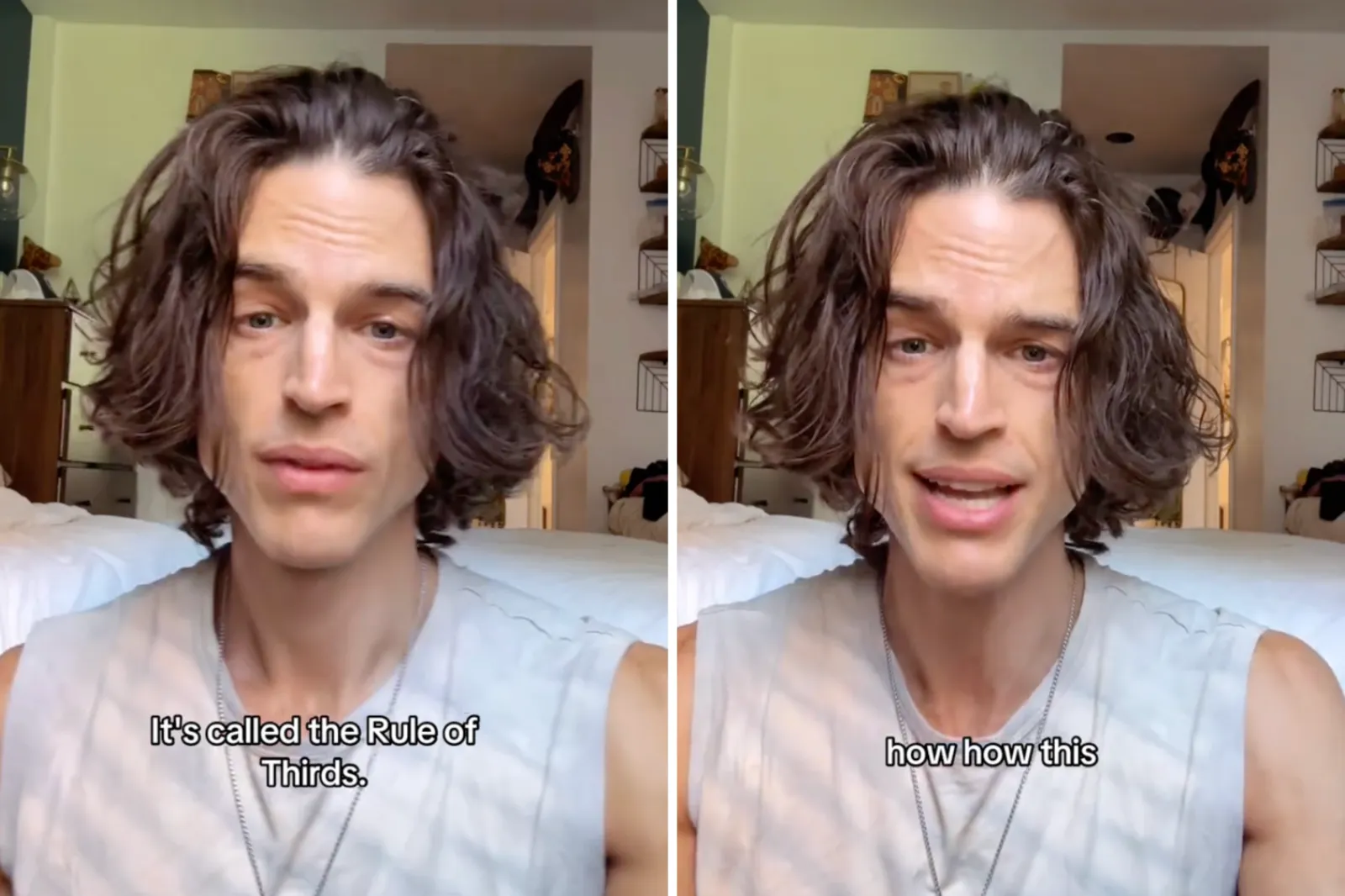
The video quickly racked up over 500,000 views — and just as quickly prompted a response from Andrew Briedis, a 41‑year‑old screenwriter and comedy writer based in New York City, who stitched Knott’s clip with a rebuttal that flipped the joke back onto Gen Z.
'It’s called the Rule of Thirds'
“Gen Z, you know I love you but I just need to ask,” Briedis said in his response. “How is it possible that you grew up with this equipment and you do not know how to frame a shot?”
Rather than viewing the extra space above the head as a mistake, Briedis argued it was intentional — and rooted in traditional composition principles.
“It’s called the Rule of Thirds,” he said. “It’s meant to balance the shot. So that it draws your eye to a very specific place.”
He also criticized Gen Z’s tighter framing, which often cuts off parts of the face in pursuit of a casual look.
“This isn’t — what is this?” he said. “Who is it? What is this doing for anybody?”
While acknowledging that millennials are fair game for mockery, Briedis said this particular critique missed the point.
“Feel free to make fun of Millennials for literally anything,” he said. “But I’m telling you right now, this is not it.”
The back‑and‑forth sparked lively debate in the comments, with users from both generations weighing in.
“The next generation of films are going to be so hard to watch,” joked one commenter.
Others defended the so‑called “millennial gap” as practical rather than aesthetic.
“As a millennial I purposefully have a gap at the top to put my captions so they don’t interfere with my face and body as I talk,” wrote one user named Amanda.
Some admitted the habit had stuck with them over time.
“Stop. I was a Facebook mom taking my photos way up top,” said Jessica. “Almost 40 now and I still want to take my selfies that high.”
Speaking to Newsweek, Briedis said his video was inspired by the internet’s ongoing fixation on generational differences.
“I am a comedy writer and satirist and Gen Z hating on Millennials is such a meme,” he said. “It was kind of a way to poke fun at both generations.”
He said the critique came from a mix of genuine observation and self‑aware exaggeration.
“What I am saying to Gen Z comes from a place of truth, but the exasperation and fear of being out of touch is very Millennial,” he said. “It was an opportunity to playfully goof on each other in a low-stakes way.”
Briedis described the “millennial gap” as a functional choice shaped by the platforms themselves.
“Millennials are more likely to leave space above their heads to place captions, keep their faces clear of app icons, and better frame the shot,” he said.
By contrast, he said Gen Z’s approach aims to feel intimate — even if it’s still carefully curated.
“Gen Z will often frame their shots super close, cutting off half their face so you only really see their eyes and forehead,” he said. “The intention is to make the video seem casual, like you’re on FaceTime with the creator.”
Despite the framing wars, Briedis pushed back against the idea that one generation is more authentic than the other.
“The effortless aesthetic is still curated, just like Millennials,” he said.
He also reflected on what it feels like to be the butt of Gen Z jokes online.
“Millennials have spent close to fifteen years being blamed for everything by older generations,” he said. “It was surprising when Gen Z also started coming at us.”
Rather than leaning into the rivalry, Briedis said he suspects the divide is overstated.
“Part of me feels like new age social media is pitting Millennials and Gen Z against each other to stop us from uniting,” he said. “We’d be unstoppable together.”
More broadly, he believes generational differences online are shaped by vastly different experiences growing up on the internet.
“Gen Z grew up with constant surveillance,” Briedis said. “Millennials had to worry about missing out on jobs because they posted red cup party photos in Facebook groups, but we were allowed to dance freely at clubs in our 20s without the fear of being filmed and embarrassed.”
He added: “I think that makes us a little more goofy, which I love.”
View 0 Comments
Submit Correction
View Editorial & AI Guidelines