
...

By Amanda Greenwood
Associate News Editor
0
Share
Newsweek is a Trust Project member
See more of our trusted coverage when you search.Prefer Newsweek on Googleto see more of our trusted coverage when you search.
Millions of people across the Western United States are under heat advisories this week as forecasters warn that dangerously high temperatures could increase the risk of heat-related illness.
Temperatures are expected to climb above 100 degrees Fahrenheit in parts of California and Nevada, while unusually warm conditions will also affect communities in Oregon and Washington.
The concern extends beyond discomfort. Health officials warn that prolonged exposure to extreme heat can quickly lead to heat exhaustion or heat stroke, particularly among older adults, outdoor workers, young children and people without access to air conditioning.
Read More on News
Where the Heat Will Be Most Intense
Nevada Hits 100 Degrees Fahrenheit

...
In Nevada, the NWS has issued a heat advisory for parts of the Western Nevada Basin and Range, including the cities of Fallon, Fernley, and Lovelock.
Temperatures are forecast to reach between 98 and 102 degrees Fahrenheit, and the advisory is in place from mid-Tuesday morning through to early Friday morning.
California Valleys May Reach 112 Degrees
...
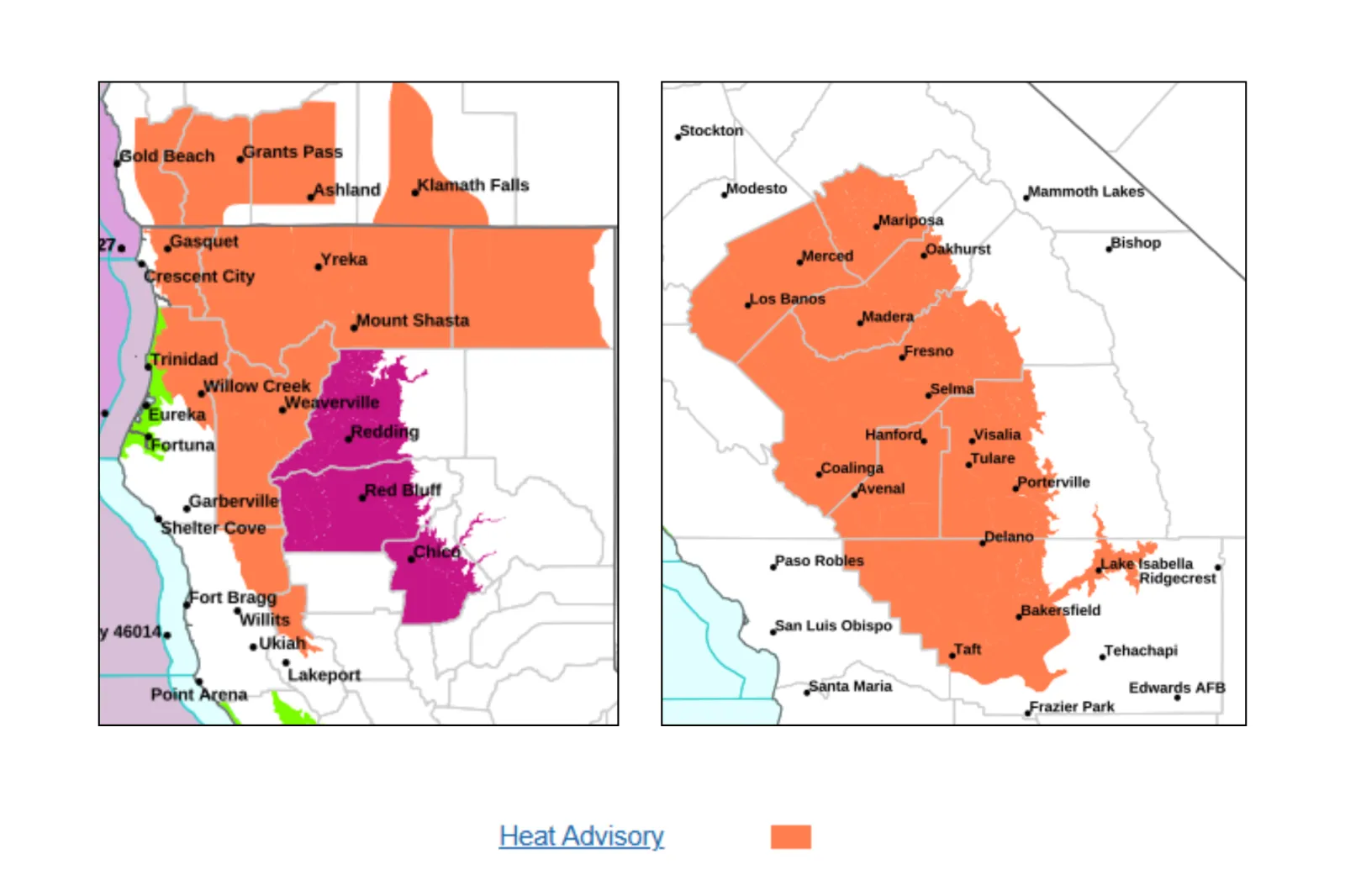
California faces some of the hottest conditions. Temperatures are forecast to reach between 90 and 110 degrees Fahrenheit across several northern counties, while parts of the Central Valley, including Fresno, Bakersfield and Visalia, could exceed 103 degrees Fahrenheit.
Some valleys may approach 112 degrees Fahrenheit.
Southern Oregon Becomes a Hotspot
...
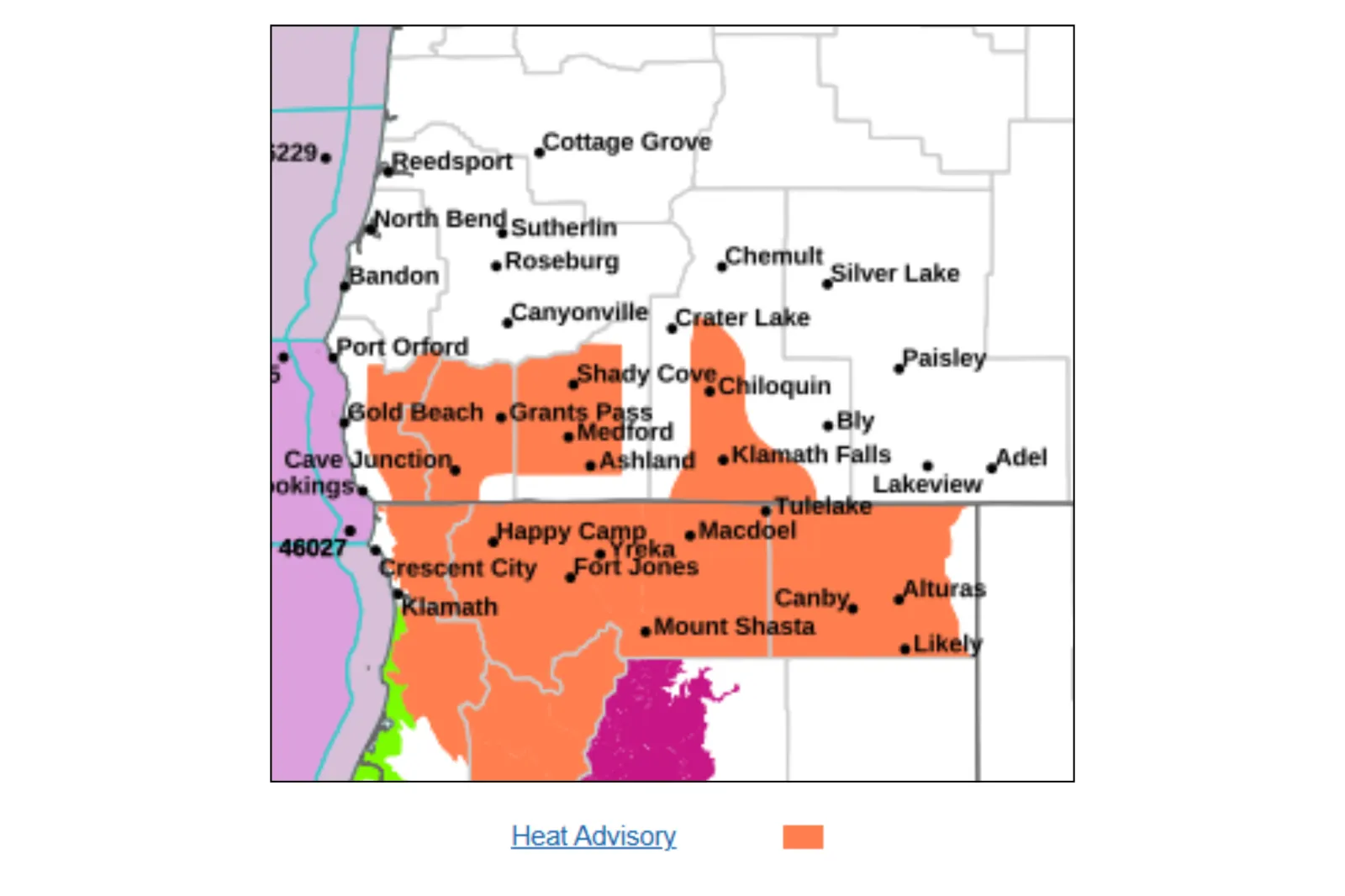
Southern Oregon, including Medford and Klamath Falls, is expected to see highs between 90 and 104 degrees Fahrenheit through Tuesday night.
Even Washington Feels the Heat
...
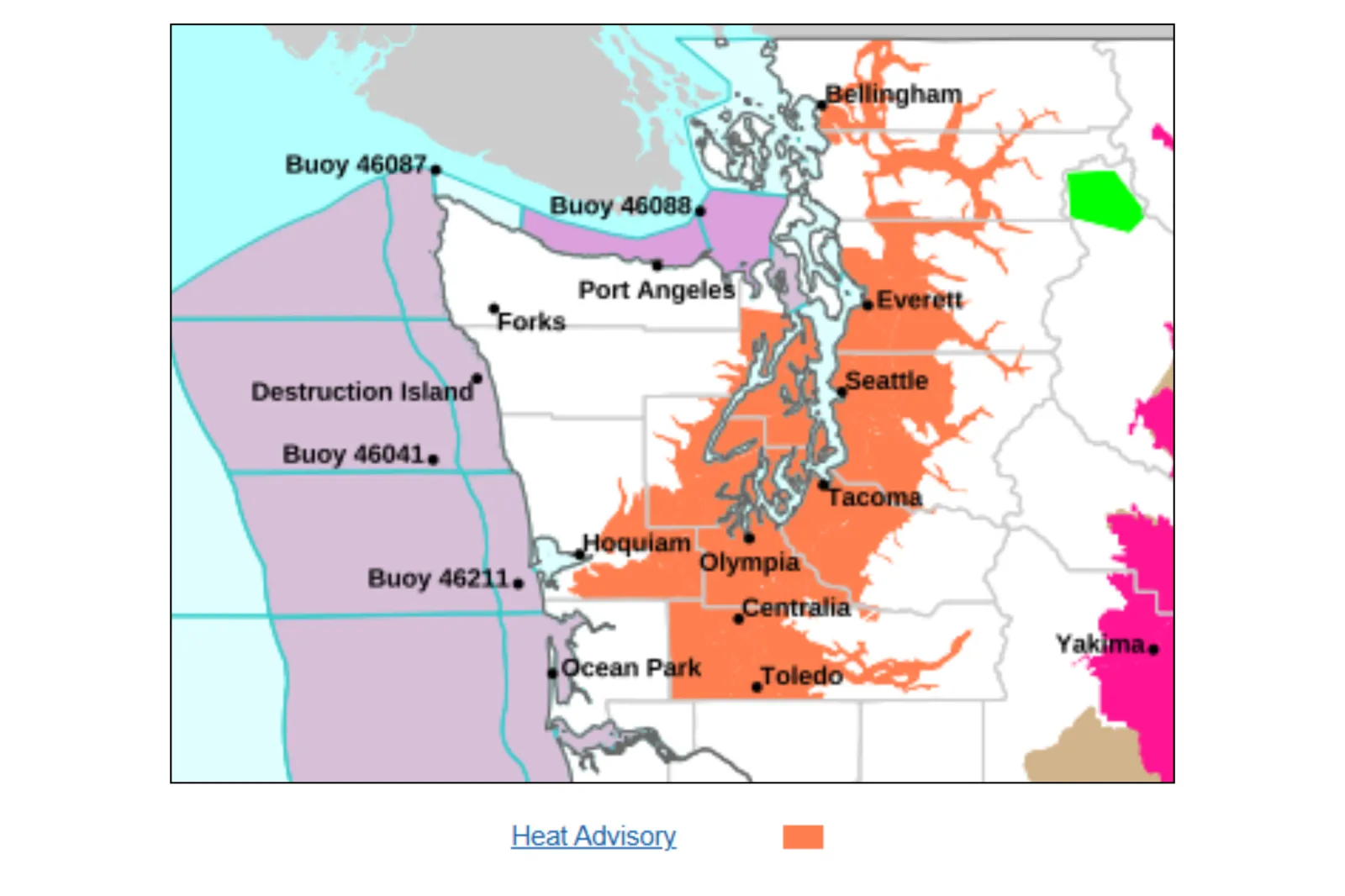
Even areas farther north are feeling the heat. Advisories cover Seattle, Tacoma, Everett and surrounding communities, where temperatures are expected to reach between 85 and 95 degrees Fahrenheit.
Why Extreme Heat Can Become Dangerous
Extreme heat remains one of the deadliest weather hazards in the United States.
The National Weather Service (NWS) warns that prolonged exposure can increase the risk of heat exhaustion, heat stroke and other heat-related illnesses.
The danger increases when people lack access to air conditioning, become dehydrated or spend extended periods outdoors.
Officials also warn that rivers and lakes may remain deceptively cold despite hot weather. Sudden immersion can trigger cold-water shock, which can lead to panic, loss of muscle control and drowning.
Recognizing Heat Exhaustion and Heat Stroke
...
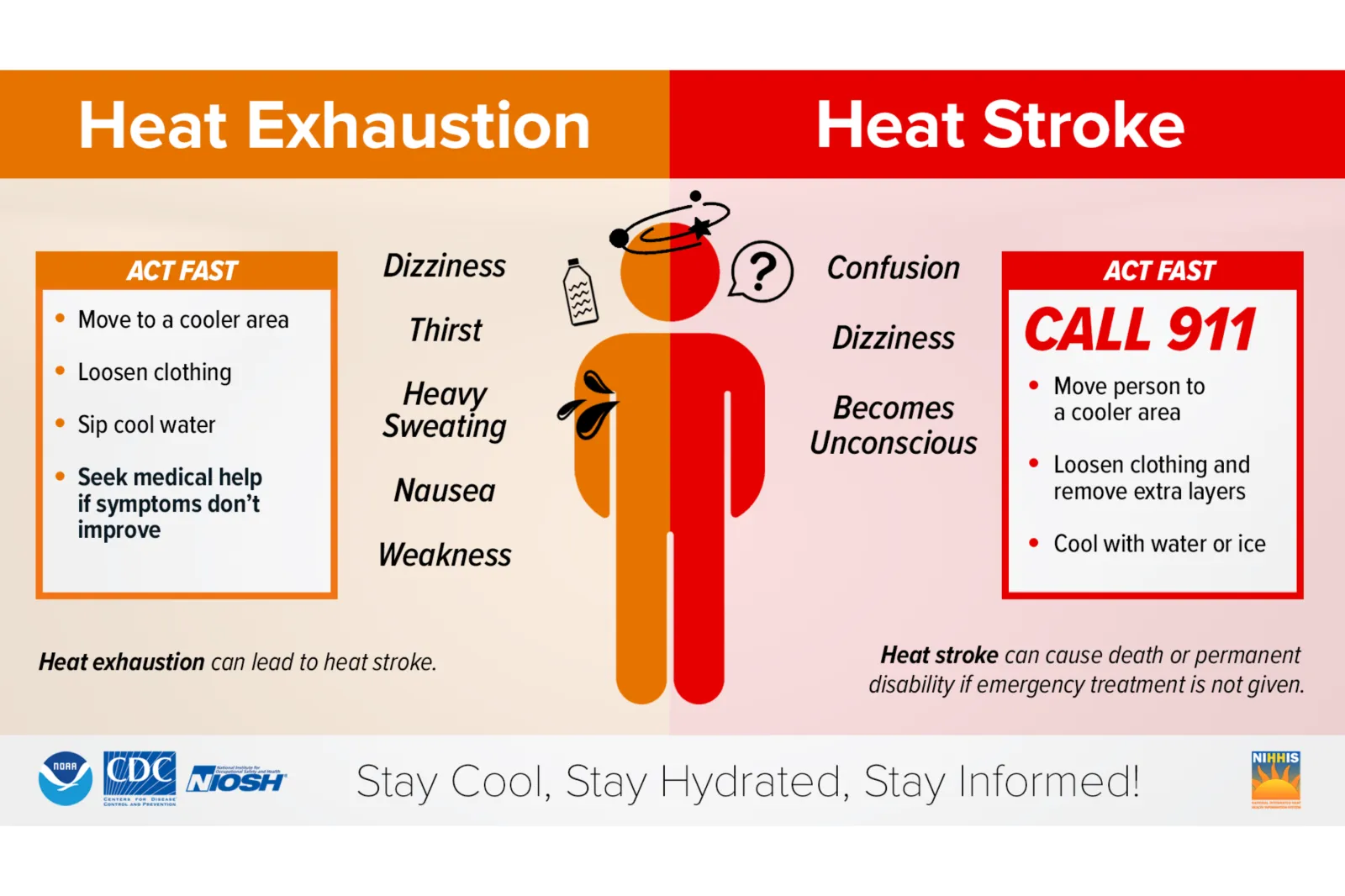
The NWS says that heat exhaustion and heat stroke are serious heat-related illnesses that can develop during prolonged exposure to high temperatures.
Heat Exhaustion
This typically comes first as the body struggles to cool itself, with symptoms including:
- Heavy sweating
- Weakness
- Dizziness
- Nausea
- Headaches
- Muscle cramps
Heat Stroke
If left untreated, heat exhaustion can quickly lead to heat stroke, a life-threatening emergency in which the body’s temperature rises rapidly.
Signs of heat stroke include:
- A high body temperature
- Confusion or disorientation
- Rapid pulse
- Loss of consciousness
Unlike heat exhaustion, sweating may stop as the body’s cooling system fails.
Health officials warn that both conditions can worsen quickly in sustained heat—especially when overnight temperatures remain high—making early recognition and cooling critical.
How To Stay Safe
Residents are urged to:
- drink plenty of water
- avoid strenuous outdoor activity during the hottest part of the day
- spend time in air-conditioned spaces whenever possible.
Lightweight clothing and regular breaks in shaded or cooled spaces are also strongly recommended, particularly for outdoor workers.
People without reliable cooling are encouraged to use public cooling centers, many of which operate through libraries, community centers and other public facilities.
When Will Temperatures Cool Down?
The heat is expected to linger through midweek, particularly in California and Nevada, where advisories remain in effect into Thursday or early Friday. Conditions should begin to improve toward the weekend as temperatures gradually fall across much of the region.
Nevada
The heat advisory conditions are likely to persist until at least Thursday, with little change in daytime temperatures and continued warm nights. A gradual cooldown is expected heading into Friday and the weekend, as highs dip into the low 90s degrees Fahrenheit by Friday and upper 80s by Saturday, with a slight chance of showers or thunderstorms developing late in the week.
California
The heat is likely to hold steady until Thursday, maintaining elevated temperatures during the day. A change arrives late in the week, with highs dropping into the upper 80s degrees Fahrenheit by Friday and mid-80s over the weekend, alongside a chance of rain beginning Thursday afternoon and continuing into Friday.
Oregon
Highs are forecast to drop into the mid-80s by Friday and low 80s by Saturday, alongside increasing cloud cover and a slight chance of rain.
Washington
Temperatures will fall to the mid to low 70s before settling into the mid-to-high 70s over the weekend.
View 0 Comments
Submit Correction
View Editorial & AI Guidelines