...

By Amanda Greenwood
Associate News Editor
0
Share
Newsweek is a Trust Project member
See more of our trusted coverage when you search.Prefer Newsweek on Googleto see more of our trusted coverage when you search.
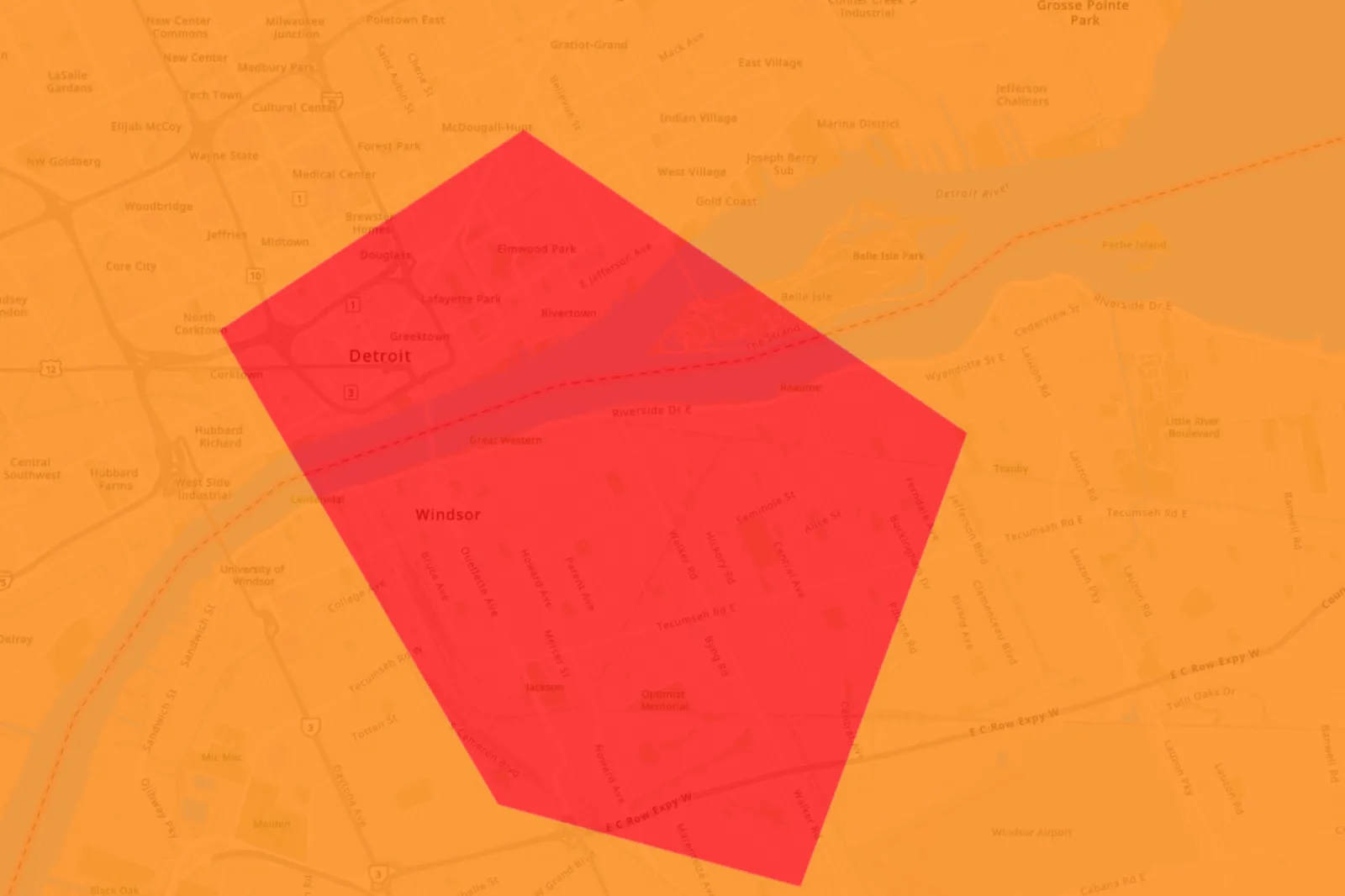
Millions of residents across parts of Michigan—including Detroit and Windsor—have been warned to stay indoors, as a pocket of fine particle pollution (PM2.5) has reached “unhealthy” levels, according to the Environmental Protection Agency’s (EPA) AirNow map.
The National Weather Service (NWS) has also issued an air quality advisory—in effect until Monday, February 16—for parts of southwest Michigan, including St. Clair, Livingston, Oakland, Macomb, Washtenaw, Wayne, and Monroe Counties, warning people that elevated levels of PM2.5 are making the air quality “unhealthy for sensitive groups,” and urging them to “keep windows closed overnight to prevent smoke from getting indoors.”
...
Read More on News
Advice for Residents With ‘Unhealthy’ Air in Michigan
Both the NWS and EPA have advised everyone in affected areas to take steps to avoid exposure to the polluted air. They should either reduce the intensity or duration of outdoor activities, and those in sensitive groups—which include the elderly, children, and those with existing heart or lung conditions—should “avoid strenuous outdoor activities.”
The NWS has also told residents to “reduce or eliminate activities that contribute to air pollution,” until conditions improve. These types of activities include lighting outdoor fires and using wood-burning stoves and candles.
Where possible, people should use their home’s central air system and make sure the air filter is a high-quality one (rated MERV 13 or higher) to help remove fine pollution particles from the air inside.
Why Is the Air Quality ‘Unhealthy’ in Michigan?
According to the MiAir—which provides up-to-date air quality data for Michigan—the elevated levels of PM2.5 are a result of “snowmelt.”
It says that “surface temperatures exceeding 50-degree F are speeding up the melting of snow, which will continue to release trapped particulate matter—increasing PM-2.5 concentrations.”
What Is PM2.5?
PM2.5 are small particles of pollution that are considered by the EPA to be one of the most dangerous forms of pollution. This is because the particles are so fine—2.5 micrometers or less (smaller than a strand of hair)—they can be unknowingly inhaled, penetrating deep into the lungs and bloodstream, triggering or worsening existing heart or lung conditions, such as asthma, and causing symptoms ranging from “wheezing, coughing, chest tightness, dizziness, or burning in the nose, throat, and eyes.”
How Air Quality Is Measured
The EPA uses the Air Quality Index (AQI) to measure and communicate air quality across the U.S. The AQI is a standardized scale—from 0 to 301+—that categorizes air conditions from “good” and “moderate” to “unhealthy” and “hazardous.”
- Good (0-50): Air quality is satisfactory, and there is little or no health risk to the public.
- Moderate (51-100): The air quality is acceptable for most people, but unusually sensitive individuals might experience minor health effects.
- Unhealthy for Sensitive Groups (101-150): Children, older adults, and people with heart or lung disease may be affected by the poor air quality.
- Unhealthy (151-200): Everyone may begin to feel health effects, but sensitive groups are likely to be more seriously affected.
- Very Unhealthy (201-300): This usually triggers a health alert, meaning there is an increased health risk for the general population.
- Hazardous (301+): The air quality could have serious health effects for everyone, and an alert warning of emergency conditions is issued.
View 0 Comments
Submit Correction
View Editorial & AI Guidelines