...

By Anna Skinner
Associate News Editor
0
Share
Newsweek is a Trust Project member
See more of our trusted coverage when you search.Prefer Newsweek on Googleto see more of our trusted coverage when you search.
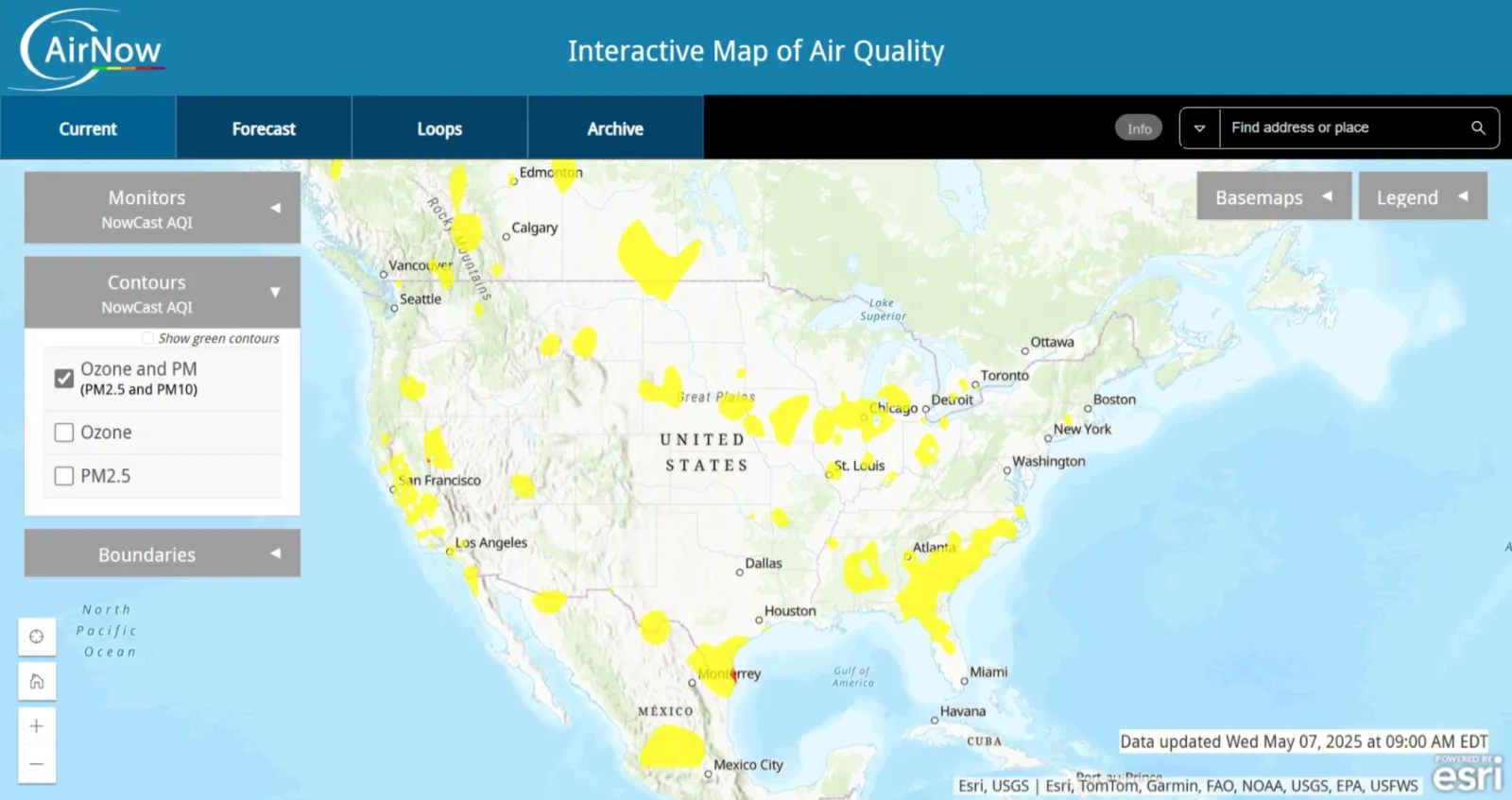
Air quality forecasts issued by the U.S. Environmental Protection Agency (EPA) through its AirNow website on Monday predicted that parts of western Florida would experience air quality deemed "unhealthy for sensitive groups" the following day. However, the region's air quality remained in the good or moderate category.
A Florida Department of Environmental Protection (DEP) spokesperson told Newsweek "misreading of forecast tools" could be why. Newsweek reached out to the EPA by email for comment.
Why It Matters
Multiple states have already been exposed to poor air quality this year, caused by wildfire smoke, particle pollution like dust, or ozone. The issuance of air quality alerts coincides with a broader national trend in air quality deterioration.
Read More on U.S.
A recent report from the American Lung Association (ALA) found that 156.1 million Americans—46 percent of the population—now live in counties with failing grades for ozone or particulate pollution, a 25 million increase from the previous year.
However, forecasts aren't always accurate. Even when they are accurate, air quality is affected by numerous factors including sunlight, wind and temperatures, and can change quickly.
What to Know
On Monday afternoon, the AirNow forecast for the following day showed that air quality levels in the Tampa area were expected to fall into the "orange" category on the Air Quality Index (AQI), indicating conditions that are "unhealthy for sensitive groups," which includes older adults, children, and individuals with respiratory conditions.
...
According to the U.S. Environmental Protection Agency (EPA), AQI values in this range can trigger symptoms such as shortness of breath, coughing, and exacerbation of chronic heart and lung diseases. The forecasts don't trigger automatic alerts, but federal air quality guidance suggests that sensitive populations should reduce outdoor exertion and stay indoors if air quality reaches the orange category.
However, a spokesperson with the Florida DEP told Newsweek on Tuesday evening that air quality in Tampa remained in the "good" range.
"Monitors at locations like West Riverfront, Tampa Heights and North Ybor are not showing any elevated levels, and no air quality alerts have been issued," the spokesperson said.
When assessing historical air quality measurements through AirNow, the site also showed daily AQI as "good" or "moderate" in Tampa.
In some parts of the U.S, local officials might issue an ozone action day alert or an air quality alert. A Texas Commission on Environmental Quality (TCEQ) spokesperson previously told Newsweek that the alerts don't necessarily mean the air quality is poor and are only indicative of forecasts.
What People Are Saying
A Florida DEP spokesperson told Newsweek: "It's possible there was a misreading of the forecast tools, but there hasn't been any indication that conditions would reach the "unhealthy for sensitive groups" range today. In this region, the Hillsborough County Environmental Protection Commission manages local monitoring and would issue any alerts if needed."
The spokesperson added that "real-time air quality data is always available through DEP's website, AirNow.gov or most weather apps."
Katherine Pruitt, the senior director of Nationwide Clean Air Policy for the ALA, previously told Newsweek: "The Air Quality Index's health advisory messages for sensitive groups can only be effective if people living with conditions that make them more vulnerable to health harm from air pollution recognize themselves as part of a sensitive group and take appropriate precautions. Research has shown that is not necessarily the case."
What Happens Next
As of Wednesday, AirNow's air quality monitoring is detecting Florida's air quality in the "good" or "moderate" categories. Tomorrow's forecast shows a similar trend.
Tampa's current monitoring shows it is in the moderate category.
"If you are unusually sensitive to particle pollution, consider reducing your activity level or shorten the amount of time you are active outdoors," AirNow said.
View 0 Comments
Submit Correction
View Editorial & AI Guidelines