10
Loading video...

By Jenni Fink
Senior Editor
0
Share
Newsweek is a Trust Project member
See more of our trusted coverage when you search.Prefer Newsweek on Googleto see more of our trusted coverage when you search.
As Senator Mitch McConnell continues his recovery from a June fall that left him hospitalized and later in a rehabilitation facility, his extended, fully paid absence from the Senate has renewed a broader debate about paid leave in America, including with regard to what women who give birth are afforded.
The Kentucky Republican, who has not been seen publicly since mid-June and was discharged from rehabilitation in early August to continue recovering at home, has remained on the federal payroll throughout his medical absence. Congress has no official paid sick leave policy, and members can continue receiving their salary indefinitely while on a medical leave. At the same time, millions of American women who give birth each year do not have access to any guaranteed paid maternity leave.
"This disparity highlights how: (1) it is far past the time for federal legislation affording everyday Americans the same rights and benefits bestowed upon Congress; and (2) providing such benefits is clearly feasible, as we do so already for our lawmakers," Thomas Ricotta, an attorney specializing in Family and Medical Leave Act (FMLA) cases, told Newsweek.
Read More on U.S.
How Long Is Maternity Leave in the United States?
The United States remains the only wealthy nation without a federal paid parental leave guarantee for most workers. While FMLA provides eligible workers with up to 12 weeks of job-protected leave, the law does not require it to be paid leave. It also excludes many workers employed at smaller businesses and those who have not met minimum employment requirements.
Only a limited number of states and Washington, D.C., operate paid family leave programs. Those states include California, Colorado, Connecticut, Delaware, Maine, Massachusetts, Minnesota, New Jersey, New York, Oregon, Rhode Island and Washington. Workers in most other states rely primarily on employer-provided benefits or unpaid leave.
No state in the country universally guarantees fully paid maternity leave for all workers through a statewide program.
This disparity means a new mother in Kentucky, Texas, Florida, or dozens of other states may have no guaranteed source of wage replacement after childbirth, even while taking protected leave under federal law.

...
Do You Get Paid for Maternity Leave?
Whether a woman gets paid during maternity leave depends largely on where she lives and who employs her.
Under federal law, most Americans are not entitled to paid leave after giving birth. Some employers voluntarily provide paid parental leave, while workers in states with paid family leave programs may qualify for partial wage replacement funded through state-administered programs.
Ricotta noted that there's "quite a disparity" in how members of Congress are treated "in comparison to how other Americans are treated."
Professor Margaret Quinlan, director of the Health & Medical Humanities program at the University of North Carolina at Charlotte, told Newsweek that postpartum recovery is often treated differently from other major medical events.
"The contrast between a member of Congress receiving weeks of fully paid leave during a medical recovery and the reality that many new mothers have no guaranteed paid leave underscores a persistent inequity in U.S. policy," she said. "Postpartum recovery is not a luxury. It is a critical period of physical and mental health that deserves the same respect and policy support as any other significant medical event."
Now, federal civilian employees are eligible for up to 12 weeks of paid parental leave at their full salary under the Federal Employee Paid Leave Act. McConnell has been out of the Senate for 9 weeks, as of the time of publication of this article.
Related Story
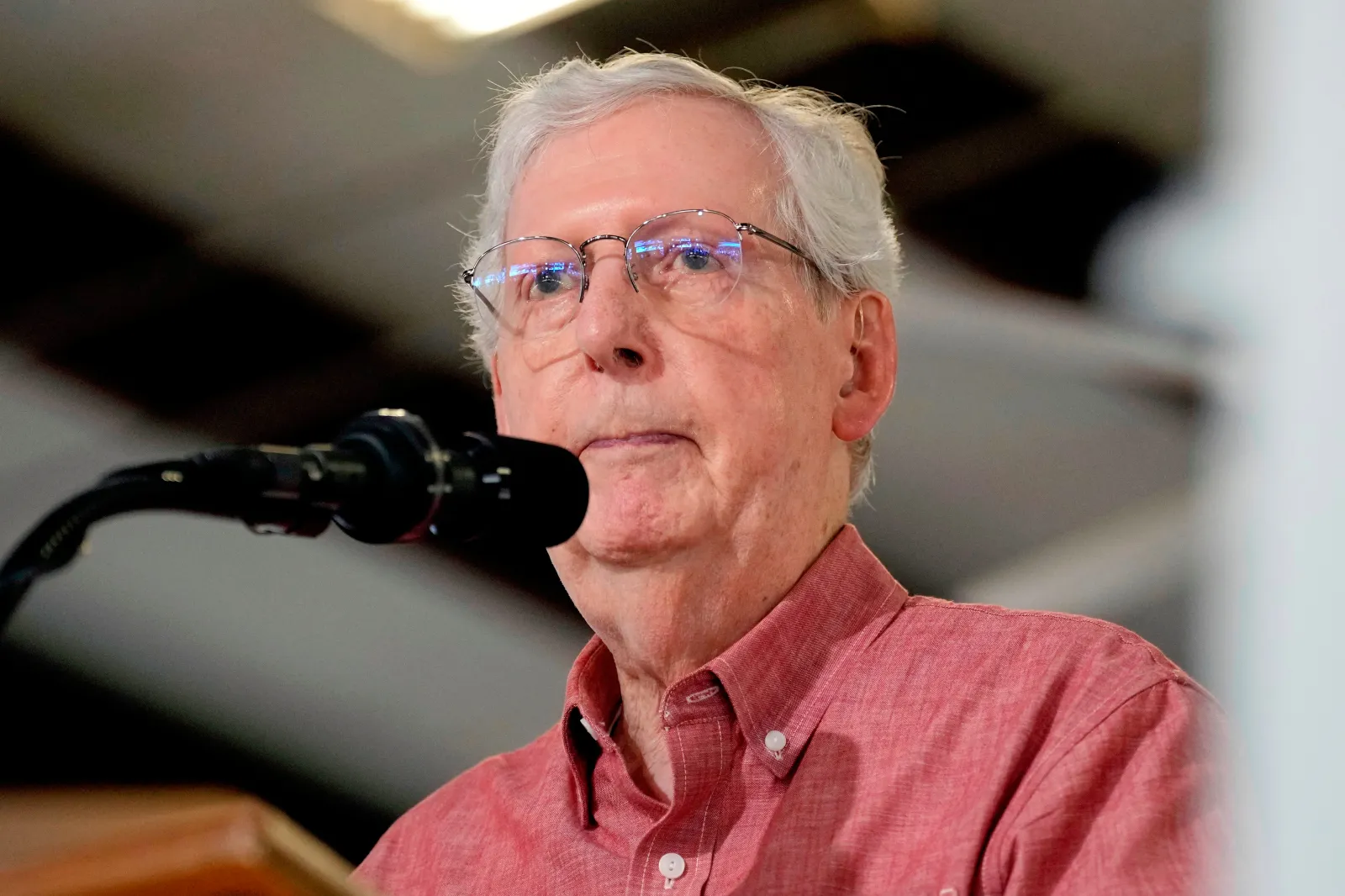
Andy Beshear Says Mitch McConnell Owes Kentuckians an Update
How Long Has Mitch McConnell Been on Medical Leave?
McConnell's medical absence began following a June 14 fall at his home in D.C. According to statements from the senator and his office, the Kentucky Republican was hospitalized after briefly losing consciousness and later underwent rehabilitation while recovering from injuries associated with the fall and pneumonia.
The senator disclosed the circumstances of his hospitalization in July after weeks of public speculation about his condition. He later announced that he had been transferred to a rehabilitation center before being discharged to continue recovery at home. McConnell was released from rehabilitation 53 days after his fall and planned to continue working remotely while undergoing physical therapy.
Throughout his absence, he has remained a sitting U.S. senator and continued receiving his salary.
Caroline Welles, executive director of The First Ask, also pointed to the contrast.
"Members of Congress have the most generous leave policy in the country which includes full paid salary during sick leave for as long as they need. Senator McConnell has drawn his full $193,000 salary through seven-plus weeks of sick leave. While we believe that he should be able to take the time he needs to recover, he is also in the position to extend these benefits to Americans recovering from childbirth and notably does not," Caroline Welles, executive director of The First Ask, an organization dedicated to getting Democratic women elected, told Newsweek.
Andy Beshear, Mitch McConnell Feud
Kentucky Governor Andy Beshear, a Democrat, has increasingly criticized the lack of transparency surrounding McConnell's condition.
Beshear has publicly questioned whether McConnell should continue serving if he cannot demonstrate that he can fulfill the responsibilities of his office. The governor urged the senator to consider resignation if he could not prove his fitness to serve.
"I've heard absolutely nothing back from Mitch McConnell," Beshear said on Face the Nation on Sunday. "All he needs to do is call into this show for two minutes, or Fox News for two minutes, or do a video for two minutes to the people he's supposed to serve. But you know what? He absolutely refuses to do it."
Mitch McConnell Health Latest: Current Condition
The latest public update on McConnell's condition came in early August when he said in a statement that he had been discharged from a rehabilitation facility and returned home.
McConnell said he would continue an intensive physical therapy regimen while remaining engaged in Senate business remotely. His office has said physicians advised continued recovery from home, but no timetable has been provided for a full return to Washington.
According to previous medical updates, McConnell did not suffer a stroke, heart attack, concussion or major fractures in the fall, though his doctors noted that residual effects from childhood polio continue to affect his mobility.
Supporters argue that McConnell deserves whatever time is necessary to recover. Critics counter that the circumstances highlight how different forms of recovery receive unequal treatment under public policy.
"Senator McConnell's leave demonstrates what a humane response to a significant health event can look like: time, pay, and job security. The exhausting irony is that many Americans recovering from childbirth, one of the most common medical experiences in the country, cannot count on those same protections," Quinlan said.
Kentucky's Maternity Leave Compared to Mitch McConnell Paid Absence
Kentucky does not operate a statewide paid family leave program for private-sector workers. Most residents therefore rely on employer policies or unpaid FMLA protections if they qualify. That means a Kentucky woman recovering from childbirth could receive substantially less paid time off than McConnell has received while recovering from his June health incident.
Beth Wanner, founder of Mother Cover, said the comparison extends beyond pay and reflects how institutions handle employee absences.
"Pay is only half the story. McConnell has been out since mid-June and the Senate's work on funding and the farm bill has stalled because nobody covered the seat. That is the exact thing employers do to a woman on maternity leave. They don't backfill her, they split her work across an exhausted team, and then the fallout gets attributed to her leave. Congress can absorb months of that. A 200-person company cannot, and a new mother pays for it in her career while Mitch's job is fully protected," Wanner said.
While McConnell is under pressure to prove his ability to serve in the Senate, advocates of stronger paid family leave policies continue to push for guaranteed paid time off to ensure women can fully recover from childbirth, both emotionally and physically, before returning to work.
Contact Newsweek editors on this story: Sam Wilson.
View 0 Comments
Submit Correction
View Editorial & AI Guidelines