10
Loading video...

By Jack Beresford
Senior Reporter
0
Share
Newsweek is a Trust Project member
See more of our trusted coverage when you search.Prefer Newsweek on Googleto see more of our trusted coverage when you search.
A mom in Minnesota was innocently scrolling through TikTok when she suddenly realized the impact it was having on her son.
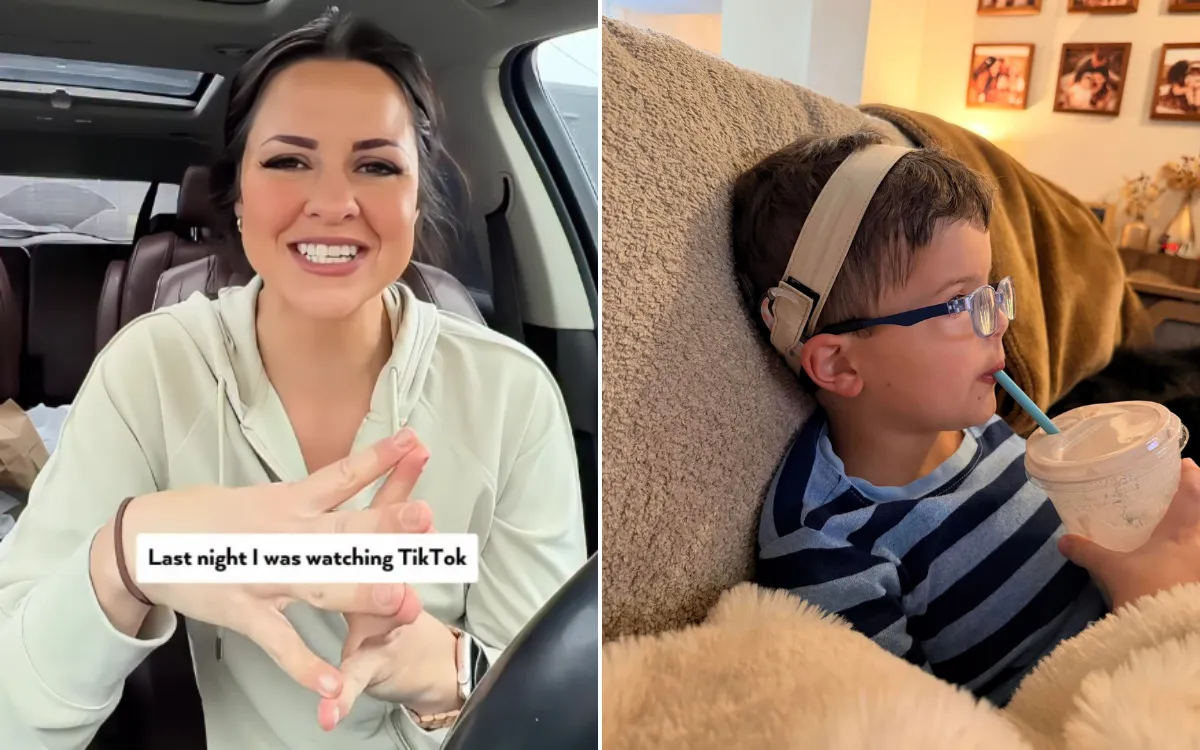
Beth Leipholtz shared a post to Threads, under the handle @beth_and_coop, explaining what happened to her deaf 6-year-old son, Cooper, when she began browsing the popular social media platform.
Leipholtz regularly shares stories from her day-to-day life with Cooper on Instagram under the handle @beth_and_coop. "We got Cooper's diagnosis when he was 6 weeks old," Leipholtz told Newsweek. "Sharing kind of helped me work through it in the beginning, and, as a result, has helped other people, which is why I continue to share."
Read More on Family & Parenting
When Cooper was born, he did not pass a mandatory newborn hearing test. Doctors at the time told Leipholtz not to worry about it, as, sometimes, newborns can have fluid in the ears. Cooper was booked in for a follow-up appointment but, in the meantime, back home, Leipholtz became curious about a "white swash of hair" her son had been born with.
After Leipholtz posted in a mom’s social-media group, somebody mentioned Waardenburg syndrome. A rare genetic disorder that occurs in estimated 1 of every 42,000 births, this is characterized by congenital sensorineural hearing loss and pigmentation deficiencies that affect the hair, skin, and eyes.
...
When Leipholtz looked into the condition, it read like a "checklist" of her son’s physical features, including the part about hearing loss. "At that point, he really hadn’t reacted to anything, sound-wise, so we kind of knew at that moment," Leipholtz said. "We then got his official diagnosis when he was 6 weeks old."
Leipholtz said they decided to take a "bilingual approach" from there. Mom and dad would "immediately" start using American Sign Language around Cooper, while he would also have cochlear implants fitted.
"He had surgery for his implants when he was 9 months old, and they were turned on when he was 10 months," Leipholtz said. "We still use a bilingual approach, but he definitely prefers spoken language as far as when he's communicating himself."
Having those avenues of communication have been brilliant for Leipholtz and her son, but, as with anything in life, there have been the occasional hiccups. The TikTok incident is a case in point.
That day when Leipholtz was on her phone, the family had been on a plane. Cooper has to use his mom's phone to connect his implants, via Bluetooth, to the television on the flight.
"The only way I could figure out how to do it was by using the app on my phone," Leipholtz said. "Then the trip passed, we got home, and kind of forgot they were connected.
So, later, when she began browsing TikTok, Leipholtz initially thought she was watching a video on mute. "I use captions a lot and just watch videos silently," she said. "I went to turn the video up and realized that I still couldn't hear it. That's when I went and checked and realized. Luckily, everything that I had been watching was pretty PG, in the grand scheme of things."
This isn’t the first time Leipholtz has made this kind of mistake. "It's happened before with other various things, like, I'll start a podcast in the car or, you know, I think I'm answering a phone call and not be able to hear it," she said. "Eventually I realize, ‘oh, cool, that was streaming into his input.’"
When Leipholtz realized what was going on, she asked Cooper: "Have you just been listening to my TikToks?"
The mom added: "He just kind of smirked at me. I said: ‘Why didn't you say anything? And he just said, ‘I was listening.’"
Leipholtz decided to share what happened because she saw it as one of the "funny moments" that might help parents who are going through what she went through just after Cooper’s initial diagnosis to realize there is light at the end of the tunnel.
"You never think you're going to find humor in it. You never think that there's going to be like these silver linings. But, in reality, it's just an additional layer of parenting that we have to pay attention to," Leipholtz said. "I just hope people realize that, like, yes, these things happen, but, at the end of the day, like, it can be funny, it can be joyful, it can be wonderful."
View 0 Comments
Submit Correction
View Editorial & AI Guidelines