10
Loading video...

By Daniella Gray
Reporter
0
Share
Newsweek is a Trust Project member
See more of our trusted coverage when you search.Prefer Newsweek on Googleto see more of our trusted coverage when you search.
A mom from South Dakota who had a gut instinct that there was something wrong with her baby finally got the answers she was searching for.
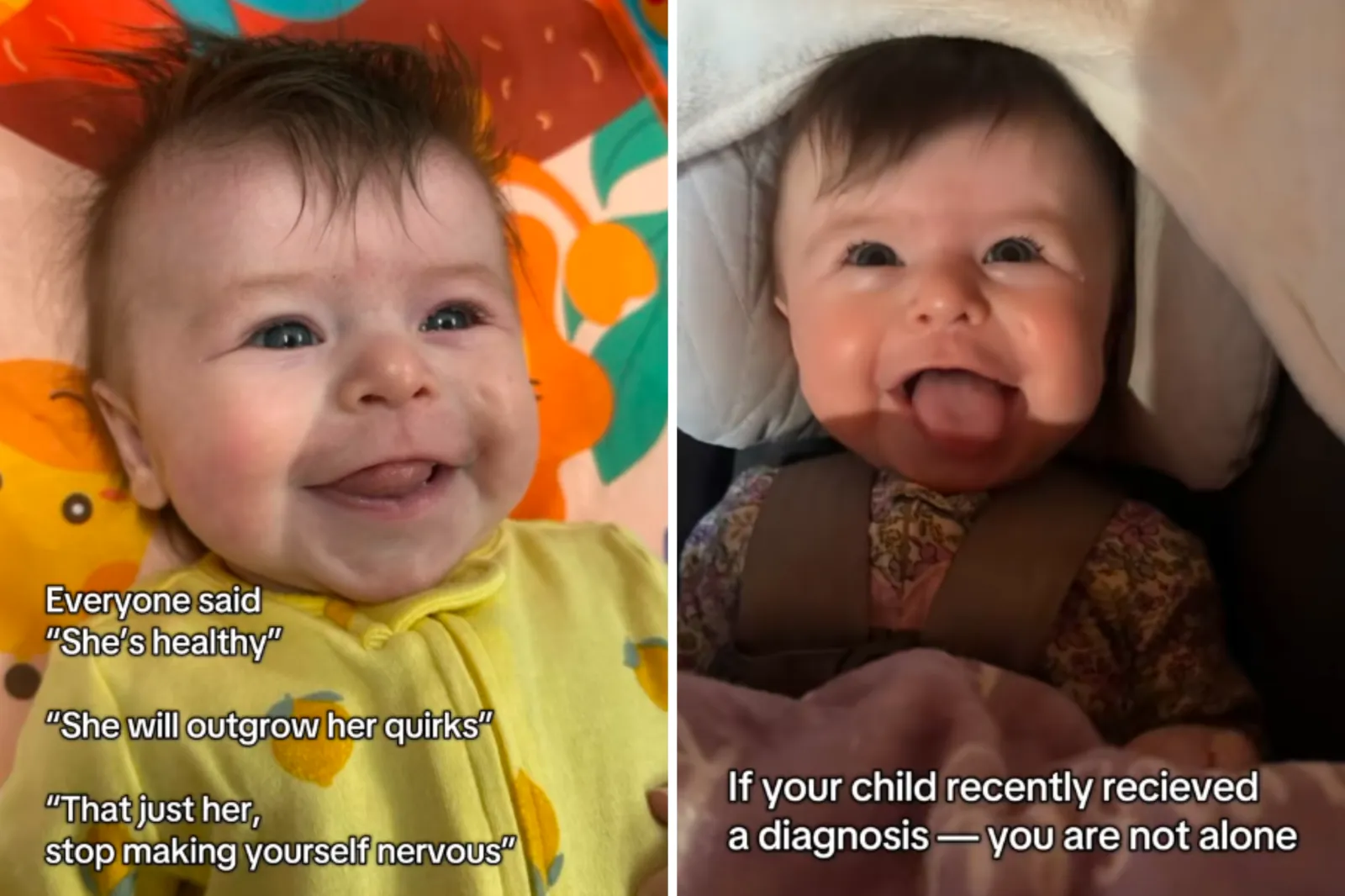
At first, 27-year-old Rylie Trygstad wasn’t sure if she was just overreacting. As a first-time mom, she had been told by friends and family to stop worrying and that her "healthy" baby, Ramsey, would "outgrow her quirks."
But when she was 3 months old, subtle signs began to stand out. Trygstad, who shares Ramsey with her husband, Bennet, 26, works in the physical therapy field, and developmental milestones are part of her everyday language.
Read More on Family & Parenting
...
"I started to notice Ramsey having difficulty with developmental tasks like rigid movements and increased muscle tone, and she would often clasp her hands together at midline," Rylie told Newsweek.
By six months, new questions emerged. At a routine pediatric appointment, Ramsey’s soft spot—the fontanelle—was difficult to feel.
X-rays later showed that her fontanelles and sutures were open, but her head circumference was measuring in a very small percentile, with minimal growth since her three-month visit. During the same appointment, the pediatrician detected a possible heart murmur.
An EEG—a test that records the electrical activity of the heart—was ordered as advised by a pediatrician, and while it didn’t provide clear answers, it did reveal very mild valve stenosis in Ramsey’s heart—considered trivial for the time being.
Around then, Rylie also noticed intermittent head tremors, particularly when Ramsey woke from naps. Importantly, Ramsey remained alert and focused during these episodes, never losing consciousness. Eventually, an EKG ruled out seizure activity.
The lack of answers was exhausting. Although no one explicitly told her she was overreacting, Rylie believed it was implied.
"Being a first-time mom, I constantly worried that I was not doing enough for my daughter, but friends and family would assure me that I was," she said. "It truly was more of a constant internal battle: was it worth dragging her to numerous doctor appointments, X-rays, scans [and] lab draws?"
During another appointment, a pediatrician referred the family to a neurogenetics program and, after comprehensive assessments, the team agreed genetic testing was warranted.
The call with the results came on a random Wednesday afternoon. As soon as her phone rang, Rylie said her heart dropped. The genetic counselor explained that the tests showed a microdeletion on chromosome 7—confirming a diagnosis of Williams syndrome, a rare genetic condition that affects multiple systems in the body.
"With tears running down my face, my initial question was, will she walk and talk?" Rylie said.
After a brief overview of the condition and guidance toward the Williams Syndrome Association for further information, an in-person appointment was scheduled for two days later.
"When I hung up the phone, I immediately called my husband to share the news with him," Rylie said. "While in a state of shock, we voiced gratitude for having an answer and decided to spend the rest of the day as a family soaking everything in before sharing the news with our family members."
Ramsey is now 14 months old, and Williams syndrome can affect her cardiovascular health, development, feeding, hearing and more, and no two children experience it in exactly the same way.
One of the biggest day-to-day challenges right now is eating. Children with Williams syndrome often struggle with feeding, textures and appetite. Ramsey works closely with her occupational therapist, and transitioning to more soft table foods has meant she is turning a corner.
Rylie shared her daughter’s journey to a diagnosis in a post on TikTok (@rylie.christensen99). By sharing her story, Rylie hopes other parents will trust themselves if something doesn’t seem right with their child.
"Mom instinct is a real thing, follow your gut," Rylie said. "If something doesn’t feel right, that instinct deserves to be taken seriously. Advocating for your child isn’t being difficult—it’s being responsible."
View 0 Comments
Submit Correction
View Editorial & AI Guidelines