10
Loading video...

By Daniella Gray
Reporter
0
Share
Newsweek is a Trust Project member
See more of our trusted coverage when you search.Prefer Newsweek on Googleto see more of our trusted coverage when you search.
A mom from Chicago, Illinois, was left heartbroken when her daughter was diagnosed with a rare genetic condition after repeated reassurances that she was developing normally.
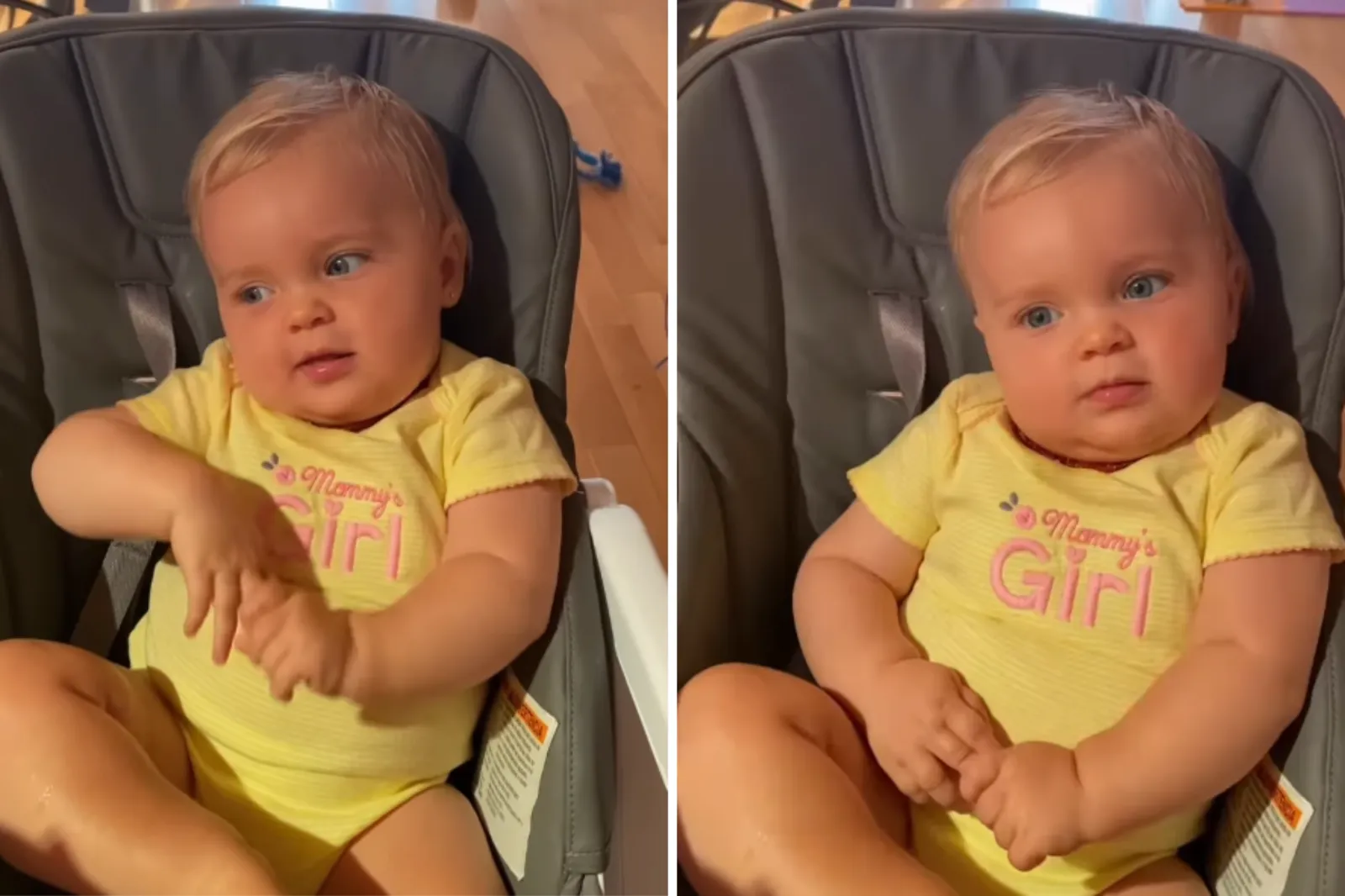
Laura Johnson told Newsweek that she started to feel as if something wasn't right when her baby Mila was around 5 months old.
"She wasn’t sitting, wasn’t using her hands the way she should, and just seemed to be falling behind," Laura said. "As her mom, I knew in my heart something was wrong."
Read More on Family & Parenting
...
Friends, family members and even doctors reassured her that every child develops differently and that Mila would catch up in her own time.
For Laura, who is also mom to Mason, 8, and Maddox, 4, the reassurance was "incredibly frustrating."
Although there were moments when she questioned herself, Laura said the feeling that something was being overlooked never completely disappeared.
"A mother’s instinct is powerful, and mine was right," she said.
Looking back today, the mom of three said the warning signs seem far more obvious than they did at the time.
"One day she knew how to roll over, and the next day she couldn’t do it anymore," Laura explained. "It wasn’t just that she wasn’t learning new skills—she was actually losing the skills she already had."
By the time Mila was around 10 months old, she had stopped holding her bottle, grabbing toys and interacting with the world in the way she once had. She also lost head control, a challenge that persisted for years.
Shortly before Mila's first birthday, she began experiencing infantile spasms.
"We were admitted to the hospital where an EEG [a test that measures electrical activity in the brain] showed her brain was having seizures almost constantly," Laura said.
Genetic testing eventually revealed that Mila had STXBP1, a rare neurological disorder that can cause developmental delays, intellectual disability, movement and communication difficulties, feeding problems and seizures.
It is a rare genetic neurological condition caused by changes in the STXBP1 gene, which plays an important role in communication between nerve cells. According to the STXBP1 Foundation, it affects an estimated one in 26,000 to 30,000 births. Epilepsy is particularly common, affecting around 85 to 90 percent of people with the condition, and seizures can begin in infancy, including as infantile spasms.
There is currently no cure, so treatment focuses on managing symptoms and supporting development, often through antiseizure medications and physical, occupational, speech and feeding therapies tailored to each child's needs.
Receiving the diagnosis was heartbreaking for Laura, but it finally gave her the answers she had been searching for.
Today, Mila continues to make progress despite the challenges she faces.
Laura shares Mila's journey on social media (@milas_crew), proudly celebrating every milestone, each of which she said represents "thousands of hours of therapy and determination."
Her message to other parents is simple: trust your instincts and keep asking questions if something doesn't feel right.
"I want other parents to trust their instincts," Laura said. "If you feel something isn’t right, keep asking questions and don’t be afraid to seek second or third opinions."
She also hopes people will see beyond Mila's diagnosis.
"A child with a disability can still live a beautiful, joyful, meaningful life," she said. "Mila continues to prove every day that her diagnosis does not define her."
Contact Newsweek editors on this story: Charlotte Nisbet and James Debens
View 0 Comments
Submit Correction
View Editorial & AI Guidelines