10
Loading video...

By Sam Stevenson
Associate News Editor
0
Share
Newsweek is a Trust Project member
See more of our trusted coverage when you search.Prefer Newsweek on Googleto see more of our trusted coverage when you search.
A California ballot measure that would impose a one-time tax on the state's billionaires has received another major endorsement, as supporters seek to build momentum ahead of a vote later this year.
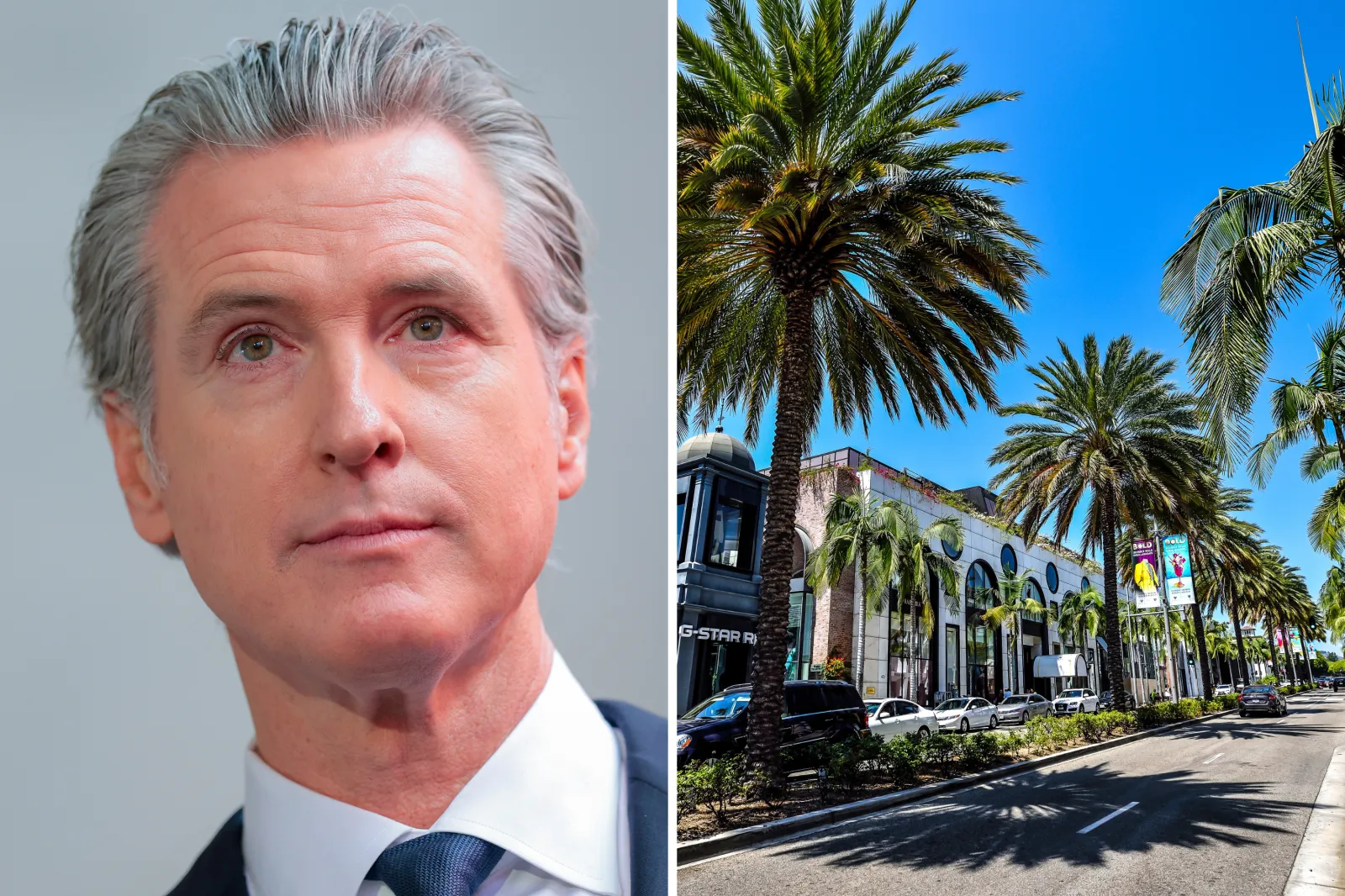
The California Nurses Association, representing more than 100,000 nurses and healthcare workers, endorsed Proposition 40, California's proposed billionaire wealth tax, despite opposition from Governor Gavin Newsom and several influential organizations.
It follows last weekend's backing from the California Democratic Party, in one of the state's most closely watched ballot fights.
Read More on News
Proposition 40 would impose a one-time 5 percent tax on Californians with assets exceeding $1 billion, potentially impacting hundreds of wealthy individuals.
Supporters estimate the measure would raise about $100 billion over five years, with the money earmarked primarily for healthcare and other public programs.
Newsom has said a California-only wealth tax could encourage wealthy residents to relocate, arguing instead for national legislation.
He has also criticized the measure for directing most of its revenue toward a single policy area rather than providing broader funding for schools, housing, childcare, public safety and higher education.
In a June 26 Substack article explaining his opposition, Newsom wrote: "You may not be able to pick up and move to Texas or Florida to shelter your income from taxation, but I promise you that billionaires can, and do."
He added: "I'm voting no because this measure dedicates almost all of the revenue it raises to a single category of state spending" and "ignores our public schools" and provides "nothing for housing, nothing for childcare, nothing for public safety workers" or California's public universities.
A spokesperson for the California Medical Association (CMA), which opposes the proposal, told Newsweek in an emailed statement: "CMA opposes Proposition 40 because it would make California's health care funding more dependent on a volatile revenue source and could ultimately undermine long-term funding for the patients it seeks to help.
"We support Proposition 3 as it provides a more stable, long-term approach to protecting Medi-Cal funding to help ensure Californians continue to have access to care."
Campaign supporters have, however, sought to frame the battle as part of a broader debate about the influence of extreme wealth in American politics.
Igor Volsky, the campaign director for Tax the Greedy Billionaires, said the California Democratic Party's endorsement was a rebuke of politicians who oppose the measure, including Newsom.
Volsky argued that a small number of wealthy Californians had used their influence to protect their economic interests and were now working to defeat the proposed tax.
"Here and around the country, the momentum to break up billionaires' stranglehold over us all is undeniable," Volsky said. "Politicians now have a choice: Will you stand with greedy billionaires making life harder and more expensive for your constituents, or will you fight to reclaim political and economic power for the people you actually serve?"
Voters will have their say on the ballot measure in California's statewide general election on November 3, according to the California Secretary of State.
Newsweek also contacted Newsom's office, the California Nurses Association and SEIU-United Healthcare Workers West via email outside regular working hours on Tuesday morning.
Why It Matters
California's proposed billionaire wealth tax has become a test of whether voters support using targeted taxes on extreme wealth to fund public services.
It has also exposed divisions within California Democrats and organized labor, with Newsom among its highest-profile critics.
...
Prop 40, by the Numbers
- 5 percent tax rate
- About 200 California billionaires affected
- $100 billion projected revenue
- 100,000+ CNA members backing proposal
- 54 percent voter support
- November 3 election day
- 1.6 million signatures submitted
What To Know
Proposition 40 is a ballot measure, which means it is a proposal placed directly before voters, allowing them to decide whether a new law, tax, constitutional amendment, or policy should be approved.
Supporters say the tax would affect around 200 California billionaires whose combined wealth runs into the trillions of dollars.
Backers of the plan have tied the proposal directly to concerns about healthcare funding.
Campaign materials claim federal cuts could leave millions of Californians at risk of losing coverage and argue new revenue is needed to keep hospitals, emergency rooms and clinics operating.
Announcing the union’s endorsement, California Nurses Association President Cathy Kennedy said wealth inequality had been allowed to grow as the richest Americans avoided paying what she described as their "fair share" of taxes.
Kennedy also linked the proposal to federal budget legislation she said reduced funding for healthcare and food assistance programs.
In backing the measure, the union joins a coalition that already includes SEIU-United Healthcare Workers West, independent Senator Bernie Sanders of Vermont, Democratic Representative Ro Khanna of California and numerous labor and advocacy organizations.
Supporters portray these latest endorsements as evidence of growing momentum.
Dave Regan, president of SEIU-United Healthcare Workers West, said the California Democratic Party's recent decision to endorse Proposition 40 demonstrated that Democratic voters broadly support the measure, saying: “This endorsement puts to rest the idea that California democrats are not united by the billionaire tax.”
Democratic Divisions Over Prop 40
Despite those endorsements, Proposition 40 remains controversial.
Newsom has opposed the measure, warning that taxing billionaire wealth could encourage wealthy residents to leave California and potentially reduce future tax revenues. Several labor organizations and business groups have expressed similar concerns.
"We have a progressive tax structure, and I aggressively defend it. But this is not that—and we’re already paying the price. One state can’t do this alone," the governor wrote in the June 26 Substack. "We need a national conversation about progressive tax policy that taxes the wealthy more than the middle class and working people. That’s exactly what California does. We don’t just defend it—we promote it. And it’s the approach this country should be taking."
The debate has also divided organized labor.
While healthcare unions have rallied behind the measure, other influential unions have opposed it or declined to take a position. SEIU California, one of the state's most powerful labor organizations, recently chose to remain neutral.
That split was visible during the California Democratic Party's endorsement vote. The proposal ultimately secured the party's backing after a closely contested process that highlighted disagreements among Democrats over how best to address healthcare funding challenges.
What Are Its Chances?
Public polling suggests Proposition 40 enters the final months of the campaign with an advantage, though not an overwhelming one.
A Public Policy Institute of California poll of 1,707 California adult residents, conducted from May 14–18, 2026, with a ±3.2 percent margin of error, suggested 54 percent of likely voters support the billionaire tax, while 76 percent of Democrats back it.
Ballot initiatives polling above 50 percent are considered competitive but not guaranteed to pass, particularly when well-funded opposition campaigns are expected.
Supporters also note that the measure qualified for the ballot with more than 1.6 million signatures, nearly double the number required.
Opponents, however, are expected to spend heavily before Election Day, setting up what could become one of California's most expensive ballot battles.
National Spotlight
The fight is attracting attention far beyond California because wealth taxes have long been championed by progressive Democrats but have rarely reached voters in such a prominent form.
A victory for Proposition 40 would likely energize advocates of similar proposals in other states and could strengthen calls for federal action targeting ultra-wealthy Americans.
Defeat, meanwhile, would give opponents fresh ammunition in arguing that even voters in a heavily Democratic state are wary of taxing accumulated wealth.
What Happens Next
For now, supporters are betting that endorsements from the state's largest political party and one of its largest healthcare unions will help keep the measure's momentum moving in their direction heading into November.
Update 8/5/26, 4:33 a.m. ET: This article was updated with additional information.
View 0 Comments
Submit Correction
View Editorial & AI Guidelines