10
Loading video...

By Gabe Whisnant
News Editor
0
Share
Newsweek is a Trust Project member
See more of our trusted coverage when you search.Prefer Newsweek on Googleto see more of our trusted coverage when you search.
A federal court on Monday dismissed claims filed by Elon Musk against OpenAI and its top executives, rejecting his allegation that the company abandoned its nonprofit mission.
The decision clears a major legal challenge hanging over one of the world’s most valuable AI firms as it moves toward a potential blockbuster IPO. The ruling leaves OpenAI’s current structure intact and underscores limits on legal challenges to its evolution.
A nine-person jury found that Musk filed the lawsuit too late, and U.S. District Judge Yvonne Gonzalez Rogers adopted that advisory verdict and dismissed the case after a three-week trial in Oakland, California.
Read More on U.S.
Elon Musk Loses AI Lawsuit Against OpenAI
Musk, a co-founder of OpenAI, brought the lawsuit in 2024, arguing that Chief Executive Sam Altman and President Greg Brockman betrayed a shared understanding that the company would remain a nonprofit dedicated to advancing artificial intelligence for the benefit of humanity. Musk, who invested about $38 million in OpenAI’s early years, alleged the company shifted toward profit behind his back and used that transformation to enrich insiders.
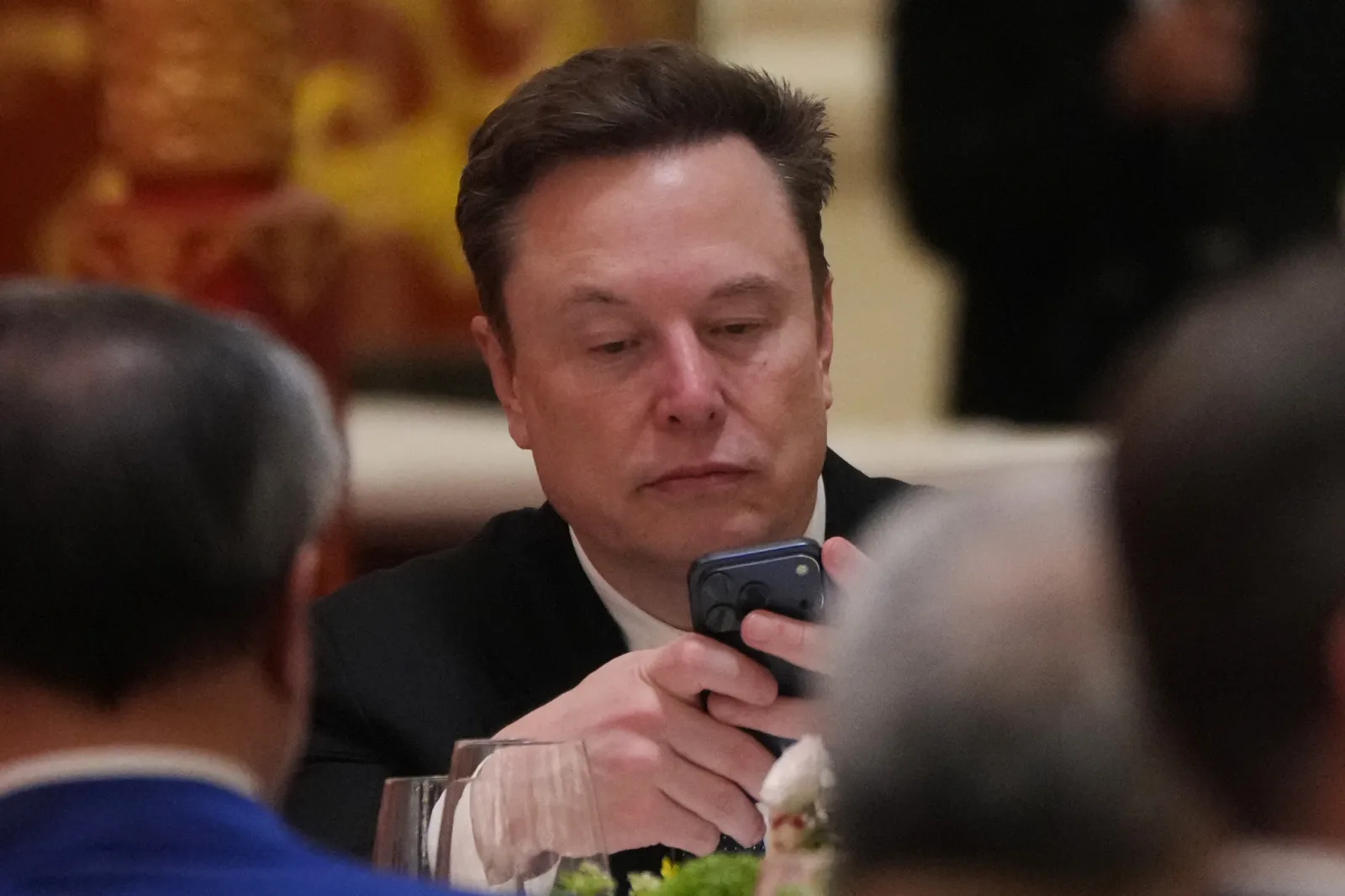
After the decision, Musk said on X Monday that the case was decided on a technicality rather than its substance, arguing that neither the judge nor jury actually addressed the core allegations.
“There is no question to anyone following the case in detail that Altman & Brockman did in fact enrich themselves,” he said, maintaining the real issue is when the alleged conduct occurred.
He added that he plans to appeal to the Ninth Circuit, warning the outcome could create a harmful precedent for charitable giving, and reiterated that OpenAI was founded “to benefit all of humanity.”
...
The jury rejected those claims and found no liability, concluding that Musk’s legal action came outside the applicable statute of limitations. Judge Gonzalez Rogers said there was sufficient evidence to support the jury’s finding and dismissed the case in full.
OpenAI and Altman countered that no binding promise existed to keep the company a nonprofit indefinitely and that Musk was aware of internal discussions about alternative structures as early as 2017 and 2018. Their legal team argued the restructuring was necessary to raise capital and compete in a costly race for advanced AI development.
Jury Says Lawsuit Was Not 'Filed on Time': What We Know
At the center of the verdict was timing. Jurors determined that Musk knew or should have known about OpenAI’s transition to a for-profit model years before filing the lawsuit in 2024. Under applicable law, that delay meant his claims could not proceed.
The panel deliberated for roughly two hours before reaching its decision, signaling a relatively clear view of the timing issue. Although the jury’s role was advisory, the judge indicated during the trial that such findings would likely be decisive—and ultimately adopted them as her own ruling.
The outcome effectively shuts down Musk’s effort to force structural changes at OpenAI, including the removal of Altman and Brockman and the unwinding of its for-profit arm. Musk had also sought damages to be directed toward OpenAI’s charitable mission, not himself.
However, Musk’s lawyer, Marc Toberoff, offered a one-word response to reporters as he exited the courtroom Monday: “Appeal,” according to a post on X by Wired’s Max Zeff.
What Is the Lawsuit About?
The lawsuit centered on whether OpenAI’s evolution from a nonprofit research lab into a hybrid, profit-driven company violated its founding principles. Musk argued that he supported OpenAI financially and publicly based on assurances that it would remain focused on broad societal benefit rather than private gain.
OpenAI disputed that framing, saying the organization always faced practical constraints that required large-scale funding and flexible corporate structures. Executives testified that developing advanced AI systems required billions in computing resources, making a purely nonprofit model unsustainable.

...
The trial, which began April 27, provided a rare window into those early debates and the breakdown of Musk’s relationship with Altman. Testimony from both men revealed deep disagreements over governance, control and the risks of concentrating power over advanced AI.
Altman told jurors that OpenAI’s mission included ensuring no single individual could control artificial general intelligence, a point he said factored into decisions about ownership and leadership. Musk, by contrast, framed the dispute in simpler terms, telling jurors, “It’s not OK to steal a charity.”
The proceedings also revisited the brief ousting of Altman as CEO in 2023, when OpenAI’s board raised concerns about his leadership before reinstating him days later. Musk cited the episode as evidence of internal turmoil, while current and former board members described broader governance tensions.
Reporting by the Associated Press contributed to this article.
View 0 Comments
Submit Correction
View Editorial & AI Guidelines