...

By Meghan Roos
Live Blog Writer
0
Share
Newsweek is a Trust Project member
See more of our trusted coverage when you search.Prefer Newsweek on Googleto see more of our trusted coverage when you search.
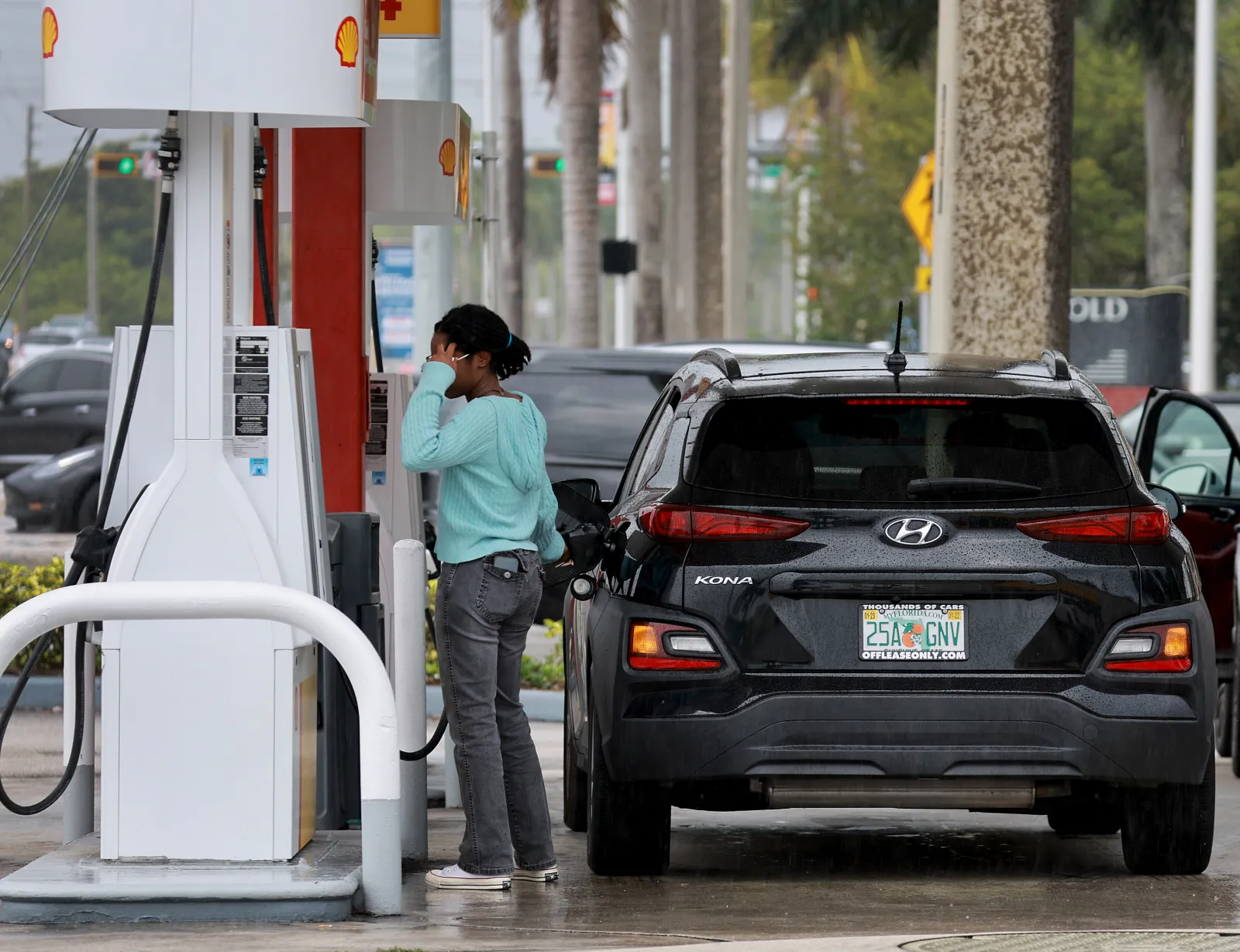
The U.S. set a new national average gas price record for regular unleaded gas on Friday, marking the fourth day in a row that such a record has been set.
Gas prices have been on the rise across the country over the last several weeks. Industry experts said the climb is primarily in response to the February 24 invasion of Ukraine by Russia, one of the world's top oil producers. Concerns about potential impacts the war could have on oil production and distribution, paired with economic sanctions the U.S. and allied countries placed on Russia after the war began, have driven up oil prices, which in turn is increasing prices at the pump.
Before the war began, the highest national average cost for a gallon of regular unleaded gas was recorded in July 2008 at $4.114, according to American Automobile Association (AAA) data. That record, which held for nearly 14 years, was shattered on Tuesday with a new high price set at $4.173. New records were set again on Wednesday and Thursday, and the pattern continued on Friday as the national average price reached $4.331 per gallon.
Read More
High Fuel Costs Put Damper on Trucker Convoy Encircling D.C.3 min read

Will Food Costs Surge as Much as Gas Prices Due to Russia-Ukraine War?6 min read

Putin, McConnell Scoff at Biden for Blaming Gas Price Hike on Russia4 min read

...
Though Friday became the fourth day in a row that the U.S. set a new national average, AAA spokesperson Andrew Gross noted that the increase from Thursday's record of $4.318 to Friday's $4.331 was less than 2 cents. Gross said that small increase was "notable considering the past 10 days have seen much more significant daily increases."
"This could be due to the global oil price drifting lower after that initial shock of hitting $123/bbl shortly after Russia invaded Ukraine," Gross told Newsweek, though he noted it is difficult to predict the extent to which fluctuating oil prices will impact prices at the pump.
Initial oil price spikes experienced an overall drop this week, with West Texas Intermediate, the U.S. reference point for oil prices, falling below $110 per barrel on Friday.
"I'm not sure exactly why the price is lower, but it has fallen back below $110, which in turn could eventually take some of the pressure off of these pump price increases we have been seeing," Gross said. "But this war also makes it impossible to predict if pump prices have peaked or if they will keep grinding higher."
Like the U.S. national average prices, several states have similarly set new statewide gas price records in the wake of Russia's war with Ukraine, though prices continue to vary widely from one state to the next. Several states recorded price jumps of 50 cents or more per gallon less than two weeks after the war began, a pace that GasBuddy's head of petroleum analysis, Patrick De Haan, said earlier this week was likely to slow after President Joe Biden announced the U.S. would no longer import Russian oil.
On Friday, 27 states set new statewide average gas price records, a Newsweek analysis of AAA data found. California was the only state within that group of 27 with a statewide average gas price above $5 per gallon, a record that follows several others it has set in recent weeks.
Six states—Delaware, Indiana, Maine, Michigan, New Jersey and New York—set statewide records earlier this week that held without climbing higher on Friday, while Washington, D.C. also retained a record of $4.50 per gallon that the capital set on Thursday.
Arkansas, Colorado, Iowa, Kansas, Kentucky, Missouri, Montana, Nebraska, Oklahoma, South Carolina, South Dakota and Wyoming all recorded gas prices lower than their previous statewide average records, all of which were set in 2008.
Ohio, Wisconsin and West Virginia retained their records from 2011, while Minnesota and North Dakota held on to records from 2013.
Updated 03/11/2022, 3:44 p.m. ET: This story has been updated with comments from AAA spokesperson Andrew Gross.
View 0 Comments
Submit Correction
View Editorial & AI Guidelines