...

By Ellie Cook
Senior Defense Reporter
0
Share
Newsweek is a Trust Project member
See more of our trusted coverage when you search.Prefer Newsweek on Googleto see more of our trusted coverage when you search.
The dominance Western countries like the United Kingdom have enjoyed for decades in the Atlantic Ocean is under threat from Russia, the head of the British Navy has said.
The British government has said it has seen a 30 percent increase in Russian vessels posing a threat to U.K. waters in the past two years, and the country's military has intercepted several Russian ships this year.
The powerful position nations like the U.K. have long had in the Atlantic "is at risk," the chief of the U.K.'s Royal Navy, General Sir Gwyn Jenkins, said in a speech in central London on Monday.
Read More on World
"We are holding on, but not by much," Jenkins said. "There is no room for complacency."
British Defense Secretary John Healey said last month the Yantar, described by officials as a Russian intelligence-gathering ship, had pointed lasers at British pilots watching the vessel near U.K. waters in what he termed a "deeply dangerous" move. The Yantar was also spotted off the British coast in January and intercepted close to France.
"The Yantar is only the visible bit you see in the public—and it's not the bit that worries me the most," Jenkins said. "It's what's going on under the waves that most concerns me."
...
Russia has a formidable submarine fleet and is well accustomed to operating in the austere Arctic conditions, whereas NATO members are often less comfortable.
Moscow has several major military bases, including a chunk of its nuclear deterrent, clustered around the Arctic cities of Murmansk and Severomorsk and will send its stealthy submarines out through strategic chokepoints like the so-called GIUK gap, between Greenland, Iceland and the U.K., out into the Atlantic.
But Russian submarines under the waves are often very difficult to detect, and NATO officials concede they are sometimes not spotted. Moscow is tipping funds into modernizing its military, in particular its naval capabilities, as part of its ballooning defense spending while it grinds on with its full-scale invasion of Ukraine.
"Our would-be opponents are investing billions," Jenkins said. "We have to step up, or we will lose that advantage," he added.
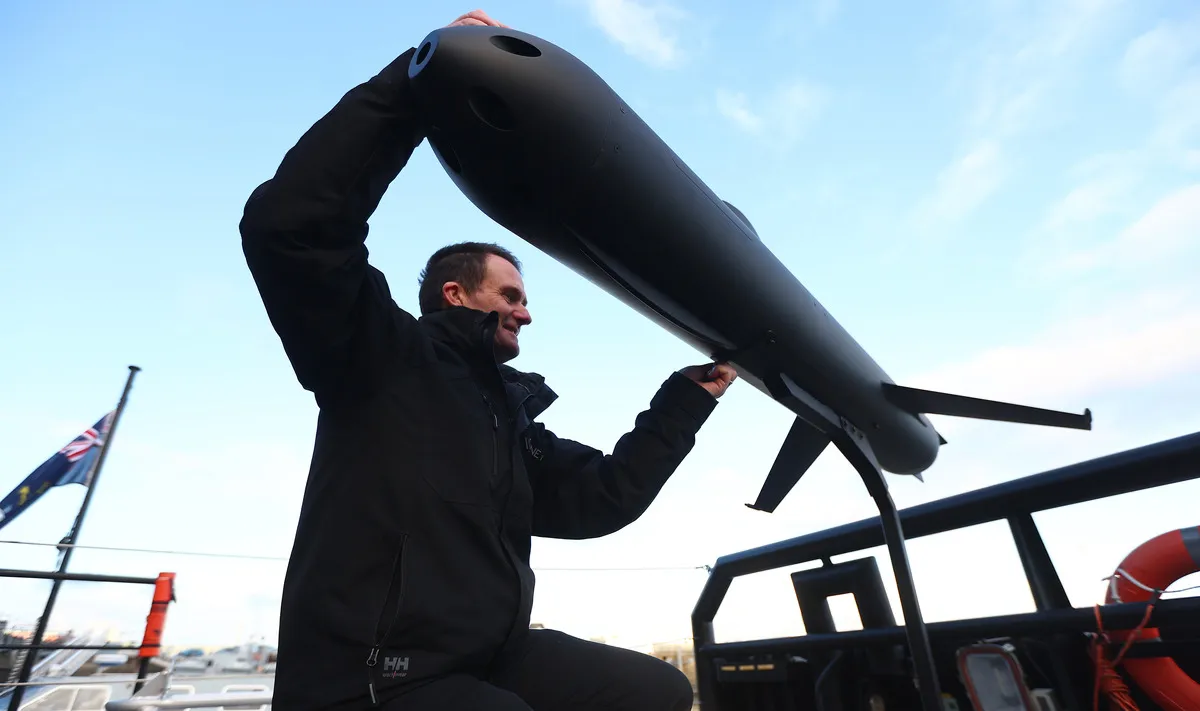
The U.K. said early on Monday its new initiative, dubbed Atlantic Bastion, will protect critical undersea infrastructure by blending drones and artificial intelligence with warships and other more traditional assets in the North Atlantic.
The alliance, more broadly, is beefing up defenses around critical undersea infrastructure like the extensive pipelines and cables snaking along the seabed, which are vulnerable to sabotage and hard to protect. Undersea cables ferry roughly 98 percent of the world's data, keeping much of normal daily life running.

...
The British Defense Ministry said there was a "huge appetite" from defense companies to pump out "hi-tech capabilities" to fend off Russian submarines in the North Atlantic.
NATO in January said it would be operating more frigates and maritime patrol aircraft, shortly after a spate of suspected sabotage incidents linked to Russia's "shadow fleet" of sanctions-skirting oil tankers. Several undersea cables were cut or damaged in November and December 2024, including four data cables and a major power link on December 25.
London announced earlier in December that it would create a joint fleet of more than a dozen advanced frigates with fellow NATO member Norway in the coming years. The ships—the new Type 26 anti-submarine warfare frigates yet to be finished—will patrol the North Atlantic and particularly the GIUK gap.
The U.K.'s armed forces separately said in late November it had intercepted a Russian warship, the Stoikiy, and one of Moscow's tanker vessels off its southern coast, a few weeks after it tracked Russia's Vice Admiral Kulakov through the English Channel. Days prior, a British frigate shadowed Russia's Novorossiysk submarine and a tug boat through the waterway.
View 0 Comments
Submit Correction
View Editorial & AI Guidelines