...

By Chloe Mayer
Reporter
0
Share
Newsweek is a Trust Project member
See more of our trusted coverage when you search.Prefer Newsweek on Googleto see more of our trusted coverage when you search.
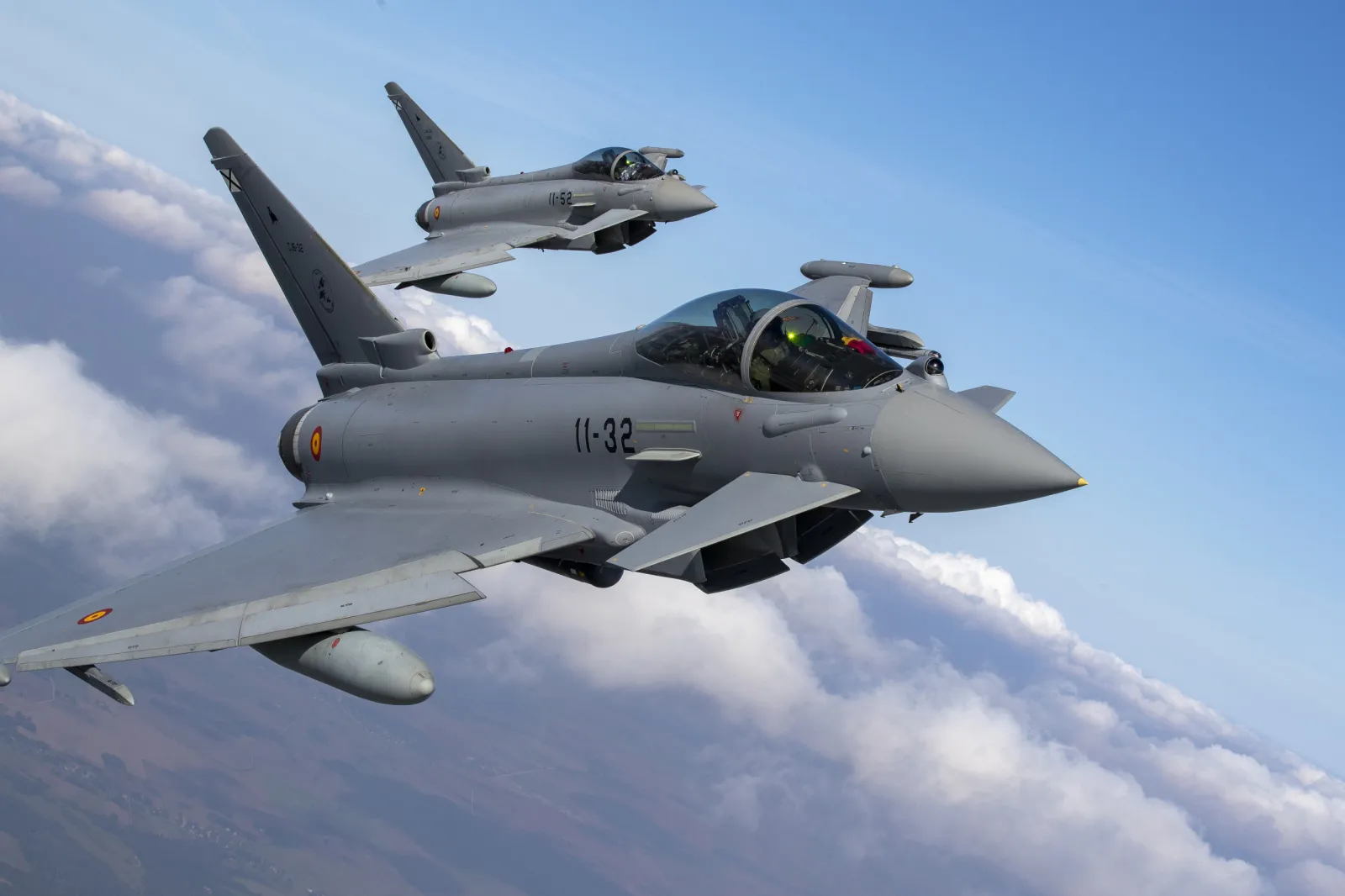
NATO fighter jets were scrambled to intercept Russian aircraft violating international aviation rules seven times last week, according to European defense officials.
Lithuania's Ministry of National Defense released a report on Monday stating that Russian military planes repeatedly flew over the Baltic Sea with their onboard transponders turned off. It added that pre-outlined flight plans had not been completed, and that the aircraft did not maintain radio communication with regional air traffic control centers.
The incidents forced NATO to deploy its own jets to track, identify and intercept the aircraft, Lithuania said.
Read More
Photos Show F-35 Jets Intercepting Russian Aircraft in ‘NATO Lake’3 min read

NATO Scrambles Fighter Jets Over Russian Strikes On Ukraine3 min read

NATO Nation Scrambles Fighter Jets After Russian Ballistic Missile Strikes3 min read

Newsweek contacted Russia's foreign ministry for comment on Tuesday.
...
What To Know
Lithuanian authorities said the seven incidents occurred on Wednesday, Thursday, Friday and Sunday last week. They were as follows:
- December 11: three IL-20 Russian military aircraft were detected flying in international airspace over the Baltic Sea from Kaliningrad. Their onboard transponders were switched off, they had no pre-filed flight plans, and the crews were not maintaining radio communication with regional air traffic control.
- December 12: NATO fighter aircraft escorted one IL-20 and one TU-214PU aircraft in international airspace. The IL-20 was flying from Kaliningrad to mainland Russia. Its onboard transponder was turned off, it had no pre-filed flight plan, but the crew did maintain communication. Meanwhile, the TU-214PU was flying from mainland Russia to Kaliningrad with no pre-filed flight plan, but the onboard transponder was kept on and the crew did maintain communication.
- December 12: NATO fighter jets were scrambled in response to an IL-18 travelling in international airspace from Kaliningrad to mainland Russia. It had no pre-filed flight plan, the onboard transponder was turned on, and the crew did maintain contact.
- December 13: NATO fighter aircraft were scrambled to intercept one IL-76 and two TU-214 aircraft that were heading for mainland Russian from Kaliningrad through international airspace. Only the IL-76 had a flight plan, while all aircraft kept their onboard transponders on and maintained radio communication.
- December 15: NATO fighter jets were scrambled to intercept an Antonov AN-72 aircraft. The aircraft was heading from mainland Russia to Kaliningrad in international airspace. It had no flight plan, the onboard transponder was switched off, though the crew did maintain radio communication.
Why It Matters
Russia has been accused of violating international aviation rules multiple times in recent months.
In June, Sweden and Finland, NATO's newest members, reported airspace violations by Russian military planes amid a major alliance exercise in the region.
In September, a Russian Il-38 maritime patrol and anti-submarine warfare aircraft violated Japanese airspace three times, with each encroachment lasting for 30 seconds to one minute, Japan's defense ministry said.
Russian drones were also reported to have entered Latvian and Romanian airspace in September, while Poland was forced to scramble fighter jets last week when Russia conducted ballistic and cruise missile strikes on western Ukraine.
Meanwhile, the U.K.'s Royal Air Force scrambled fighter jets last month as a Russian military plane was detected close to British airspace.
And in September, Russian planes flew close to the western coast of Alaska.
What People Are Saying
In October, Gordon "Skip" Davis, a retired U.S. Major General, spoke to Newsweek about similar incidents that have occurred recently.
"Russian flights near Alaska and the Baltic region serve as both military provocations and strategic messages aimed at keeping NATO and the U.S. on alert while demonstrating Russia's enduring military reach," he said.
He warned it was a risky tactic as the Russians "often do not file flight plans or communicate with civilian air traffic controllers."
"This behavior increases the risk of dangerous incidents or miscalculations in the crowded airspace near NATO borders," he said.
Davis once served as NATO's deputy assistant secretary general for its defense investment division and is now senior fellow at the Center for European Policy Analysis.
Newsweek has contacted Russia's Foreign Ministry seeking comment.
View 0 Comments
Submit Correction
View Editorial & AI Guidelines