...

By Billal Rahman
Immigration Reporter
0
Share
Newsweek is a Trust Project member
See more of our trusted coverage when you search.Prefer Newsweek on Googleto see more of our trusted coverage when you search.
A U.S. Navy veteran’s wife who was detained by Immigration and Customs Enforcement (ICE) during a green card interview in California says she "almost died" after suffering a medical emergency in federal custody—an incident her family alleges was caused by a medication error and followed by solitary confinement.
Lydia Rabara Swinburne, 39, a Filipino national, was released on May 18 after a federal judge ordered her immediate discharge from ICE custody. Her detention and reported medical crisis have drawn renewed attention to the conditions inside immigration detention facilities and the adequacy of medical care provided to detainees held on civil, not criminal, grounds.
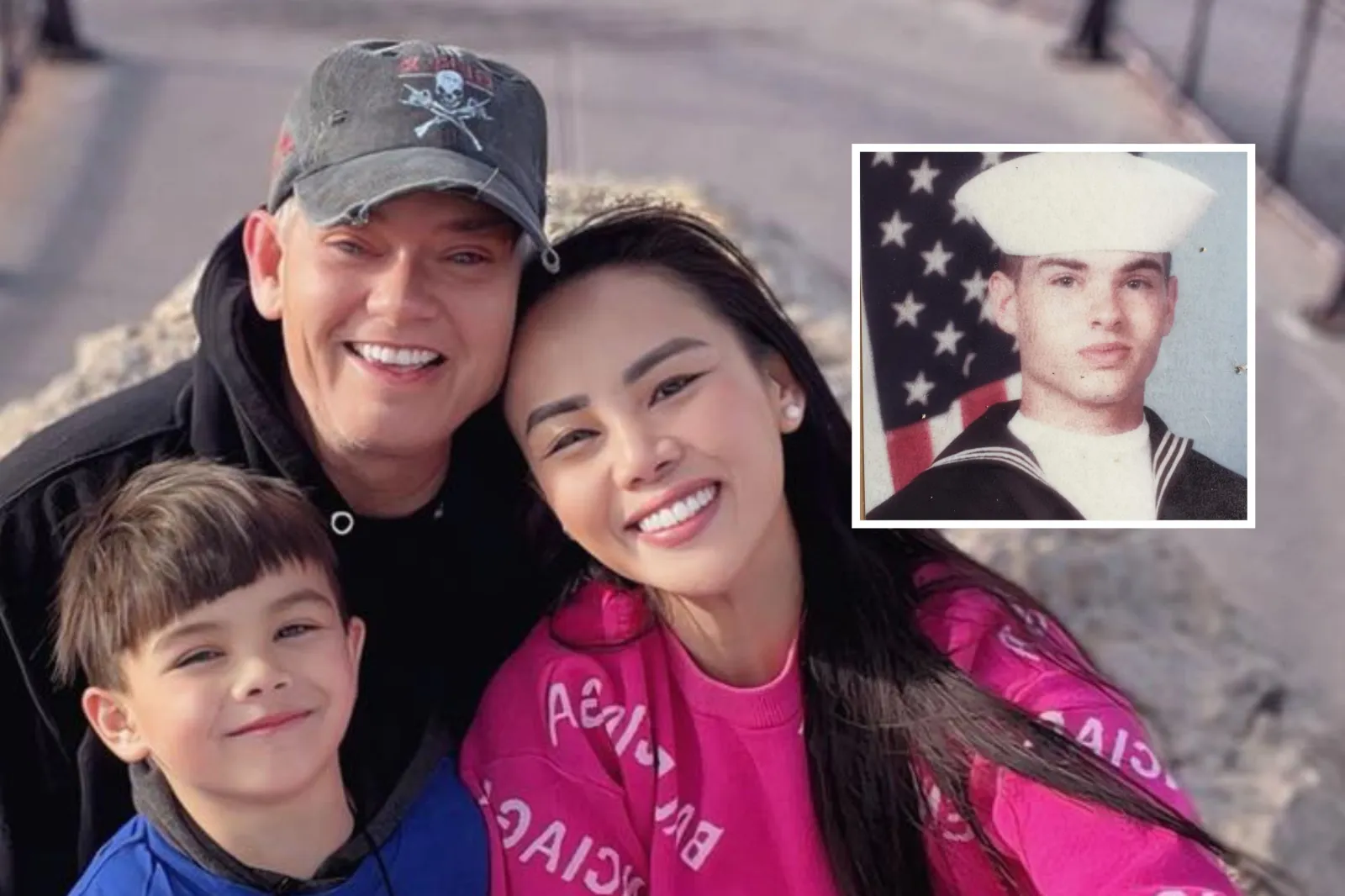
Her husband, Robert Swinburne, 59, a former U.S. Navy navigator, told Newsweek the episode has devastated their family, including their six‑year‑old U.S. citizen son.
Read More on News
"I am a mess. I don’t sleep more than two or three hours a night," said Swinburne before his wife's release. "I seem to be living two lives between pain and fatherhood. One the truth and one the mask."

...
Detained During Green Card Interview
According to the Department of Homeland Security (DHS), Lydia Rabara Swinburne was admitted to the United States as a B-2 nonimmigrant valid until April 23, 2026.
She was arrested by ICE on April 7 while attending a green card interview as she and her husband pursued adjustment of her immigration status.
A DHS spokesperson said she was detained after being "arrested by local authorities for Assault with a Deadly Weapon and Inflict Corporal Injury on Spouse." The charges were later dropped before trial.
Robert Swinburne acknowledged a domestic argument between the couple on March 20 but said the incident was mischaracterized. He told Newsweek the dispute escalated after he became concerned when his wife was unreachable for several hours. When she returned, he said she blocked a doorway and swung a can opener, which struck him as he attempted to enter. The two struggled, fell, and he sustained a minor injury.
He said he did not want to press charges and believed his wife contacted police seeking mediation, which he described as common practice in the Philippines.
"Until the incident which flagged her for detention, my wife has never had any interaction with the police," he said. "She is respectful of others and poses no danger to society."
Medical Emergency in Custody
On May 2, more than three weeks into her detention at the California City ICE facility, Lydia Rabara Swinburne said she became unresponsive in her cell after a nurse gave her medication that she did not recognize.
"They were a different type and color," she said in a statement to Newsweek. "They did something to me. That day, I didn’t recognize the meds. I almost died."
...
She described severe symptoms, including dizziness, vomiting, and difficulty breathing.
Her husband alleges the emergency resulted from a medication error by facility staff. He said detainees inside the facility contacted him to report that she was first given Narcan, a medication used to reverse opioid overdoses, inside her cell and that a multi‑hour lockdown followed while detainees were questioned.
He further alleged that his wife was taken to the facility’s clinic, where she received chest compressions and multiple doses of Narcan before being transported by ambulance to a hospital.
"A man in a suit came out and told me she was just sick… It was just a serious cold," Robert Swinburne said. "Okay, so why did they need to give her nine hits of Narcan if it was just a cold?"
DHS and CoreCivic Responses
DHS confirmed that a medical emergency occurred on May 2, saying medical staff found Lydia Rabara Swinburne "breathing" and transported her to a local emergency room, where she was diagnosed with a "medication reaction." The agency said she returned to the detention facility the same day and was housed in a medical unit until further evaluation.
DHS provided details of her medical history in custody, stating that during an intake screening on April 8 she denied prior self‑harm or overdose but reported taking lithium and bupropion, which were continued. During a mental health evaluation on April 10, DHS said she acknowledged a suicide attempt before detention, and on April 12 reported a recent overdose and pneumonia.
According to DHS, doctors later diagnosed anxiety and adjustment disorder and prescribed additional medications, including hydroxyzine. On May 3, lithium and bupropion were discontinued, hydroxyzine was increased temporarily, and it was recommended that she return to normal housing.
"For many illegal aliens this is the best healthcare they have received their entire lives," a DHS spokesperson said.
CoreCivic, the private contractor that operates the California City facility, declined to discuss the specific case, citing privacy laws, but said detainees have access to licensed medical staff, daily requests for care, and 24‑hour emergency response, with referrals to outside hospitals when necessary.
"Nothing matters more to CoreCivic than the health, safety and well‑being of the people in our care," a spokesperson said, adding that facilities are subject to multiple layers of oversight.
Disputed Claims and Solitary Confinement Allegations
Robert Swinburne disputes DHS’s account and said his wife was later placed in solitary confinement and denied her usual psychiatric medication. DHS has said she was housed in a medical unit following her hospitalization.
In letters to her husband from inside detention, Lydia Rabara Swinburne denied attempting suicide or misusing drugs and rejected claims that she overdosed. She wrote that officers delayed responding as she collapsed and said staff later accused her of overdosing or acquiring drugs from other detainees.
"They accused me of overdosing on my own or buying bad drugs from the other girls," she said. "I don’t drink, never smoked, and I’ve never even seen bad drugs. I know they made a mistake."
Newsweek could not independently verify whether she received an incorrect medication, how many doses of Narcan were administered, or whether she was placed in solitary confinement or medical isolation after her return from the hospital.
Legal Challenge and Release
The family’s attorney filed a habeas corpus petition challenging Lydia Rabara Swinburne’s detention. The filing argued that she had been held for more than a month without receiving a Notice to Appear in immigration court, preventing her from seeking a bond hearing.
On May 18, U.S. District Judge Dena M. Coggins issued a temporary restraining order directing that Lydia Rabara Swinburn “be released immediately” from ICE custody.
"I feel like I’m dreaming," Lydia Rabara Swinburne said after her release. "To hold my son after five weeks, to hold my husband’s hand, I have no words. It doesn’t seem real."
Family Impact and Broader Scrutiny
Robert Swinburne said the separation took a severe toll on their son, who often woke crying for his mother. He said he kept photographs of his wife around the home and spoke about her often to maintain a sense of connection.
"She makes everything in our lives beautiful," he said.
He also described Lydia Rabara Swinburne’s long involvement in humanitarian work in the Philippines, including supporting a local orphanage near Subic Bay, where the couple met while his ship was docked.
Nationwide, medical care, mental health treatment, and the use of isolation in ICE detention facilities have come under increasing scrutiny, with advocates and legal filings raising concerns about oversight, delayed care, and medication management. DHS maintains that it provides comprehensive medical services to detainees, including emergency care.
The precise circumstances surrounding the May 2 incident remain disputed, and no independent investigation findings have been publicly released.
For Lydia Rabara Swinburne, the focus is now on recovery and family.
"I want to know the truth," she said. "But right now I never want to wake up from this dream with my husband and son."
View 0 Comments
Submit Correction
View Editorial & AI Guidelines