...

By Jenni Fink
Senior Editor
0
Share
Newsweek is a Trust Project member
See more of our trusted coverage when you search.Prefer Newsweek on Googleto see more of our trusted coverage when you search.
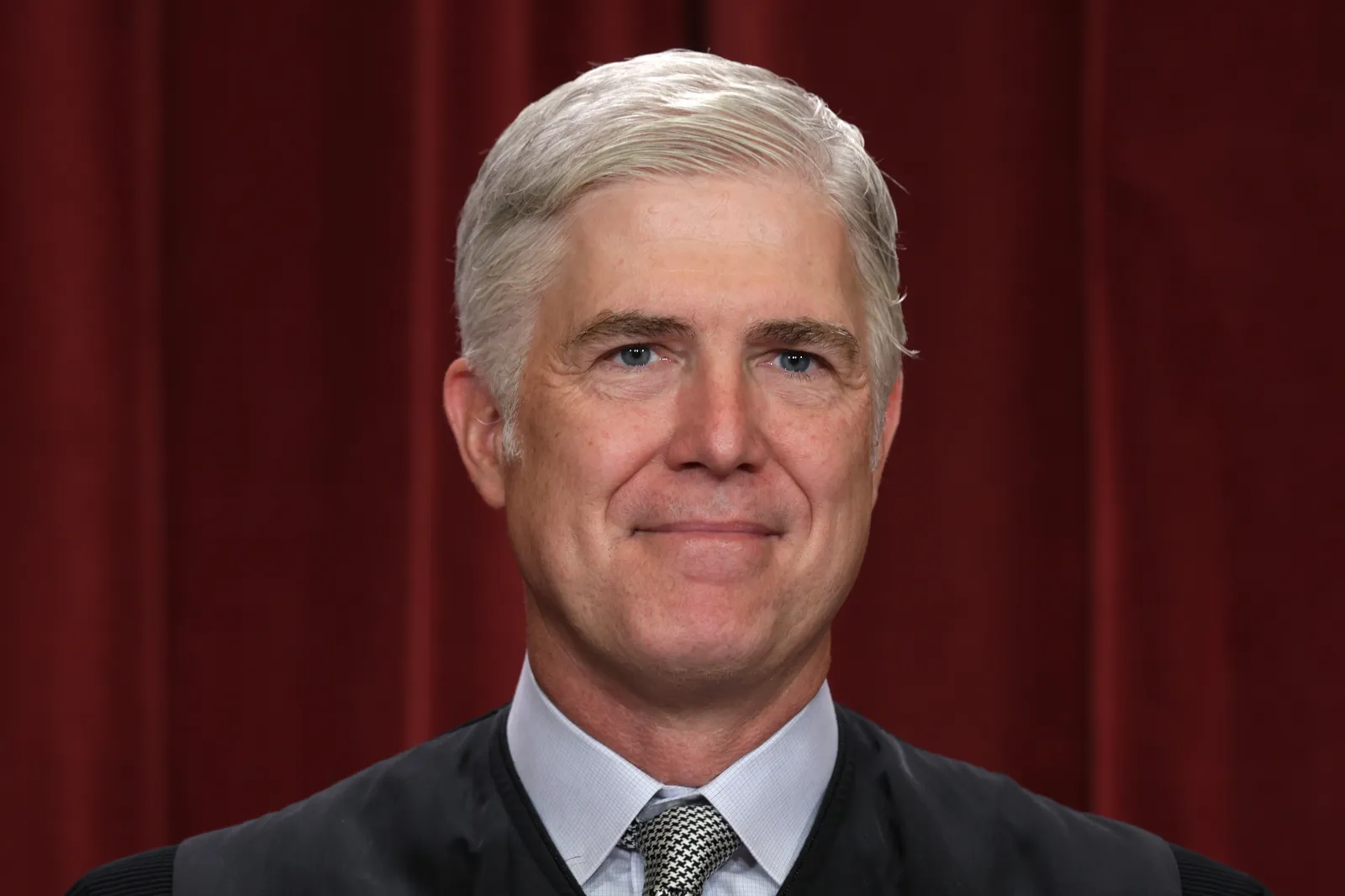
The Supreme Court declined to hear a case from a Colorado inmate who argued that his prison sentence exceeded the maximum allowed, and it did so without input from Supreme Court Justice Neil Gorsuch, who has a history with the petitioner.
Delmart Edward Vreeland is serving a 336-year-to-life sentence after being convicted of child prostitution, sexual assault, sexual exploitation of children and distribution of cocaine in 2008. He asked the Supreme Court to hear his case and ultimately vacate or correct his sentence, arguing that Colorado courts violated his Sixth Amendment right by allowing a judge to decide facts that enhanced his sentence under a habitual-offender law rather than a jury.
The Supreme Court declined to hear the case, and the order list issued on Monday stated that Gorsuch took no part in its consideration. While some justices have started giving specific reasons for declining to participate in a case, Gorsuch gave no reason, though it's likely because he knows the petitioner.
Read More on U.S.
Before he was a Supreme Court justice, Gorsuch served on the Tenth Circuit Court of Appeals, and in 2016, he and two other circuit judges heard Vreeland's case. At the time, Vreeland sought release on bail while his habeas petition challenging his convictions and sentence was being heard in court. In an opinion that Gorsuch authored, the circuit judges denied the bail request, concluding that Vreeland didn't make a strong enough case to show his habeas claims were likely to succeed.
A decade later, Gorsuch was once again faced with a case from Vreeland but declined to participate. It's common for justices to sit out cases in which they've had prior experience with the petitioner in their work before joining the Supreme Court.
...
Vreeland asked the justices to take his case after years of litigation in Colorado state courts. He contends that his sentence exceeded the statutory maximum and that state actors continued to enforce it even after its illegality became apparent. According to the petition, this prolonged incarceration violates constitutional protections under the Sixth and 14th Amendments.
"During appellate litigation, the State expressly acknowledged that Count 9 arose from the same criminal episode as Count 8 and that the original concurrent sentence was unlawful under Colorado law," Vreeland wrote in his petition.
Vreeland argues that disputed facts used to enhance his sentence, such as the nature, sequencing, and treatment of prior convictions, were decided by a judge rather than a jury. He maintains that this practice conflicts with Supreme Court precedent requiring juries to find beyond a reasonable doubt any facts that increase a defendant’s lawful sentencing range.
The petition also criticizes Colorado appellate courts for what Vreeland characterizes as excessive delay and procedural roadblocks. He claims that his appeals and collateral filings languished for years without meaningful resolution, effectively denying him due process and access to the courts while he remained incarcerated under an allegedly unlawful sentence. The petition frames these delays not as routine judicial backlog but as constitutionally significant failures with ongoing consequences.
“Without granting certiorari review, Vreeland runs the grave risk of remaining wrongfully incarcerated with no avenue for relief," the petition said.
Along with challenging his sentence and conviction, Vreeland has spent years accusing state authorities of mistreating him while in prison. Vreeland was arrested in 2004, and within days of posting bond, he removed his ankle monitor and fled to Iowa, but was re-apprehended. He was convicted of providing drugs and alcohol to two teenage boys and forcing them to perform sex acts and make child pornography. At the time of his arrest, he was wanted in several states and Canada for an extensive criminal history that spans decades, involving identity theft. He also claimed that he predicted the September 11, 2001, terror attacks were going to happen.
Gorsuch's recusal comes as the Supreme Court is in the midst of implementing changes to how it identifies and manages potential conflicts of interest. In November 2023, the Court adopted its first formal Code of Conduct, acknowledging mounting public concern over ethics and transparency.
Building on that code, the Court announced in February that it had updated its internal processes by deploying new software to assist with automated recusal checks. The system compares information about parties and attorneys in a case with lists maintained by each justice’s chambers to detect possible conflicts. At the same time, the Court revised its rules to require more detailed disclosures from litigants, including complete party lists and stock ticker symbols where applicable.
Court officials said the changes were designed to reduce the risk of late or overlooked recusals and to better handle the thousands of petitions filed each term. The new system supplements individual chambers’ existing review processes rather than replacing them.
While the Court has more tools to identify potential grounds for recusal, justices still make recusal decisions individually and are not required to explain them publicly. While liberal justices on the court have started giving reasons for why they didn't hear a case or participate in a decision, conservative justices have opted to announce only that they didn't participate.
That discretion has drawn criticism from lawmakers and advocacy groups, some of whom have pushed legislation requiring public explanations when justices step aside. Bills introduced in Congress over the past two years would mandate greater transparency, but none have become law.
View 0 Comments
Submit Correction
View Editorial & AI Guidelines