...

By Melissa Fleur Afshar
Reporter
0
Share
Newsweek is a Trust Project member
See more of our trusted coverage when you search.Prefer Newsweek on Googleto see more of our trusted coverage when you search.
A fresh claim about deadly infections in British hospitals could provide new support for Lucy Letby’s appeal, after her legal team claimed to have identified the same water‑borne bacteria in one of the babies she was convicted of killing as the infection linked to recent deaths in Glasgow, Scotland.
Letby’s lawyers said traces of stenotrophomonas maltophilia—the bug currently at the center of a major fatal accident investigation in Scotland—were found in the endotracheal tube of Baby I in February 2025. Letby had been convicted of killing the baby girl after what prosecutors said was a deliberate fatal overdose of air and overfeeding with milk.
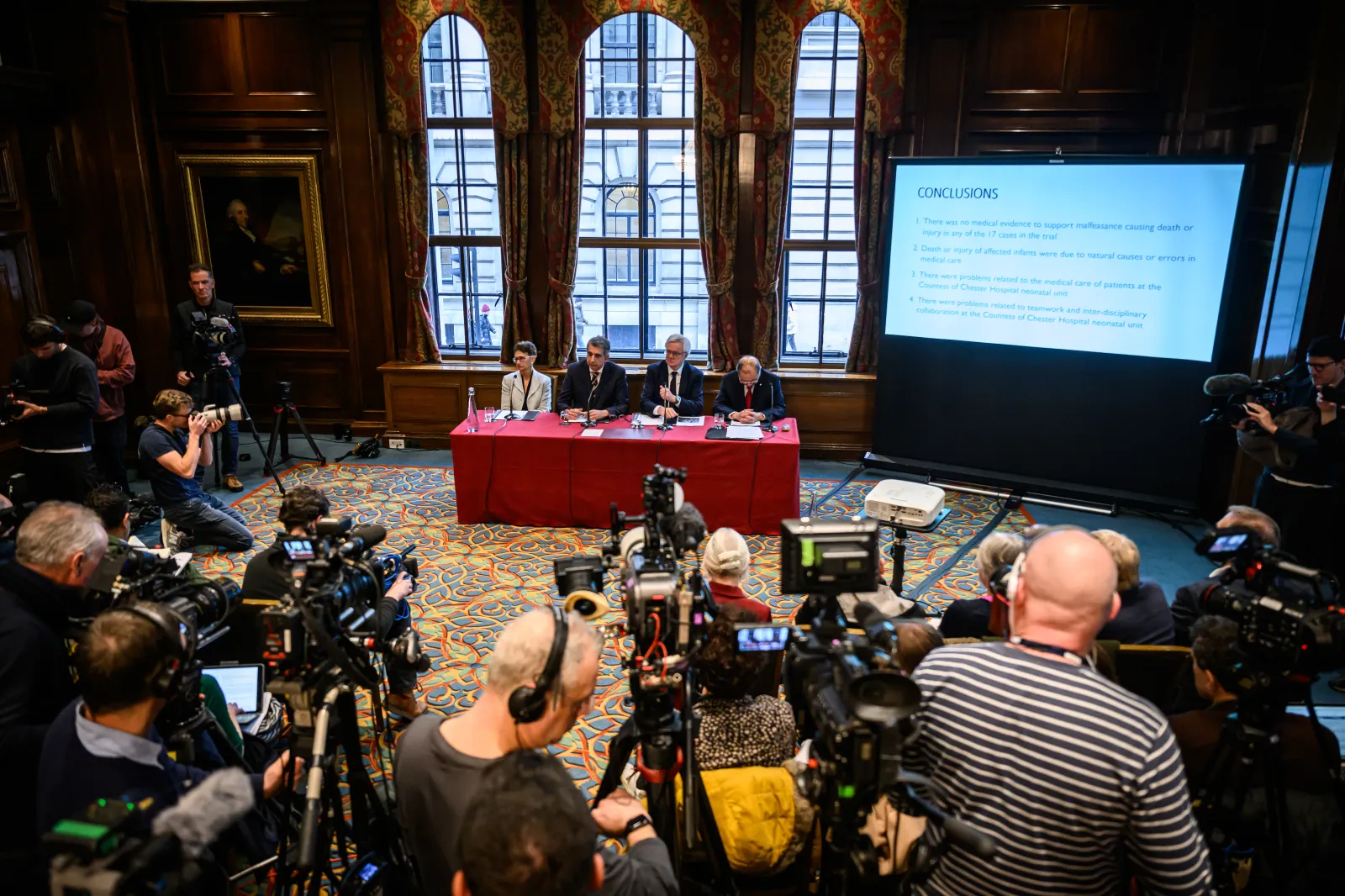
Dr. Martyn Pitman, an obstetrician, has now called for a similar inquiry at the Countess of Chester Hospital where the former neonatal nurse worked, arguing that the presence of the same bacterium could indicate that Letby was not actually responsible for the infant's death.
Read More on News
Who Is Lucy Letby?
Letby, 36, is serving 15 whole‑life orders for murdering seven babies and attempting to murder seven others while working as a neonatal nurse in Chester, England. After news of her case broke out, she was quickly dubbed by the general public and the media, the "baby killer." Now, her defense team says the bacterial finding raises new questions about the medical circumstances surrounding at least one of the deaths considered at trial.
The evidence emerged as detectives investigate deaths linked to stenotrophomonas maltophilia at the Queen Elizabeth University Hospital (QEUH) in Glasgow. Three children and three adults died after contracting infections there, in what has been described as one of Britain’s worst National Health Service (NHS) scandals.
The health board, NHS Greater Glasgow and Clyde, has now accepted that on the balance of probabilities, the hospital environment—particularly its water system—caused certain infections. Police are carrying out a fatal accident investigation.
Experts working for Letby’s legal team have warned that the Countess of Chester suffered similar structural and hygiene problems. They found that the dated hospital building had experienced poor plumbing and drainage and required intensive cleaning, with the conditions potentially allowing the bacterium to colonize parts of the unit.
...
Evidence presented at Letby’s trial and in subsequent inquiries showed the neonatal unit had been affected by multiple sewage and plumbing issues. These included foul water in sinks, blocked drainage in the aging 1960s building and a significant flood in January 2016. Staff had at times placed nappy pads in ceiling voids above the unit to catch sewage leaking from pipes carrying waste from the floor above.
Letby was first arrested in July 2018 as part of a long-running police investigation into unexpected infant collapses at the Countess of Chester Hospital in Chester.
The case continues to attract widespread public interest. Netflix has now added a feature‑length documentary, The Investigation of Lucy Letby, to its true‑crime catalog. The film includes never‑before‑seen footage from Letby’s arrests and police interviews and features the mother of one of the babies speaking publicly for the first time.
View 0 Comments
Submit Correction
View Editorial & AI Guidelines