
...


By Amanda Castro and Marni Rose McFall
0
Share
Newsweek is a Trust Project member
See more of our trusted coverage when you search.Prefer Newsweek on Googleto see more of our trusted coverage when you search.
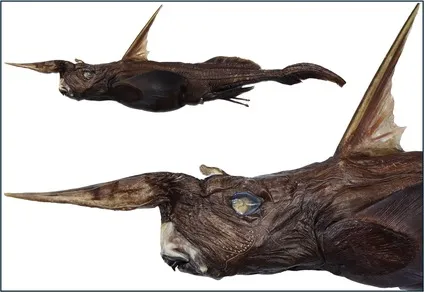
A newly identified deep-sea fish species has been confirmed in the Pacific Ocean off Costa Rica, marking the first time scientists have documented this particular ghost shark.
The finding reveals how much of the country’s deep‑ocean biodiversity remains uncharted, even in waters long studied by regional researchers. The discovery could reshape future conservation priorities as scientists warn that many deep‑sea species may be disappearing before they are ever documented.
Researchers say the species—Rhinochimaera costaricana—was described after decades of sporadic specimen collection and the use of new genetic tools that allowed scientists to distinguish it from its close relatives. The study, published in Zootaxa, was led by Costa Rica’s Fisheries and Aquaculture Institute (INCOPESCA), the University of Costa Rica and Brazil’s Federal University of Pará.
Read More on News
Newsweek has reached out to Naidely Valeria Vidaurre-Quesada, lead author of the study, the University of Costa Rica's School of Biology, via email for comment.
New Member of Ghost Shark Family
The species belongs to long‑nosed chimeras, a little‑known group of cartilaginous fish often called ghost sharks for their pale coloring and deep‑sea habitat. Though related to sharks and rays, chimeras represent an ancient lineage that has existed for hundreds of millions of years.
Scientists identified the species using three male specimens collected between 2000 and 2023 at depths of 390 to 787 meters—far below where recreational divers can reach.
...
What Makes R. costaricana Unique
Researchers compared 49 body measurements from the Costa Rican specimens with data from more than 90 individuals representing the three previously recognized Rhinochimaera species. The new species stood out for several distinctive traits:
- Shorter snout: noticeably reduced compared with its closest relatives
- Taller first dorsal fin and spine: a key morphological marker
- Wider gap between dorsal fins: separating it from other species
- Fewer tail tubercles: small bony structures along the caudal region
Genetic testing confirmed the morphological differences. DNA sequences showed divergences of 3.9 percent to 4.7 percent from other known Rhinochimaera species—well above the threshold typically used to define a new species.
Why Discovery Matters for Costa Rica
The finding adds to Costa Rica’s growing list of deep‑sea species and underscores how little is known about the Pacific waters beyond the continental shelf. Scientists say the region remains one of the least explored ecosystems in the region.
New technologies—especially genetic sequencing—are helping researchers identify species that may have been misclassified for decades.
The species name, Rhinochimaera costaricana, honors the nation where all known specimens were collected.
What Comes Next for Deep‑Sea Science
The discovery signals a turning point for deep‑ocean research in the region.
Scientists involved in the study say the deep Pacific off Costa Rica likely holds many more undocumented species, and that continued exploration—paired with genetic tools—will be essential for understanding and protecting these ecosystems as fishing pressure and climate change reshape the ocean’s depths.
View 0 Comments
Submit Correction
View Editorial & AI Guidelines